What's inside
As an Amazon Associate I earn from qualifying purchases. This post may contain affiliate links at no extra cost to you.
White oak and rift-sawn white oak are not two different species. Rift-sawn white oak is a way of cutting white oak logs, and that cutting method changes the grain pattern, board stability, price, and how evenly cabinet doors accept stain or clear finish.
For cabinets where every door must look nearly identical, rift-sawn stock has a real advantage. For a typical kitchen with a natural, painted, or lightly stained finish, though, ordinary white oak can be the better buy if you sort the parts carefully and prepare them consistently.
As an Amazon Associate we earn from qualifying purchases at no extra cost to you.

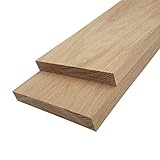
Our Top Picks


How the Cut Changes the Appearance
Plain-sawn white oak is cut to maximize lumber yield. Its cathedral arches, curved grain, and occasional irregular figure are familiar in flooring and traditional cabinetry. The face may also show flecks, especially in quartersawn areas.
Rift-sawn white oak is cut at a more consistent angle to the growth rings, usually producing mostly straight, vertical grain on the face. It has less of the cathedral pattern and generally fewer dramatic medullary-ray flecks than quartersawn oak. A rift-and-quartered bundle can contain a mix of both looks, so confirm the supplier’s description before ordering.
That straight grain is the main reason rift-sawn oak is popular for modern slab and Shaker doors. The eye sees fewer sweeping lines across adjacent doors, making differences in color and grain direction less distracting.
Comparison at a Glance
| Factor | Plain-sawn white oak | Rift-sawn white oak |
|---|---|---|
| Typical grain | Cathedral arches, varied figure | Mostly straight, vertical grain |
| Door-to-door uniformity | Good only with careful sorting | Usually better from the start |
| Material cost | Lower | Higher, often substantially |
| Waste and yield | Better log yield; easier to source | More waste in milling and selection |
| Best finish match | Paint, medium stains, rustic clear finishes | Clear coats, light stains, minimalist designs |
| Stability | Good when properly dried and built | Generally more consistent across the board width |
Choosing for Your Finish
For a clear finish, grain consistency matters more because there is no pigment hiding the differences. Rift-sawn white oak gives a calmer, more architectural surface. A waterborne clear coat or a low-color oil-modified finish will preserve the pale oak appearance, but both will reveal variation between boards. Buy by the bundle or veneer flitch, not by isolated samples.
Light stains are the hardest finish to make uniform on ordinary white oak. The stain darkens end grain, earlywood, and latewood at different rates, so cathedral sections can become noticeably darker or stripier. Rift-sawn grain reduces that visual contrast, but it does not eliminate blotching or color variation.
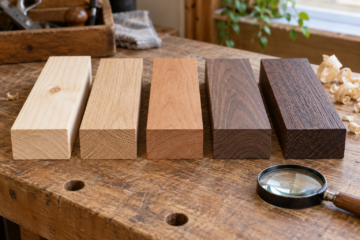
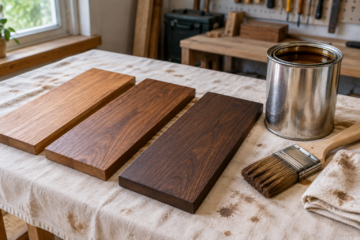
For a medium or dark stain, the cheaper wood can be perfectly acceptable. The stronger contrast often becomes part of the design. Test the actual stain on door-face offcuts, sanded through the same grits as the doors. A color shown on a flat sample can change dramatically on a routed rail or an edge.
Painted cabinets do not need rift-sawn oak for appearance. Oak’s open pores can telegraph through paint, especially under satin or semigloss finishes. If you are painting, spend the budget on sound, straight parts and proper pore filling instead. A quality oak grain filler or high-build primer will have more effect than the sawing method.
Preparing Oak for a Uniform Finish
Start with moisture-controlled lumber or doors. Aim for roughly 6% to 8% moisture content in a normally heated home, and let parts acclimate in the shop for several days. Wood that is too wet can shrink after finishing, exposing joints or changing the reveal around the doors.
Sand all parts consistently. A practical sequence is 120 grit, 150 grit, then 180 grit for most stains and clear finishes. Stop at 180 unless the finish manufacturer specifically recommends finer sanding; sanding to 220 can close the surface enough to reduce stain absorption and create a lighter result. Use fresh abrasives and do not press hard, which can burnish the oak unevenly.
Ease sharp door edges with a small hand sanding pass. A crisp edge absorbs more stain and loses finish faster than a lightly eased edge. Do not round it over aggressively: approximately 1/32 inch is enough for most cabinet doors.
Remove dust with vacuuming and a clean, lint-free cloth. Avoid soaking unfinished oak with water immediately before staining. Water can raise the grain and leave unevenly dried areas unless you deliberately use a controlled water-popping process.
Controlling Stain Variation
For a more even color, use a compatible wood conditioner or washcoat, but test it first. A conditioner can reduce dark absorption in porous areas while also making the overall color lighter. A thin, carefully measured washcoat of dewaxed shellac is another option, but an incorrect dilution can make the stain look weak or streaky. Buy dewaxed shellac only if you are prepared to test the exact mix on scrap.
Apply stain in manageable groups—often one door and its matching drawer front at a time. Keep a wet edge, wipe for the same amount of time, and use the same cloth pressure. Letting one door sit for five minutes longer can produce a visible mismatch even when the wood is from the same board.
For clear finishes, apply two or three thin coats rather than one heavy coat. Scuff sand only as directed by the product, commonly with 320 grit between coats after the finish has fully dried. A waterborne cabinet clear coat adds little amber color; oil-based products warm the white oak noticeably.
What to Buy
Choose rift-sawn white oak when straight grain is central to the design, the doors will receive a clear or very light finish, or the project has long runs of matching slab fronts. Order 10% to 15% extra for sorting and defects, and ask for consistent rift content across the whole order.
Choose plain-sawn white oak when cost matters, the finish is paint or a darker stain, or you like visible cathedral grain. Buy extra material, lay out every door before machining, and group parts by color and grain direction. That selection work often delivers a uniform result without paying the premium for rift-sawn stock.
0 Comments