What's inside
As an Amazon Associate I earn from qualifying purchases. This post may contain affiliate links at no extra cost to you.
Choosing between tung oil and teak oil for outdoor wood furniture is less about finding a magic finish and more about deciding how much maintenance you will accept. Both can deepen color and make dry wood look richer, but neither creates a maintenance-free outdoor coating. Sun, rain, dirt, and standing water eventually wear through either finish.
The biggest difference is consistency. “Pure tung oil” is a defined type of drying oil, although products sold under that name can still vary. “Teak oil” is a marketing term. One brand may sell a thin blend of oils and solvents, while another adds varnish resins for more surface protection. Read the label rather than assuming teak oil contains teak or that all teak oils perform alike.
As an Amazon Associate we earn from qualifying purchases at no extra cost to you.


Our Top Picks


Tung oil vs. teak oil at a glance
| Feature | Tung oil | Teak oil |
|---|---|---|
| What it is | Usually tung oil, sometimes diluted or modified | A non-standard blend of oils, solvents, and sometimes resin |
| Appearance | Warm, ambered color with a natural sheen | Usually warm color; sheen varies from matte to satin |
| Application | Several thin coats, with long curing time | Generally quick and easy to wipe on |
| Water resistance | Good after full curing and enough coats | Ranges from modest to good, depending on the formula |
| UV protection | Usually poor unless additives are included | May include UV additives, but performance varies |
| Best use | Owners who want a controllable, penetrating finish | Fast maintenance on outdoor furniture already suited to oiling |
When tung oil is the better choice
Tung oil is a good fit when you want to control the finish rather than simply refresh the surface. It penetrates open-grained woods and cures into a water-resistant film within the wood fibers and at the surface. On teak, ipe, mahogany, and similar dense woods, it may sit more on the surface and require careful wiping.
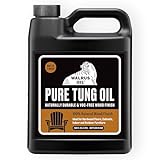
Use a product labeled pure tung oil wood finish if you specifically want tung oil. Check whether it is pure, polymerized, or “tung oil finish.” A tung oil finish may contain varnish and drying agents, which can make it easier and faster to use but chemically different from pure oil.
Pure tung oil usually needs three to five thin coats for a practical furniture finish. Wipe on a generous coat, let it soak for 20 to 30 minutes, then remove every wet spot and puddle. After the first coat, allow at least 24 to 48 hours of drying in warm, dry, well-ventilated conditions. Lightly scuff with 320-grit sandpaper between coats only if the surface feels rough.
The trade-off is time. In cool or humid weather, a coat can remain tacky for several days. Applying another coat over a soft one traps solvent and oil, producing a sticky surface that collects dust. Pure tung oil also offers limited UV protection, so furniture left in full sun may gray despite being well oiled.
When teak oil is the better choice
Teak oil is often the practical choice for routine upkeep. It is commonly thinner than straight tung oil, so it spreads quickly and is less demanding on dense outdoor woods. A typical maintenance job can be completed in one afternoon, although the furniture should stay dry overnight.
Look for an exterior teak oil that clearly states its intended use and drying time. Some formulas contain varnish or resin and provide more surface film than an oil-only product. Those may last longer, but they can eventually peel or flake where a penetrating oil would simply wear away.
Teak oil is not automatically the best finish for teak furniture. Teak naturally contains oils and resists decay, and many owners prefer to leave it unfinished so it weathers silver-gray. Oil keeps the original brown color temporarily, but usually demands reapplication every few months in exposed conditions. If the label recommends frequent re-oiling, believe it.
Prepare the wood before applying either finish
Preparation determines more of the result than the choice between these two oils. Remove cushions, hardware, and surface dirt. Wash with a mild detergent or a cleaner intended for outdoor wood, then rinse thoroughly. Let the furniture dry for at least 24 hours; dense teak and other hardwoods can hold moisture longer than they feel on the surface.
If the old finish is peeling, scrape it and sand until the loose edges are gone. For bare or previously oiled wood, start around 120 or 150 grit and finish with 180 grit. Sanding much finer than 220 grit can polish dense wood and reduce absorption. Round off sharp edges lightly because finish tends to pull away from them.
Test the oil under the seat or on a hidden area. Oils can darken wood substantially, especially weathered cedar, eucalyptus, and lighter hardwoods. The color may change again as the oil cures.
Application, drying, and common failures
Apply either product out of direct sun, ideally between 60 and 80 degrees Fahrenheit. Use a lint-free cloth or a natural-bristle brush, then wipe off excess. Do not leave shiny wet patches on the surface. They dry unevenly and can become gummy.
Plan on one maintenance coat when the wood looks dry and absorbs water immediately. For a neglected surface, two thin coats may be needed, but additional coats do not compensate for poor preparation. If the furniture sits on a covered porch, recheck it every six to 12 months. Fully exposed furniture may need inspection every three to six months.
Oil-soaked rags can ignite through spontaneous combustion. Spread them flat outdoors to dry, or place them in a water-filled metal container before disposal. Keep the work area ventilated, and do not use an oil finish over wax, silicone polish, or a failing film finish without removing the contamination.
Which should you buy?
Choose tung oil when you want a natural-looking finish, do not mind several coats, and can provide sheltered storage while it cures. It is also the better option when you want to avoid an undefined blend and are willing to verify the label.
Choose teak oil when convenience matters more than exact chemistry, the label gives clear exterior directions, and you accept regular touch-ups. The cheaper option is perfectly fine for basic seasonal maintenance on sound outdoor furniture. Spend more only when the product offers a useful feature—such as clearer instructions, better drying behavior, or UV additives—not simply because “teak” appears on the label.
0 Comments