What's inside
As an Amazon Associate I earn from qualifying purchases. This post may contain affiliate links at no extra cost to you.
For a clear-finished dining bench, both white oak and ash offer pale color, visible grain, and enough strength for everyday seating. The choice comes down less to strength than to appearance, price, and how much risk you’re willing to accept from moisture and finish changes. White oak is the safer pick for a bench that may see spills or damp cleaning. Ash is often cheaper and can be a good buy when the boards are dry, straight, and well matched.
As an Amazon Associate we earn from qualifying purchases at no extra cost to you.

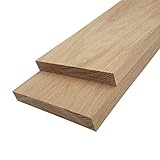

Our Top Picks
 Polyurethane Wood Finish Water Based Polyurethane Clear Gloss100 ml1.6 x 1.6 x 4.7 inchesCheck on Amazon


White oak vs ash at a glance
| Consideration | White oak | Ash |
|---|---|---|
| Color and grain | Light tan to medium brown; prominent grain, often with ray flecks on quarter-sawn faces | Usually pale cream to light brown; bold, open grain with strong contrast |
| Hardness | About 1,360 lbf on the Janka scale | About 1,320 lbf |
| Spill resistance | Better: its plugged pores slow liquid movement | Lower: open pores readily take up liquid |
| Workability | Hard and durable; can split near ends and blunt tools | Hard, resilient, and generally easy to machine; can splinter |
| Typical buying trade-off | Often costs more, especially in clear or quarter-sawn stock | Can cost less, but color and board quality vary |
How the woods look under a clear finish
White oak typically starts light brown or tan, with grain that ranges from calm and straight to pronounced and cathedral-shaped. A clear oil or oil-modified finish usually deepens it toward amber. Quarter-sawn white oak may show silvery ray flecks; plain-sawn stock usually shows more sweeping grain. If you want an even, quiet bench top, choose boards from the same bundle and inspect them in the actual orientation you plan to use.
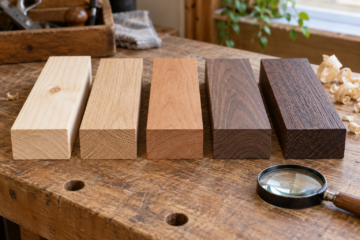
Ash is commonly paler, with cream-colored sapwood and darker brown heartwood. Its open, strong grain can look lively under clear finish, but boards from different parts of a tree may vary noticeably. Ash also tends to amber with age and finish, so a freshly sanded sample is not a reliable guide to the finished color. Put the intended finish on a scrap from the same boards before committing.
Neither species is naturally uniform. A clear finish will not hide mineral streaks, dark patches, or mismatched board color. For a bench seat assembled from several boards, dry-lay the pieces and move them around until the color transitions look deliberate.
Spills, wear, and bench use
The Janka hardness figures are close enough that neither species has a decisive advantage against dents in normal dining use. Chair hardware, dropped cutlery, and grit can damage either one. White oak’s more useful edge is its closed vessel structure: tyloses block many pores, making the wood more resistant to liquid penetration than ash. This does not make oak waterproof, but it gives you more time to wipe up a spill.
Ash’s open pores can draw in water, wine, or food before you notice. If the bench will be used by children or near a kitchen, that raises the cost of choosing ash: you’ll need a sound finish and prompt cleanup, and damaged finish can let stains reach the wood. Ash is still reasonable for a dry dining room or a lightly used bench. It is simply less forgiving when the surface is neglected.
What to look for when buying boards
For a seat, buy dry, straight stock with enough width for the design rather than planning on narrow strips to disguise defects. Check the moisture content with a meter if possible; roughly 6–9% is a useful indoor target in many heated homes, though local conditions vary. Let lumber acclimate in the room where the bench will live, then recheck before milling. Boards that are wet or moving can open glue joints or leave a seat cupped after assembly.
Inspect for twist, end checks, knots near edges, and grain runout at legs or other loaded parts. For the seat, a little color variation is usually a cosmetic decision. For legs and rails, avoid large defects where a tenon, screw, or other joint must carry load. If white oak carries a substantial price premium, compare the actual boards: a clean, stable ash board is a better buy than poor oak stock.
White oak is available in both plain-sawn and quarter-sawn lumber; quarter-sawn boards are generally more stable across their width and may show ray fleck, but cost more. Ash is often sold in wide, straight boards, which can reduce glue-up work. Price varies by region, grade, and thickness, so compare the finished usable yield rather than only the per-board-foot quote.
Sanding and clear finishing
Mill the boards flat, then sand progressively through 120, 150, and 180 grit for most clear finishes. Going much finer can reduce absorption for penetrating oils and make the surface look uneven; follow the finish maker’s instructions. Ease sharp seat edges slightly—about a 1/8-inch roundover is comfortable and less likely to chip than a crisp corner. Vacuum thoroughly and remove dust from pores with a clean brush or vacuum attachment.
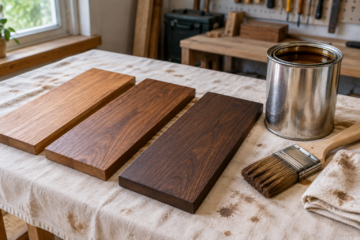
Both woods have open grain. A wiping varnish or hardwax oil will leave the pores visible, while a film finish can bridge them slightly but may not produce a glass-smooth surface without grain filling. For a dining bench, a durable water-based or oil-based polyurethane is a practical choice. Water-based finish keeps the wood closer to its pale color; oil-based finish adds warmth and amber. Neither is automatically better—test for the appearance you want and check that the label approves use on furniture surfaces.
Apply thin, even coats rather than flooding the surface. Follow the product’s drying and recoat times, and lightly sand between coats only as directed. A common failure is sanding through the first coat on corners or edges, leaving dull patches after the next coat. Keep enough finish on the seat to protect it, and coat the underside and end grain as well to reduce uneven moisture exchange.
For a clear, low-color look on either species, compare water-based polyurethane finishes. If you choose ash, a clear grain filler can reduce the open-pore texture before a film finish, though filling adds labor and can change the look.
Which one should you buy?
Choose white oak when spill resistance, a traditional oak appearance, or a more forgiving dining surface matters more than the price. It is the stronger all-around choice for a busy household, though it still needs a good finish and basic care.
Choose ash when you prefer its pale, bold grain, find better-quality boards at a meaningful discount, or are building a bench for a lower-spill setting. For either species, the cheaper option is fine if the lumber is dry and stable, the joints are sound, and the finish is suited to food-and-drink exposure. A good board and careful finishing matter more than a small difference in hardness.
0 Comments