What's inside
As an Amazon Associate I earn from qualifying purchases. This post may contain affiliate links at no extra cost to you.
Red alder and soft maple can both produce good results with water-based gel stain, but they do not behave the same way. Alder is usually the easier, more forgiving choice. Soft maple is harder, tighter-grained, and more likely to show uneven color or lap marks if the surface preparation is inconsistent.
The main reason to use a water-based gel stain is control. Its thicker formula stays closer to the surface than a penetrating stain, making it useful on blotch-prone woods, vertical panels, doors, and assembled furniture. It still is not foolproof. On both species, sanding scratches, glue residue, end grain, and uneven absorption will remain visible through a thin stain coat.
As an Amazon Associate we earn from qualifying purchases at no extra cost to you.


Our Top Picks
 Varathane Total Control Dark Walnut Gel StainQuart (Pack of 1)4.25 x 4.25 x 4.9 inches2.07 poundsCheck on Amazon
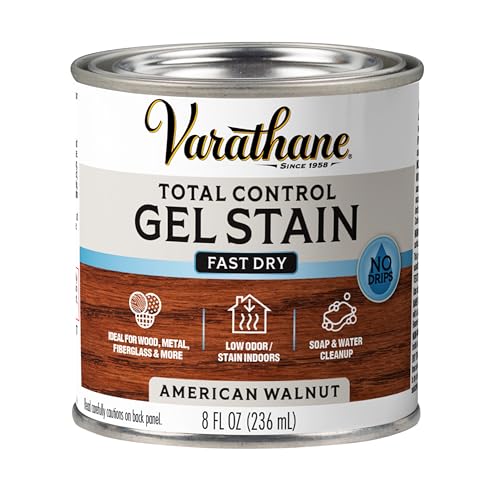 Varathane Total Control American Walnut Gel StainHalf Pint (Pack of 1)2.88 x 2.88 x 2.97 inches0.6 poundsCheck on Amazon
 Polyurethane Wood Finish Water Based Polyurethane Clear Gloss100 ml1.6 x 1.6 x 4.7 inchesCheck on Amazon
Red Alder vs. Soft Maple at a Glance
| Factor | Red alder | Soft maple |
|---|---|---|
| Hardness and workability | Soft, easy to sand and shape | Harder and less forgiving of sanding errors |
| Typical appearance | Warm tan to pinkish brown with subtle grain | Light, clean, and fairly uniform with less open grain |
| Stain behavior | Usually accepts gel stain evenly | Can look streaky or patchy, especially on broad flat areas |
| Best preparation | Consistent sanding and light pre-sealing if needed | Careful sanding, thorough cleaning, and test panels |
| Best use when | You want a warmer, woodier stained appearance | You want a pale, smooth base and controlled color |
How Red Alder Takes Water-Based Gel Stain
Red alder is relatively soft and has a fine, understated grain. It often takes water-based gel stain more evenly than a conventional liquid stain, particularly when the color is applied in thin coats and wiped consistently. The wood can still absorb more color in softer areas, but the variation is usually manageable.
Alder’s natural color matters. Light brown, honey, and medium walnut tones generally look warm and attractive. Gray, blue, and very dark colors can produce less predictable results because the pink and tan undertones remain visible. If you want a cool gray or near-black finish, make a sample using the same board stock rather than relying on a color card.
Alder dents easily, so avoid aggressive sanding. Sanding a soft area with a power sander can create shallow depressions that collect stain. For most flat parts, sand through 120 and 150 grit, then finish at 180 grit. Going much finer than 180 or 220 grit can reduce absorption and make the color lighter, but it will not correct uneven sanding.
How Soft Maple Takes Water-Based Gel Stain
Soft maple is not as hard as sugar maple, but it is still considerably denser and less absorbent than alder. The surface can look almost painted with gel stain, especially when the product is wiped off quickly. That can be an advantage if you want a uniform color, but it also makes application marks easy to see.
Large maple panels are the biggest challenge. A section that sits wet for five minutes can become darker than one wiped after two minutes. Water-based formulas also dry quickly, often within 5 to 15 minutes depending on temperature, humidity, and airflow. Work in manageable areas and maintain a wet edge instead of stopping in the middle of a panel.
For soft maple, sand evenly to 180 grit and remove all dust with a vacuum followed by a clean, slightly damp microfiber cloth. Do not flood the surface with water. Excess moisture can raise the grain and create a rough texture under the gel stain.
Surface Preparation That Prevents Blotches
Start by inspecting the wood under raking light. Pencil lines, cross-grain scratches, compressed fibers, and glue squeeze-out may be hard to see before staining but obvious afterward. Scrape dried glue carefully, then sand the area until it blends with the surrounding surface. Glue spots repel water-based stain and leave pale, sharply defined patches.
Break sharp edges lightly with 180-grit paper. A completely sharp edge absorbs stain differently and may become much darker than the face. Do not round over visible joinery unless that is part of the design.
A pre-stain conditioner or washcoat can help alder and soft maple, but it reduces color strength. For a water-based system, choose a water-based wood conditioner or compatible sanding sealer. Test it first: on dense soft maple, it may make the stain look too pale. A thin washcoat is usually more useful when the bare wood absorbs unevenly than when the problem is poor sanding.
Application Method for Consistent Color
Stir the gel stain slowly from the bottom. Do not shake it, since bubbles can leave pinholes. Apply a thin coat with a lint-free cloth, synthetic brush, or staining pad. A lint-free staining cloth gives the most control on small furniture parts, while a brush is faster on moldings and recessed areas.
Apply with the grain, then wipe off excess in the same direction. Keep the film thin; a heavy coat can remain tacky and look cloudy. On a door or wide panel, divide the surface into sections roughly 12 to 18 inches wide. Finish each section before moving on, and avoid overlapping a partly dried edge.
Let the first coat dry according to the label, commonly at least 2 to 4 hours before recoating. Cool or humid conditions can extend that time. If the first coat is too light, add a second thin coat rather than leaving the first coat thick. Two controlled coats are safer than one heavy coat.
Which Wood Should You Buy?
Choose red alder if you want easier machining, a warmer natural base, and a lower risk of visible application marks. It is the better budget choice for painted or medium-stained furniture where perfect color uniformity is not critical. Alder is also a practical choice for beginners, provided you avoid over-sanding soft areas.
Choose soft maple when you want a cleaner, lighter background, sharper-looking edges, and a more refined surface. It can look excellent with a water-based gel stain, but you pay for that appearance with more preparation and testing. Buying the cheaper species is fine when the project has narrow parts, a rustic look, or an opaque dark color. For a wide, highly visible panel, spend more attention on samples than on the stain brand.
Topcoat and Common Failure Checks
After the stain has dried fully, protect it with a compatible water-based clear finish. A water-based polyurethane clear finish preserves the color better than many oil-based topcoats, which can add amber warmth. Apply two or three thin coats, sanding lightly with 320-grit paper between coats only if the label recommends it or the surface feels rough.
Before finishing the actual project, make a sample at least 12 by 12 inches using the exact wood, sanding schedule, conditioner, stain color, number of coats, and topcoat. Check it in daylight and indoor light. If the sample shows dark edges, lap marks, or pale glue lines, the finish will not hide them. Fix the preparation or application process before committing to the finished piece.
0 Comments