What's inside
As an Amazon Associate I earn from qualifying purchases. This post may contain affiliate links at no extra cost to you.
Beech and hard maple are both dense, pale hardwoods that can look similar under a clear water-based finish. The differences show up in the grain, the finished color, and how evenly the first coat goes on. Beech is often the lower-cost choice; hard maple is typically harder and has a finer, quieter grain. Either can make a good clear-finished table, shelf, or cabinet part if you prepare the surface carefully.
As an Amazon Associate we earn from qualifying purchases at no extra cost to you.


Our Top Picks
 Minwax 1 qt Minwax 65555 Clear Polycrylic Water-Based32 fl oz4.3 x 4.9 x 4.9 inches2.25 poundsCheck on Amazon
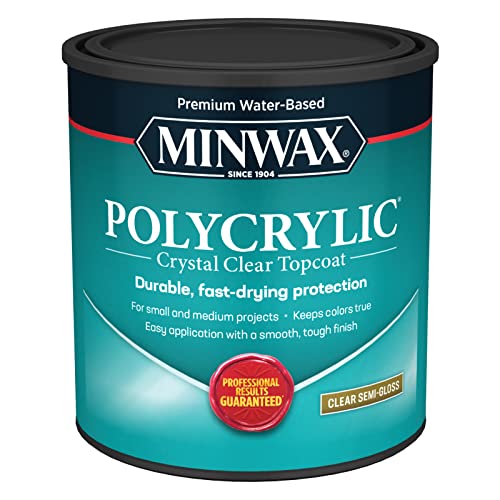 Minwax 1 qt Minwax 64444 Clear Polycrylic Water-Based32 fl oz4.4 x 4.4 x 5 inches2.25 poundsCheck on Amazon
 Minwax 33333000 Polycrylic Protective Finish Spray for Wood11.5 fl oz2.69 x 2.69 x 8.13 inches1 poundsCheck on Amazon
 Polyurethane Wood Finish Water Based Polyurethane Clear Gloss100 ml1.6 x 1.6 x 4.7 inchesCheck on Amazon
 Varathane Water-Based Ultimate Satin PolyurethaneHalf Pint (Pack of 1)3 x 3 x 3 inches0.64 poundsCheck on Amazon
Quick comparison
| Feature | Beech | Hard maple |
|---|---|---|
| Typical appearance | Pinkish tan, with visible rays and occasional fleck | Cream to light tan, usually fine and even-grained |
| Under water-based clear coat | Can show pink or salmon tones; grain contrast may increase | Stays relatively pale, though the finish can add a slight warm cast |
| Hardness | About 1,300 lbf on the Janka scale | About 1,450 lbf on the Janka scale |
| Common finishing concern | Uneven absorption, especially around end grain | Blotching or uneven sheen where sanding and application vary |
| Better fit | Cost-conscious projects where a warm, natural look is welcome | Projects needing a pale, fine-grained look and extra dent resistance |
Janka values are useful for comparing resistance to denting, not for predicting every scratch or impact. Both woods are hard enough for furniture, but neither is immune to dents.
Color and grain under a clear finish
Water-based clear finishes usually add less amber color than oil-based finishes, but they do not make the wood look completely unchanged. Beech can lean pink, peach, or tan, and boards from different parts of a log may vary. Its rays can produce small reflective flecks, especially on quarter-sawn stock. If you want a pale, uniform surface, those natural variations may be more noticeable than expected.
Hard maple is generally the safer pick when the goal is a light, restrained appearance. Its fine grain tends to read as calm and consistent, though boards can still vary in color and figure. A clear coat may make the surface look slightly warmer or more saturated, and a water-based finish can make sanding scratches or glue residue stand out rather than hide them.
Do not judge from raw wood alone. Sand a sample of each species to the grit you plan to use, apply the actual finish, and let it dry fully. A wet coat briefly darkens the surface, but the dry result is the one to compare. Test the same number of coats on each sample; extra coats can change the apparent sheen and color.
Which wood should you buy?
Choose beech if price and availability matter more than a perfectly pale look, or if you like its warmer color and visible rays. It is a sensible choice for shelves, drawer parts, and furniture that will be seen indoors. Beech can be a little less predictable from board to board, so buy enough stock from the same batch and inspect it under good light.
Choose hard maple if you want a fine, understated grain or a slightly tougher surface for a tabletop or work area. It often costs more, and its hardness can make machining slower and more demanding on cutters. The extra hardness does not justify the premium for every project: for a bookcase, cabinet interior, or other lightly used part, beech may be the better value.
Look for straight, dry stock with consistent color and minimal defects. For a wide visible panel, consider how boards will look next to one another, not just how one board looks alone. A clear finish preserves color differences rather than covering them.
Prepare the surface for water-based finish
Sand evenly and avoid skipping grits. A practical sequence is 120, 150, then 180 grit; on some projects, stopping at 150 gives a little more tooth for the finish. Going much finer can reduce absorption and make the sheen less even, particularly if different areas are sanded to different grits. Use a sharp scraper or plane for final smoothing if you can, but remove any burnished patches before coating.
Inspect in raking light for scratches, glue smears, and dents. Dried glue blocks finish from reaching the wood and can leave pale patches that are difficult to fix after the finish dries. Remove dust with a vacuum and a clean, lint-free cloth. Avoid a tack cloth that leaves residue unless its maker confirms it is compatible with water-based coatings.
Water raises the grain, leaving tiny fibers that feel rough after the first coat. On a test piece, you can dampen the bare wood lightly with clean water, let it dry, then sand very gently with 220 grit before finishing. Do not press hard: the aim is to clip raised fibers, not cut through the surface or round edges.
Apply the finish and avoid common problems
Use a water-based clear finish labeled for your project, such as a furniture or floor finish where appropriate. A water-based clear polyurethane is a practical option for many indoor surfaces. Follow the product label for temperature, recoat time, and sanding instructions; these vary by formula. Apply thin, even coats rather than trying to build thickness in one pass. A quality synthetic-bristle brush or suitable foam applicator can help, but test your method on scrap first.
For both woods, uneven sanding or inconsistent application can show up as dull and shiny patches. Beech may look blotchy where end grain or more absorbent areas take up finish differently. Maple’s dense, smooth surface can reveal laps, brush marks, and dust nibs. Keep a wet edge, use consistent strokes, and do not keep brushing once the finish begins to tack.
After the first coat dries, lightly sand only if the product directions call for it, often with 220 grit or a fine sanding pad. Remove the dust, then apply the next coat. If the surface still looks uneven, stop and diagnose the cause rather than adding coats blindly: extra film can improve protection, but it will not hide glue contamination or poor surface preparation.
Make the choice on a finished sample
If the project needs a pale, quiet appearance and takes daily wear, hard maple is the stronger bet. If the budget is tighter and a warmer, more varied look is acceptable, beech is entirely suitable. For either species, a finished sample is worth the small amount of time: it reveals the actual color, sheen, and surface defects before they are locked into a larger piece. If you are still choosing the coating, compare a water-based satin clear finish on both samples before buying enough for the project.
0 Comments