What's inside
As an Amazon Associate I earn from qualifying purchases. This post may contain affiliate links at no extra cost to you.
For natural-toned cabinets, alder and soft maple are both practical choices, but they produce noticeably different results under clear finish or light stain. Alder is warmer, softer, and more visually varied. Soft maple is harder, paler, and usually more uniform. The right choice depends less on which species is “better” and more on whether you want the wood to show character or recede into a consistent cabinet finish.
As an Amazon Associate we earn from qualifying purchases at no extra cost to you.


Our Top Picks
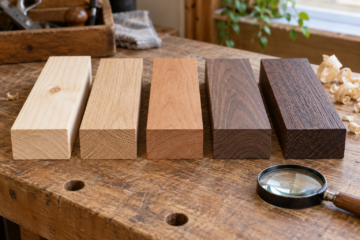
Alder vs. soft maple at a glance
| Characteristic | Alder | Soft maple |
|---|---|---|
| Natural color | Warm tan to peach, sometimes reddish | Very light cream to pale tan |
| Grain appearance | Subtle, open-looking grain with frequent color variation | Fine, generally straight grain; can include curly or figured areas |
| Hardness | Soft; dents relatively easily | Roughly twice as resistant to denting as alder |
| Stain behavior | Absorbs unevenly and can become blotchy | Also prone to blotching, especially with dark stain |
| Best natural look | Warm, rustic, understated | Clean, pale, contemporary |
| Typical cost | Often the cheaper option | Usually costs more, especially in clear-grade stock |
How each species looks with a clear finish
Alder is the more naturally colored of the two. Freshly sanded alder can look almost pink or salmon-colored, with darker streaks and occasional mineral marks. A clear water-based finish keeps it relatively light, while oil-based varnish or lacquer adds amber and can make the wood look honey-brown. That color shift is worth testing because alder can become much warmer after finishing than it appeared at the lumber supplier.
Soft maple starts much paler. Its tight grain and low contrast create a smooth, quiet surface that works well in modern kitchens. Clear water-based finishes preserve its light color better than oil finishes. An oil-based finish will yellow the wood somewhat, but usually not enough to make it resemble alder.
Neither species has the bold grain of oak or ash. If you want visible grain lines, alder may provide more color movement, but soft maple is the better choice for a nearly uniform natural finish. Examine full door samples rather than small pieces: rails, stiles, and center panels can vary considerably.
Durability and everyday cabinet wear
Soft maple is the better material for doors and drawer fronts that will see heavy use. It is not a hard maple substitute—hard maple is substantially harder—but it still resists dents and edge damage better than alder. This matters around drawer pulls, appliance openings, and lower cabinets where shoes, vacuum cleaners, and pots make contact.
Alder is perfectly serviceable for normal residential cabinets, particularly when cost matters or when the design intentionally embraces small dents and color variation. Its softness also makes it easy to machine and sand. The downside is that a sharp impact can leave a depression that sanding will not always remove without flattening the surrounding surface.
For either species, a catalyzed conversion varnish or another cabinet-grade coating generally outperforms ordinary interior polyurethane. If you are finishing on site, a durable water-based cabinet finish is easier to apply with less odor than many solvent products. Follow the manufacturer’s recoat and cure times; “dry to touch” does not mean fully hardened.
Staining natural-toned cabinets
Stain is where both woods can become frustrating. Their absorbency changes between earlywood, latewood, end grain, and areas that were sanded more aggressively. Dark brown, red, and walnut-colored stains exaggerate those differences. Alder often develops cloudy patches, while soft maple can show pale areas and dark edges around routed profiles.
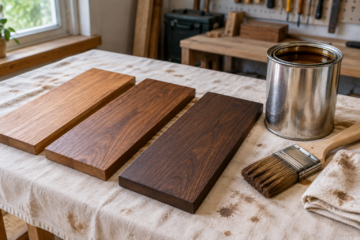
If you want the wood to look natural, consider skipping stain and using a clear finish. A lightly tinted toner or dye can add warmth more evenly than a heavy pigment stain. When stain is required, use a wood conditioner or washcoat designed for the stain system. A common starting point is a thin washcoat of dewaxed shellac, but the correct dilution depends on the product and wood. Too much sealer can prevent the stain from penetrating at all.
Always make a sample using the same door construction, sanding schedule, stain, and number of finish coats. A 12-by-12-inch scrap is useful, but a sample door is better because end grain and joints affect color. For a less blotchy result, sand consistently to about 150 or 180 grit. Sanding one area to 220 grit can make it noticeably lighter because it absorbs less stain.
Use a wood conditioner for staining only if it is compatible with the stain. Some products sold as “pre-stain conditioners” are optimized for oil stains and give poor results with water-based products.
Sanding, glue, and surface preparation
Factory-supplied cabinet parts are often already sanded, but inspect them for machine marks, glue squeeze-out, and handling grime. Start at 120 or 150 grit when correcting defects, then finish at 180 grit for most clear or stained work. Remove all dust with vacuuming and a clean, slightly damp microfiber cloth; aggressive tack cloths can leave residue that interferes with water-based finishes.
Glue is a common failure point on natural finishes. Dried squeeze-out seals the pores and produces light stripes after staining. Remove wet glue with a damp cloth without spreading it, or let it partially harden and pare it carefully with a sharp chisel. Do not flood unfinished joints with water. On visible panels, masking adjacent surfaces before glue-up can save considerable cleanup.
For small repairs, use a stainable wood filler, but test it first. “Stainable” does not mean invisible: filler often absorbs pigment differently from surrounding wood. On clear-finished alder, matching putty or tinted finish may look better than a filler intended for dark stains.
Which one should you buy?
Choose alder when a warmer color, lower price, easy machining, and mild rustic variation matter more than dent resistance. It is the sensible budget choice for many kitchen and bathroom projects, especially when the cabinets will receive a clear or lightly tinted finish.
Choose soft maple when you want a pale, consistent appearance and better resistance to everyday knocks. Pay the extra cost when the cabinets are heavily used, the design is clean and contemporary, or you plan to leave the wood very light under a clear water-based finish.
If the project includes both species, do not assume they will match under the same finish. Their color and absorption rates differ enough to make adjacent doors look intentionally mismatched. Buy, finish, and compare samples before ordering the entire cabinet run.
0 Comments