What's inside
As an Amazon Associate I earn from qualifying purchases. This post may contain affiliate links at no extra cost to you.
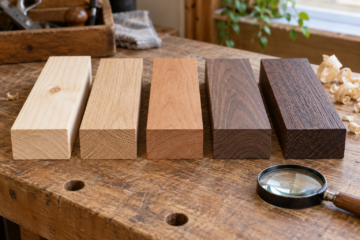
Pecan and hickory are both dense North American hardwoods with bold grain, but they behave differently under stain. Pecan usually refers to wood from pecan trees, while “hickory” may mean several closely related species sold together. In practice, the boards in a cabinet-door order matter as much as the species label: color and grain can vary noticeably from board to board, and sapwood may be pale beside darker heartwood.
For stained doors, choose pecan when you want a warmer, often more varied look and are willing to sort carefully. Choose hickory when you want strong, high-contrast grain and toughness, and can accept that stain may emphasize its light-dark variation. Neither is a reliable shortcut to a perfectly uniform finish. Ask for samples finished with the stain and topcoat you plan to use before ordering a full set.
As an Amazon Associate we earn from qualifying purchases at no extra cost to you.


Our Top Picks
 Minwax PolyShades Wood Stain + Polyurethane Finish1 Quart4.25 x 4.25 x 4.9 inches1 poundsCheck on Amazon


Pecan vs. hickory at a glance
| Factor | Pecan | Hickory |
|---|---|---|
| Typical appearance | Warm tan to brown, sometimes with marked color variation | Pale cream to brown, often with pronounced light-dark contrast |
| Grain | Usually open and varied; may include dramatic figure | Often bold, with strong grain and frequent contrast between sapwood and heartwood |
| Stain behavior | Can take stain unevenly; test for blotching and color shifts | Can show strong contrast more clearly; dark stain may exaggerate variation |
| Hardness | Hard and wear-resistant | Very hard and tough; harder on cutters and sanding abrasives |
| Best fit | A warm, distinctive look with some natural variation | A rugged, high-contrast look where grain character is welcome |
How the grain changes the finished look
Neither species is a good pick if every door must look identical. Hickory’s pale sapwood and darker heartwood can sit side by side in one door, then appear in different proportions on the next. A medium or dark stain often makes that contrast more obvious, not less. This is part of hickory’s appeal, but it can surprise buyers expecting a consistent brown.
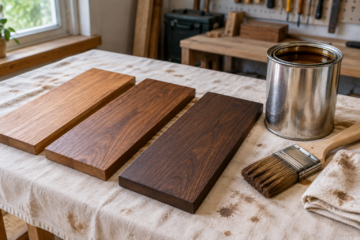
Pecan also varies, but its finished color tends to read warm and brown. The exact result depends on the boards, stain color, and clear coat. A glossy topcoat can make color and figure look more intense; a matte or satin finish generally softens the effect. Don’t judge a stain from a small dab on an unfinished offcut. View a full-width sample with the intended finish, since broad grain patterns can look different over a larger area.
Stain, sanding, and preparation
Both woods are hard, close-grained hardwoods, but open pores and mixed grain can produce uneven color. Dark wiping stains are especially unforgiving: they may collect in pores, highlight scratches, or leave blotchy patches. Sand consistently with the same grit on every door; for many cabinet-door jobs, finishing around 180 grit is a sensible starting point, but follow the stain maker’s instructions. Going much finer can reduce stain absorption, while stopping coarser may leave scratches that show after color goes on.
Make a sample using the actual door material, not a different hardwood sold as “similar.” Sand it as you’ll sand the doors, apply stain at the planned rate, wipe it on and off consistently, then add the intended clear finish. If the color is uneven, test a compatible pre-stain conditioner or a washcoat on another sample. These can reduce blotching, but they may also make the final color lighter or less vivid. Confirm compatibility with both the stain and topcoat before committing.
Use clean abrasives and remove dust before staining. Hand-sand with the grain where machine sanding leaves cross-grain scratches. On hickory, plan for slower cutting and more frequent checks for worn paper; the wood’s hardness can make sanding tedious. For a job involving many doors, a random-orbit sander for woodworking can speed up broad-face sanding, but it does not replace careful hand-sanding at edges and profiles.
Machining and door construction
Hickory’s hardness is a trade-off: it resists dents well, but cutting and routing it takes sharp tooling and a steady feed. Dull bits can burn the surface, and aggressive cuts can tear grain at profiles. Pecan is also hard, so neither is effortless to machine. On either species, make test cuts, keep cutters sharp, and use light passes on shaped edges. If you’re buying finished doors rather than making them, inspect corners and profiles for tear-out before accepting the order.
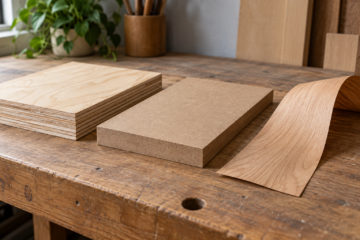
Wood movement still matters regardless of hardness. Solid-wood panels need room to expand and contract across the grain inside their frames. A properly built frame-and-panel door allows that movement; a solid panel glued tightly all the way around can crack or distort as humidity changes. For stable color and fewer surprises, also ask whether doors are solid wood, veneer, or a mix. A veneer door can match the appearance at lower cost, but damaged veneer is harder to repair invisibly.
Which one should you buy?
Buy pecan if its warm color and distinctive grain suit the room, and you can select boards or doors as a group. It is not automatically the better choice for a uniform stained finish; get samples first. Buy hickory if you like strong grain contrast and want a very tough surface. Avoid it if the project calls for quiet, consistent color unless your supplier can provide closely matched material and you approve a finished sample.
If price is the deciding factor, the cheaper species is fine when its appearance works with the design and the doors are prepared and finished well. Don’t pay extra expecting either wood to hide dents, defects, or poor sanding. For color control, a hardwood stain sample set can help compare tones, but the decisive test is still on the exact wood. For a more even, less grain-led color, paint may be the simpler route; if you plan to stain, spend the time on samples and door selection rather than trying to correct a mismatch with a darker stain.
0 Comments