What's inside
As an Amazon Associate I earn from qualifying purchases. This post may contain affiliate links at no extra cost to you.
Choosing Between Hard Maple and Beech for a Smooth Painted Cabinet Door
For a painted cabinet door, both hard maple and beech can produce a smooth, durable result. The bigger differences are how easily the boards machine, how much they move with humidity, and how well the door stays flat. Hard maple is usually the safer choice for a premium solid-wood painted door. Beech is a practical lower-cost option when the stock is properly dried, straight, and well prepared.
Neither species is automatically “paint ready” after sanding. A smooth painted door depends more on the quality of the glue joint, the construction of the panel, the primer, and the sanding sequence than on the species alone.
As an Amazon Associate we earn from qualifying purchases at no extra cost to you.


Hard Maple vs. Beech: Key Differences
| Characteristic | Hard maple | Beech |
|---|---|---|
| Approximate Janka hardness | 1,450 lbf | 1,300 lbf |
| Typical appearance under paint | Fine, subdued grain; pale color | Fine grain with slightly stronger fleck and color variation |
| Machining | Can burn or chip if cutters are dull | Generally machines cleanly, but can burn when routed |
| Moisture movement | Moderate | Relatively high |
| Paint preparation | Usually straightforward | Needs careful sealing and sanding, especially around end grain |
| Best use | Stable face frames, rails, stiles, and solid panels | Painted doors when the material is dry, straight, and competitively priced |
Hard maple is denser and somewhat harder, but that does not make it dramatically more dent-proof in a cabinet application. The practical advantage is its relatively uniform texture and dependable availability in clear, straight boards. Beech has a similarly fine texture, but it can show more figure and color variation beneath light-colored paint if the primer does not hide it completely.
Which Species Makes the Smoother Painted Surface?
Hard maple normally has the edge for a smooth painted surface. Its grain is tight and does not require a traditional grain filler. Sanding to 150 or 180 grit leaves a good surface for primer without exposing deep pores. Beech is also close-grained, so it does not need grain filler either, but its end grain can drink in primer and leave a slightly rough or uneven area around routed profiles and rail ends.
For either species, stop sanding the bare wood at about 150 grit before the first coat of primer. Going much finer can burnish the surface and reduce primer adhesion. After the primer dries, sand with 220 grit. If the surface still feels rough when viewed under a work light, apply a second primer coat and sand again with 220 or 240 grit.
A high-build wood primer is useful on open end grain, routed details, and small sanding scratches. It will not correct a poor glue joint or a panel that is moving; it simply gives you more material to level before the finish coats.
Movement and Door Construction
Beech has a reputation for moving more than maple as humidity changes. That matters most in solid raised panels and wide solid-wood doors. A 12-inch-wide panel can change noticeably across the seasons, especially in a house with dry winter heat. The panel must be allowed to float in the frame rather than being glued across its width.
Do not glue a solid panel into all four sides of a frame. Glue the rail-and-stile joints, but leave the panel loose in its groove. A small amount of clearance, often around 1/8 inch total across the panel width, gives the panel room to move. Exact clearance depends on the panel’s moisture content and the indoor climate.
Hard maple is not movement-proof. A poorly dried maple door can still cup, split, or open at a joint. Buy kiln-dried stock with a moisture content near 6% to 8% for typical conditioned interiors, and let the lumber acclimate in the shop for several days before milling it. Check boards with a moisture meter rather than relying only on the supplier’s label.
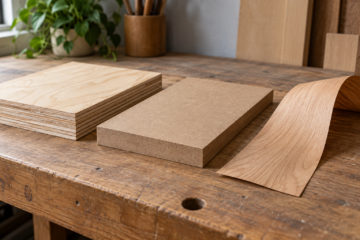
For wide flat panels, a stable engineered core is often easier to paint than either solid species. A hardwood frame around MDF or a paint-grade plywood panel reduces seasonal movement and eliminates many panel-flattening problems. This is especially sensible for doors wider than about 18 inches.
Machining and Gluing Considerations
Both species benefit from sharp knives and router bits. Hard maple can scorch at the router table if the bit is dull, the feed rate is too slow, or too much material is removed in one pass. Beech can also burn, particularly on end grain. Burn marks are not always removed by primer; sand them back to clean wood before finishing.
Joint the mating edges straight and make a dry assembly before applying glue. A standard interior PVA wood glue works for normal cabinet doors. Apply enough glue for a thin, continuous squeeze-out, then clamp until the glue has set according to its instructions. Excessive clamp pressure can bow thin rails or squeeze nearly all the glue from the joint.
Beech can be slightly more demanding when milling because its movement may reveal a small step at a joint after the stock relaxes. Mill all related parts from the same batch and let them rest after rough milling if the lumber was noticeably stressed.
Primer and Paint Preparation
Before priming, remove glue squeeze-out completely. Dried glue prevents primer from wetting the wood and can leave shiny, unpainted-looking patches. Scrape it with a sharp chisel, then sand the area until water or solvent no longer beads differently from the surrounding wood.
Use a stain-blocking or bonding primer suited to bare wood. An oil-based or shellac-based primer is useful when you need strong end-grain sealing or have concerns about resin, contamination, or tannin-like discoloration. A quality waterborne cabinet primer is more convenient and usually adequate on clean maple and beech.
For the smoothest result, use a HVLP paint sprayer or apply thin coats with a fine synthetic brush and foam roller. Two or three thin finish coats are better than one heavy coat. Heavy application can sag on the inside corners and remain soft underneath even when the surface feels dry.
Which One Should You Buy?
Choose hard maple when the price difference is reasonable, the doors include detailed profiles, or you want the most predictable painted appearance. It is the better default for a high-end kitchen where consistent machining and seasonal stability matter.
Choose beech when it is substantially cheaper, locally available in better grades, or you are building simple frame-and-panel doors with a floating panel. Beech is not a bad paint-grade wood. Reject boards with large tension cracks, fuzzy grain, or obvious moisture differences, and spend the extra time sealing end grain.
If the door will be completely opaque and the priority is a flat, furniture-smooth finish rather than visible solid wood construction, compare both species with a paint-grade MDF panel. Solid maple or beech is worthwhile when you need hardwood edges, routed profiles, or repairable joinery—not simply because paint makes one species inherently smoother.
0 Comments