What's inside
As an Amazon Associate I earn from qualifying purchases. This post may contain affiliate links at no extra cost to you.
Hard maple and soft maple can both make sound furniture, but they behave differently under paint and stain. Hard maple is denser and more resistant to dents; soft maple is usually easier to work and often costs less. Neither is automatically the better finish wood. The right choice depends on the look you want, how much wear the furniture will take, and whether you can prepare the surface carefully.
As an Amazon Associate we earn from qualifying purchases at no extra cost to you.
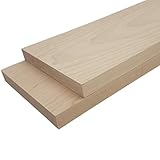


What “Hard” and “Soft” Maple Mean
Hard maple usually refers to sugar maple (Acer saccharum). Soft maple is a trade group that includes species such as red maple and silver maple. “Soft” does not mean softwood: both groups are hardwoods, and soft maple can be plenty durable for cabinets, dressers, and occasional-use furniture.
Species, board selection, and drying matter. A straight-grained soft maple board may be more predictable than a hard maple board with figure or uneven grain. When buying, ask for the species if the distinction matters, and inspect the actual boards rather than relying on the label alone.
Quick Comparison
| Factor | Hard maple | Soft maple |
|---|---|---|
| Typical feel | Dense, hard, tight-grained | Generally lighter and easier to cut |
| Paint | Good with sound preparation; hard surface can show flaws | Also good; usually easier to machine and sand |
| Stain | Can look blotchy, especially with dark colors | Can also blotch; appearance varies by species and board |
| Denting | Better resistance to everyday dents | More likely to dent, though still suitable for many pieces |
| Cost and availability | Often costs more, depending on region and grade | Often the budget-friendly choice |
| Best fit | High-wear tops, crisp details, pale natural finishes | Painted work, interior parts, and cost-conscious furniture |
For Painted Furniture
Either maple group is a good paint substrate if the wood is dry, clean, and sanded evenly. Paint hides color differences, so paying extra for hard maple rarely makes sense for a fully painted dresser or cabinet unless the piece will take heavy use or needs especially dent-resistant parts. Soft maple is a practical choice for doors, drawer fronts, and frames when the price and board quality are right.
Maple’s tight grain can make paint look smooth, but it does not excuse poor prep. Sand bare wood to about 150 or 180 grit; going much finer can reduce primer bite. Remove dust, then apply a compatible bonding or stain-blocking primer according to its label. Sand the primer lightly, often with 220 grit, and check for raised grain, dents, and glue spots before topcoating. Glue squeeze-out is a common failure point: paint may not adhere evenly where glue sealed the wood.
Use a quality wood primer for furniture suited to your paint system. Follow the stated recoat and cure times; a finish that feels dry in a few hours may still mark easily for days. Hard maple’s smooth, dense surface can make sanding scratches or a thin, uneven primer coat conspicuous under a satin or gloss finish. Inspect under raking light before applying the topcoat.
For Stained Furniture
Staining maple is harder to make uniform than staining open-grained woods such as oak. Both hard and soft maple can absorb pigment unevenly, leaving dark patches beside pale areas. Soft maple’s appearance varies more by species and board, but changing from hard to soft maple does not eliminate blotching. Strongly figured maple can look striking, yet figure and grain direction may take stain differently across one surface.
For a natural, light finish, clear finish alone or a lightly tinted finish usually shows maple more reliably than a dark penetrating stain. If you want a darker color, test on offcuts from the same boards, sanded through the same grits as the furniture. A pre-stain conditioner can reduce uneven absorption, but it can also make the result lighter or less vivid; it is not a guarantee. Try the intended stain and topcoat together before committing.
For more control, consider a gel stain or a dye-and-sealer schedule. Gel stains sit closer to the surface and can be easier to even out, but they may obscure fine grain and require careful, consistent wiping. A gel stain for maple is worth testing when a darker color is important. Apply it to sample boards first; don’t assume the color on the can will match maple.
Durability and Machining
Hard maple is the better choice for a dining tabletop, work surface, or chair parts that will see repeated knocks. Its density helps, but it does not make the finish scratchproof: a clear coat can still be damaged, and a dropped object can dent the wood. For a painted tabletop, the coating system and how the piece is used matter as much as species.
Hard maple’s density can make it tougher to cut, drill, and sand. Use sharp cutters, support the work, and avoid forcing a blade that is burning the surface. Soft maple is generally easier to machine, which can save time on a large project. Both can burn under a dull cutter, and tear-out is possible where grain reverses. Sand carefully across end grain; it often absorbs finish differently from face grain and can appear darker.
What to Buy
Choose hard maple when dent resistance matters, the wood will be left visible, or you want a pale, close-grained natural look and can pay for the material. Choose soft maple for painted furniture, hidden components, and many everyday indoor pieces where lower cost and easier machining matter more than maximum hardness. For stained furniture, buy by the board and test samples: species name alone cannot predict a uniform result.
Whichever you choose, avoid boards with deep checks, loose knots, or abrupt color changes if you need a calm painted surface. For stained work, select boards with consistent grain and color, then keep a labeled offcut for every finishing test. That small step is cheaper than discovering blotches after the furniture is assembled.
0 Comments