What's inside
As an Amazon Associate I earn from qualifying purchases. This post may contain affiliate links at no extra cost to you.
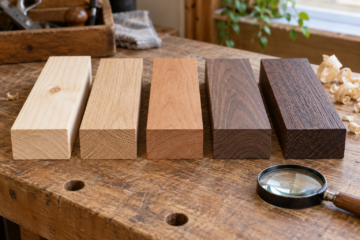
Basswood and soft maple can both produce smooth painted furniture, but they behave differently under a sander and under a finish. Basswood is usually easier to shape and cheaper; soft maple is harder and more resistant to dents, but it takes more care to sand and paint evenly. For a painted dresser, cabinet door, or table base, the better choice depends on how much wear the piece will get and how much prep you want to do.
As an Amazon Associate we earn from qualifying purchases at no extra cost to you.


Our Top Picks


Quick comparison
| Property | Basswood | Soft maple |
|---|---|---|
| Typical feel | Very light and soft | Noticeably harder and heavier |
| Machining | Easy to cut, carve, and sand | Machines cleanly with sharp tools; can burn or tear out if tools are dull |
| Paint preparation | Generally straightforward, but dents and fuzzy grain need attention | Usually smooth, but sanding scratches and uneven absorption can show through |
| Dent resistance | Low | Moderate; better for furniture that gets daily use |
| Best fit | Light-duty furniture, trim, decorative pieces | Doors, drawer fronts, table parts, and other high-contact surfaces |
What “smooth” means under paint
Paint hides color and grain, but it does not reliably hide dents, glue residue, planer marks, or deep sanding scratches. A glossy finish makes these defects more obvious because light reflects off the surface. On either species, inspect the bare wood with a bright light held at a shallow angle before priming.
Soft maple is not a single uniform material: lumber sold under that name can come from several maple species, and hardness and grain can vary. Basswood is usually more consistent in its softness. In practice, board selection matters. Pick straight, flat stock without knots, crushed edges, or deep planer chatter. Those flaws cost more time to repair than any small difference between the species.
Choose basswood for easy work; maple for tougher surfaces
Basswood is a sensible choice for painted furniture that will see light use: a decorative cabinet, a bedroom piece, a built-in surround, or a project with carved or shaped details. It cuts and sands easily, and its typically fine, even texture gives paint a good starting surface. The trade-off is its softness. A bumped corner or dropped object can leave a dent through the paint, and filler repairs may be visible if the surrounding surface is glossy.
Soft maple is the stronger choice for drawer fronts, cabinet doors, and table aprons that are handled or knocked regularly. Its harder surface is less prone to dents, though it is not immune to them. The extra hardness can make sanding slower, and sharp edges can chip if the wood is handled roughly. Maple also tends to make scratches or uneven sanding more apparent once a smooth paint film reflects light.
If price and ease of shaping are the priority, basswood is fine for many painted pieces. If the furniture will get daily contact, the added durability of soft maple can justify its cost and prep time. For large panels, also consider the panel construction and joinery: a stable panel matters more than choosing a harder species for a part that will not take impacts.
Prep both woods without creating paint defects
Start by removing glue squeeze-out. Dried glue blocks primer and can leave pale, glossy patches after painting. Scrape it carefully rather than sanding it across the face, where it can smear into the grain. Fill dents and small gaps with a paint-compatible wood filler, then let the repair dry fully before sanding it level.
Sand with the grain. For rough or milled stock, begin around 120 grit; for already smooth stock, start at 150. Work through 180 grit, checking for cross-grain scratches before moving on. Going much finer than 180 or 220 can reduce primer bite, depending on the primer, and usually adds little under an opaque finish. On basswood, use light pressure: aggressive sanding can dish soft areas or leave a fuzzy surface. On soft maple, keep the sander moving to avoid uneven patches and visible swirl marks.
Ease sharp corners slightly with a sanding block. Paint tends to pull thin over knife-sharp edges, leaving them prone to chipping. Vacuum the dust and wipe the surface with a clean, dry cloth. Avoid flooding bare wood with water to raise the grain; it can create uneven swelling and add drying time.
Prime before judging the surface
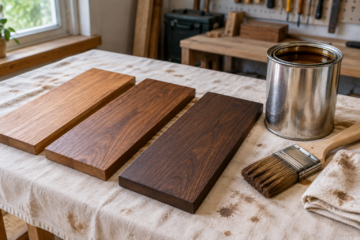
Use a primer intended for bare wood and compatible with your topcoat. A good primer helps the paint grip and evens out absorption, but it will not level a dent or erase a sanding groove. If the furniture will have a smooth enamel finish, a wood primer or sanding sealer can make the surface easier to inspect and sand between coats.
After the primer dries according to its label, sand lightly with 220 grit, or finer if the primer instructions call for it. The aim is to remove raised fibers and dust nibs without cutting through to bare wood. Spot-prime any exposed areas. Apply two thin paint coats rather than one heavy coat; thick paint is more likely to sag, bridge details, and dry unevenly. Follow the stated recoat times, since a surface that feels dry may still be soft underneath.
Basswood’s soft fibers can compress under sanding and handling, so check corners and edges for dents before each coat. Soft maple’s hardness does not eliminate adhesion problems: sanding dust, oily contamination, or a glossy unsanded spot can still cause peeling. If the first coat beads, scratches off easily, or leaves bare patches, stop and identify the cause rather than covering it with more paint.
A practical buying decision
For a low-cost painted project with little chance of impact, choose straight basswood and spend the savings on a decent primer, filler, and sanding supplies. A paintable wood filler is useful for nail holes and small defects, but it is not a substitute for sound stock or careful glue cleanup.
For frequently handled furniture, choose soft maple where dents would be a nuisance—especially drawer fronts, doors, and exposed rails. Either species can look smooth under paint when the surface is properly prepared. Basswood is easier to work; soft maple is generally tougher. Buy based on the wear the piece will face, then let the primer coat reveal whether the sanding and repairs are actually ready for paint.
0 Comments