What's inside
As an Amazon Associate I earn from qualifying purchases. This post may contain affiliate links at no extra cost to you.
For painted cabinet face frames, soft maple and birch are both workable hardwoods. Neither is automatically the better choice: the deciding factors are usually price, board quality, machining, and how carefully you prepare and prime the surface. Soft maple is often a little easier to machine and can be a good value when it is readily available. Birch can be an equally sound choice, especially if you can buy straight, consistently milled stock at a lower price.
As an Amazon Associate we earn from qualifying purchases at no extra cost to you.


Our Top Picks
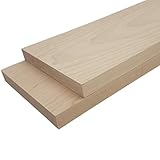
 Barrington Hardwoods Maple Lumber Boards3/4" x 2" x 12"12 x 2 x 0.75 inches1.8 PoundsCheck on Amazon
 AquaCoat Water-Based White Cabinet Wood Grain Filler Gel16 Fl Oz (Pack of 1)10 x 10 x 10 inches1.2 poundsCheck on Amazon


Quick comparison
| Factor | Soft maple | Birch |
|---|---|---|
| Paint appearance | Usually smooth; grain can show through paint if preparation is light | Usually smooth; grain and color variation can show through paint |
| Machining | Generally machines well; sharp cutters help limit burn marks and tear-out | Machines well when dry and straight; can tear out around reversing grain |
| Availability and price | Often available as a cabinet-shop hardwood; local pricing varies | Common in many regions; may be cheaper, but grade and availability vary |
| Best buying test | Look for straight, dry, clear stock | Look for straight, dry stock with consistent color and few defects |
Both species are substantially harder than most softwoods, so a properly assembled frame should hold fasteners well. For painted work, however, hardness is less important than flatness, dryness, and having clean surfaces without dents, glue, or machining marks.
What the paint will show
Paint hides color, not every surface defect. Uneven sanding, dents, open joints, and raised grain can remain visible under a smooth finish. Both maple and birch have grain that may telegraph through paint, particularly with a thin primer coat or a low-build finish. If you want a very smooth, furniture-grade result, plan on filling and sanding rather than relying on the species to disappear under paint.
Inspect each board under angled light before cutting. Reject stock with deep planer marks, twist, loose knots, or defects where rails and stiles need to be cut. A board that looks acceptable from above can reveal a dip or ridge after priming. Check moisture with a meter if possible; for typical interior cabinet work, stock around 6–8% moisture content is a reasonable target, provided it has acclimated to the shop.
Buying the lumber
Choose the boards that will yield straight, consistent frame parts, not the species name on the rack label. Sight down each board and check both edges. For stiles, prioritize straight grain and enough width to remove defects. For rails, avoid areas with knots or grain changes near the ends, where joinery and fasteners can be less reliable.
Ask whether the stock is surfaced on four sides and confirm its finished dimensions. Nominal lumber sizes are not the dimensions you will receive, and uneven thickness makes flush frame assembly harder. If you are buying pre-milled frame stock, compare its actual thickness and width, straightness, and price per usable linear foot—not just the price per board.
If both species are available in comparable quality, choose the cheaper one. There is no dependable paint-quality advantage that makes it worth paying a large premium for soft maple over birch, or vice versa. For a small project, buying fewer boards with less waste may matter more than the difference in species price.
Cutting and assembly
Use sharp blades and cutters, and take light passes when a profile or joint leaves end grain exposed. Dull tools can burn maple and leave rough or torn surfaces in either species. Birch can be prone to tear-out where the grain reverses, so support the workpiece and test the cut on scrap. Sanding can remove light machining marks, but it is not a good substitute for correcting a torn edge or an out-of-square joint.
Dry-fit the face frame before applying glue. Check that the rails sit flush with the stiles and that the frame lies flat. Remove glue squeeze-out while it is still manageable, then inspect the joint after it dries. Dried glue is a common cause of paint adhesion problems: it can seal the wood so primer does not penetrate evenly, leaving a shiny or bare-looking patch under the topcoat.
Sanding and priming
For a typical painted frame, sand the bare wood evenly to 150 or 180 grit. Going much finer before priming can reduce tooth without improving the final appearance. Break sharp edges slightly; paint tends to pull thin over a knife-sharp corner, leaving it vulnerable to chips. Vacuum the dust and wipe the surface with a clean, dry cloth before priming.
Use a primer intended for interior wood and the chosen topcoat. A stain-blocking primer is useful if there are knots, sap, or discoloration, but clear, defect-free maple or birch usually does not need an aggressive stain-blocker just because of its species. Test your full finishing schedule on a scrap offcut. Sand the primer lightly with 220 grit after it dries, taking care not to cut through on corners, then remove the dust before the next coat.
For a smoother finish, a paintable grain filler can help reduce visible grain, though it adds labor and may need more than one application. It is not a cure for dents or poor joints. Use a compatible interior wood primer and follow its stated drying and recoat times. Rushing the schedule can trap moisture or leave a soft finish that marks during installation.
Which should you choose?
Choose soft maple if it is the better-priced, straighter stock at your supplier and you are comfortable working with a hardwood that can burn under dull cutters. Choose birch if it is easier to source in the dimensions you need or offers better value in the grade available. For either species, a 220-grit sanding supply is useful for smoothing cured primer without aggressive removal.
Do not pay extra for a species name while accepting warped, damp, or poorly milled boards. With a sound frame, clean joinery, careful glue cleanup, and an even primer coat, either soft maple or birch can produce a durable painted face frame. If the project is budget-sensitive and the cheaper stock is straight and dry, the cheaper option is fine.
0 Comments