What's inside
As an Amazon Associate I earn from qualifying purchases. This post may contain affiliate links at no extra cost to you.
Both mahogany and sapele can produce a handsome clear-lacquer finish, but they do not behave identically. Genuine mahogany is usually easier to finish evenly and tends to have a quieter grain. Sapele is often less expensive and more readily available, but its interlocked grain can create a strong ribbon figure—and make sanding and color control less forgiving.
As an Amazon Associate we earn from qualifying purchases at no extra cost to you.



Our Top Picks
Quick comparison
| Factor | Genuine mahogany | Sapele |
|---|---|---|
| Grain | Generally straight to lightly interlocked; usually more subdued | Often interlocked, with pronounced ribbon or stripe figure |
| Color under clear lacquer | Warm reddish brown, often fairly even | Ranges from pinkish brown to darker red-brown; figure can look much more contrasting |
| Surface preparation | Usually straightforward, though pores remain visible | More likely to show torn grain, alternating light and dark stripes, and sanding scratches |
| Typical buying advantage | Predictable appearance and easier matching on some projects | Often a lower-cost way to get a dramatic mahogany-like look |
| Best fit | Furniture or trim where a calmer, more uniform look matters | Panels, doors, and furniture where bold figure is welcome |
Know what you are buying
“Mahogany” is used for several different woods. This comparison means genuine mahogany, usually sold as American or Honduran mahogany, versus sapele, an African hardwood sometimes marketed as African mahogany. They are related in the broad commercial sense, but they are not the same species and can vary from board to board.
For a visible project, choose by the actual boards rather than the species label alone. Look at the wood in the same lighting in which the finished piece will be seen. Sapele’s stripe can seem restrained under diffuse light and much stronger when light rakes across the surface. If the appearance matters, buy enough stock at once and dry-lay the boards before cutting. A clear finish will deepen the color and increase contrast; it will not make mismatched boards match.
How they look under clear lacquer
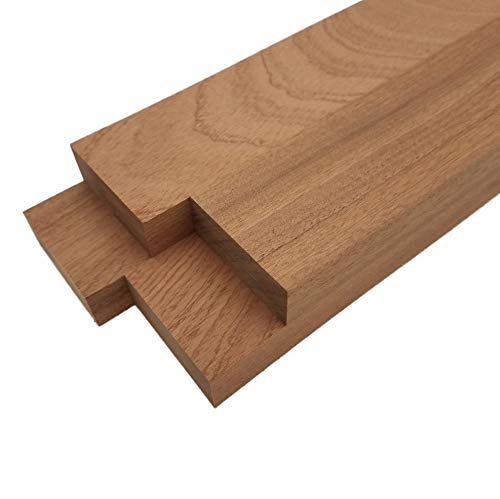
Clear lacquer adds a warm, wet look to both woods. Mahogany commonly reads as a relatively even reddish brown, though its pores and natural color variation remain visible. Sapele can look richer and more dramatic because its interlocked grain reflects light differently across adjacent bands. That effect is a benefit on a feature panel, but it can look busy on a large run of cabinets or trim.
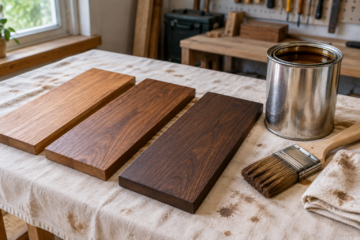
Do not assume a clear coat will preserve the raw color. Test the full finishing schedule on an offcut from the project, including any sealer, stain, and lacquer. Compare the sample after it has dried, not while it is wet. If a lighter, less orange result is important, the test is especially useful: the lacquer’s amber cast can shift the appearance.
Sanding, grain, and surface preparation
Both woods are open-pored. Lacquer can leave those pores visible unless you use a grain filler or apply enough build coats to level the surface. Filler gives a smoother, more polished result, but it adds work and may alter the color. If you want a natural, open-grain look, skip it and accept texture you can feel under your fingertips.
Sapele needs extra attention during sanding. Its interlocked grain can tear rather than cut cleanly, especially when planed or scraped against the grain. Use a sharp cutter, then inspect under low, raking light. Sand through a sensible sequence—typically 120 or 150 grit, then 180, then 220—without skipping grits. On a figured face, take light passes and use a sharp random-orbit sander with dust extraction; stop if you see fuzzy patches or torn fibers. More pressure will not fix torn grain and may leave uneven depressions.
Mahogany is generally easier to prepare, but its pores can hide dust and sanding residue. Vacuum carefully and wipe with a clean, dry cloth before coating. Avoid sanding far beyond 220 grit unless the lacquer maker calls for it: an overly polished surface can reduce mechanical key between coats, and very fine sanding does not close open pores.
Choosing and applying lacquer
Use a lacquer intended for the application method and project location. For a brushed or wiped-on schedule, follow the product directions rather than substituting a spray lacquer; for a sprayed finish, use a compatible clear lacquer for wood. Lacquer is flammable and its vapors are hazardous. Spray only with suitable ventilation, away from flames and ignition sources, and follow the finish’s safety instructions.
Before committing to the whole piece, apply the intended sealer and lacquer to an offcut. Check for adhesion, cloudiness, uneven absorption, and an unwanted color shift. Some oily or contaminated surfaces can cause poor adhesion; if a test coat beads, wrinkles, or stays tacky, stop and identify the cause rather than burying it under more finish. Use only a sealer or barrier coat confirmed compatible with the lacquer system.
For a furniture surface, several thin coats are safer than one heavy coat. Heavy application can sag on vertical surfaces, trap solvent, or produce a rough, uneven film. Follow the label for flash time, recoat window, and sanding between coats. If the finish requires scuff sanding, use the specified grit and remove the dust thoroughly. A sanding block is useful on flat areas; choose a fine nonwoven abrasive pad for light scuffing where a block might cut through an edge.
Which one should you buy?
Choose mahogany if you want a calmer, more consistent appearance and would rather spend less time correcting tear-out or sorting dramatic color bands. It is a sensible choice for a clear-finished piece where the wood should look warm but not dominate the room. It is not automatically flawless: inspect for sapwood, mineral marks, and color variation, and remember that its open pores may need filling for a glass-smooth result.
Choose sapele if you like strong figure and can select boards in person or from a supplier who will show you the actual stock. It can be the better-value buy when a mahogany-like color and bold grain suit the design. It is also fine for a clear finish without grain filler if you are comfortable with visible pores and a more active surface. Pay extra attention to test samples and sanding quality; a clear lacquer will make both good figure and preparation mistakes easier to see.
0 Comments