What's inside
As an Amazon Associate I earn from qualifying purchases. This post may contain affiliate links at no extra cost to you.
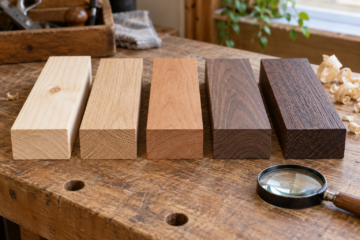
African padauk and sapele can both take clear finishes, but neither is a low-maintenance shortcut to keeping wood looking new in full sun. Padauk starts a vivid orange-red and can darken or brown with light exposure. Sapele is usually reddish brown, with a ribbon-like grain that can change appearance as you move around it. A clear coat slows weathering; it does not reliably stop color change.
For a sheltered door, cabinet, or piece of trim, either species can work well. For an exterior surface in direct sun, the finish system and maintenance schedule matter at least as much as the wood choice. Buy the species for its color and grain, then choose a finish intended for exterior UV exposure.
As an Amazon Associate we earn from qualifying purchases at no extra cost to you.


Our Top Picks
 Minwax Fast Drying Polyurethane Protective Wood FinishQuart4.1 x 4.1 x 5.1 inches1.9 poundsCheck on Amazon
 Minwax Fast Drying Polyurethane Spray11.5 Ounce (Pack of 1)2.7 x 2.7 x 8.15 inches0.9 poundsCheck on Amazon

Quick comparison
| Factor | African padauk | Sapele |
|---|---|---|
| Typical appearance | Bright orange to red when fresh; darkens and browns with age and light | Reddish to medium brown; often has a striped, interlocking figure |
| Clear-finish concern | Color shift can be dramatic; freshly planed wood may stain nearby surfaces | Figure can look uneven under a clear coat; interlocked grain may tear during machining |
| Exterior UV suitability | Finish required; clear coating will not preserve the original orange indefinitely | Finish required; clear coating will not prevent fading or surface degradation |
| Relative cost | Often a premium, especially for clear, color-consistent stock | Often easier to source in larger boards and may cost less, though figured stock can be expensive |
| Good choice when | You want a bold red-orange look and accept color change | You want a warmer brown, prominent grain, and potentially better value |
What UV resistance actually means
Ultraviolet light breaks down lignin at the wood surface, while rain and temperature swings wear away both wood and finish. A clear exterior coating with UV absorbers can slow these changes, but it cannot block all UV or keep the original color indefinitely. Even under a good coating, padauk’s fresh orange can become deeper red-brown. Sapele can lose contrast and turn gray where the coating wears through.
Expect more maintenance on horizontal, south- or west-facing surfaces than on sheltered vertical work. A porch door under an overhang may need only periodic inspection; a sun-exposed tabletop or railing may need a fresh coat every year or two, depending on climate and product. Follow the finish maker’s exposure and recoating guidance rather than assuming one schedule fits all.
Choose by appearance and cost
Choose padauk if the distinctive orange-red color is the point of the project and you are comfortable with it changing. Its color is not a stable paint-like finish. A sample left near a window can help show how the board changes, but glass filters some UV, so it will not predict outdoor aging exactly.
Sapele is the more practical buy when a brown, figured look suits the project and padauk is priced significantly higher. It is not automatically easier to finish: its interlocked grain can produce alternating light and dark bands, and poor sanding or uneven stain can exaggerate them. For a clear finish, many woodworkers skip stain and let the natural figure show. Buy from the same board or batch when color matching matters; boards from different sources can vary substantially.
Prepare the surface carefully
Mill or scrape the surface clean, then sand evenly. A useful starting schedule is 120 grit, followed by 150 and 180; stop at 180 or 220 unless the finish maker calls for something else. Sanding much finer can reduce absorption for penetrating finishes, while stopping too coarse leaves scratches that a glossy clear coat will highlight. Check the surface with raking light before coating.
Padauk dust and fresh-cut color can transfer to hands, rags, and adjacent pale wood. Keep dust collection running, use a suitable respirator, and avoid dragging dusty sanding pads over light-colored work. Sapele’s interlocked grain may tear under a blunt cutter; use sharp tooling and take light cuts, then sand out any defects rather than trying to bury them under finish.
Test the complete finish on an offcut, including the chosen cleaner or sealer. Look for blotching, color shift, poor adhesion, and a surface that feels oily or tacky after curing. Do not rely on a test made with a different finish type.
Choose a clear finish for the exposure
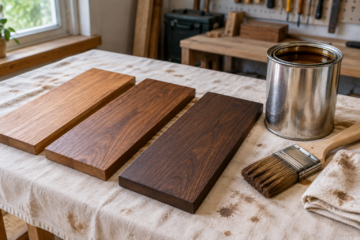
For exterior work, consider a marine or spar varnish formulated with UV absorbers. These flexible coatings are designed for outdoor movement, but they need several coats and regular inspection. A common approach is three to six coats, with sanding between coats as directed by the label. More film thickness generally gives more protection, but thick varnish can crack or peel if water gets underneath or maintenance is delayed. Search for exterior spar varnish with UV protection, then verify that the label permits the intended use and substrate.
For an outdoor surface where a film finish is likely to fail or be difficult to maintain, an exterior penetrating oil can be simpler to renew. It usually offers less long-term film build and may need more frequent reapplication, but it is less prone to peeling. Compare an exterior wood oil with UV protection against the varnish option based on the maker’s maintenance instructions and the project’s exposure.
For indoor furniture away from strong sunlight, a standard clear interior finish may be sufficient; paying for an exterior coating is usually unnecessary. Near a bright window, no clear coating can guarantee that padauk or sapele will retain its original color. If color stability is essential, use a UV-filtering window treatment or choose a pigmented finish instead of relying on a transparent coating.
Application and maintenance
Follow the product label for temperature, humidity, thinning, and recoat times. Applying a coat too thickly can leave runs, a soft surface, or wrinkling; recoating before the previous coat has cured can cause poor adhesion. Stir finishes gently when instructed, especially products containing UV additives, and do not shake a can if that introduces bubbles.
Inspect outdoor work at least twice a year and after harsh weather. Check edges, end grain, joints, and horizontal surfaces first; water enters there early. Recoat while the finish is intact and dulling, not after broad areas have peeled. If it has failed, remove loose coating, sand back to a sound surface, and rebuild the system. Padauk is not worth buying at a premium solely for supposed UV immunity, and sapele is not a poor choice because its grain needs careful preparation. The sensible choice is the wood whose changing color you can live with and a finish you are willing to maintain.
0 Comments