What's inside
As an Amazon Associate I earn from qualifying purchases. This post may contain affiliate links at no extra cost to you.
For painted cabinet shelves, pine is usually the lower-cost choice, while poplar is the more predictable one. Both can work well under paint, but neither is automatically flat, dent-proof, or ready for a durable finish. The right pick depends on shelf span, expected load, and how much prep you’re willing to do.
As an Amazon Associate we earn from qualifying purchases at no extra cost to you.

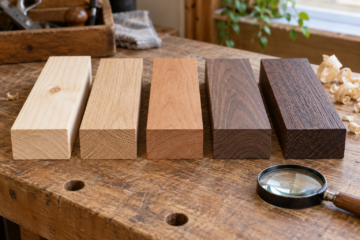
Pine vs. poplar at a glance
| Factor | Pine | Poplar |
|---|---|---|
| Cost and availability | Usually cheaper and widely sold | Often costs more; availability varies |
| Surface consistency | Knots, resin, and uneven grain are common | Generally uniform and knot-free in clear stock |
| Dent resistance | Soft; dents readily | Still a relatively soft hardwood, but typically holds up better |
| Paint preparation | May need knot sealing and extra filling | Usually easier to prime and paint evenly |
| Best fit | Budget shelves with light to moderate use | Visible shelves or cabinets that will see more wear |
When pine makes sense
Pine is a sensible buy for pantry shelves, utility cabinets, and other spots where low cost matters more than a flawless surface. It is easy to cut and widely available in shelf boards and dimensional lumber. If a shelf will carry folded linens or light supplies, clear, straight pine can serve well after proper preparation.
Inspect each board before buying. Avoid pieces with a pronounced bow, twist, loose knots, or cracks at the ends. A knot may look harmless at first, then bleed resin through paint or move as the wood dries. If the shelf face will be visible, choose boards with tight knots—or pay more for clear stock. Seal knots with a compatible shellac-based primer before applying a full coat of primer.
Pine dents easily. A dropped can or a heavy object dragged across the shelf can leave a mark even under several coats of paint. Paint protects the surface from scuffs and moisture, but it does not make soft wood hard. For a low-traffic cabinet, that may be an acceptable trade-off; for daily-use kitchen shelves, poplar or a more durable shelf material may be worth the extra cost.
When poplar is worth the extra cost
Poplar is a good choice when you want a smoother, more consistent painted finish with less sorting and patching. Clear poplar generally has fewer knots than common pine, and its relatively even grain makes seams, edges, and face surfaces easier to prepare. It is often used for painted trim and cabinet parts for the same reason.
Do not mistake “hardwood” for “hard.” Poplar is harder than typical pine, but it can still dent and scratch in service. It can also have green, gray, or purple-brown streaks. Those colors are usually hidden by opaque paint, but they may show through if the primer is thin or the finish coat is translucent.
Poplar costs more, and the price difference varies by region and board quality. If the shelves are short, hidden behind doors, and lightly loaded, the improvement may not justify the added expense. For a run of open shelves at eye level, the more uniform stock can save time in filling and sanding.
Strength depends more on the design than the species
Neither pine nor poplar will prevent a shelf from sagging if it is too long or too thin. Thickness, depth, span, support placement, and load all matter. A 3/4-inch board spanning 36 inches is much more likely to sag under books or dishes than the same board supported at 24 inches. Add a center bracket, shorten the span, or use a thicker or stiffer shelf construction if the load is substantial.
As a practical check, set the board on its intended supports before painting and load it gradually with the items it will hold. Look for visible deflection and check that the shelf stays level. This is not a substitute for a structural calculation when the shelf carries heavy equipment, but it can reveal an obviously inadequate layout before you spend time finishing it.
Prep both woods for a lasting paint job
Start with dry, straight stock. If the lumber is coming from a cold or damp store, let it acclimate indoors for several days before cutting. Cut the shelves slightly undersize where needed to allow a fit without forcing bowed wood into place.
Sand faces and edges with 120- or 150-grit paper to remove mill marks, then finish with 180 grit. Going much finer can make some surfaces less receptive to primer. Ease sharp edges with a light pass of sandpaper; paint tends to wear through first on crisp corners. Fill nail holes and small defects with a paintable wood filler, let it dry fully, and sand it flush.
For pine with knots, seal those spots before general priming. On either species, use a quality bonding primer suited to bare wood, following its label for application and recoat times. A wood primer for interior paint helps even out absorption and gives the topcoat a reliable base. Apply two thin finish coats rather than one heavy coat, and allow the stated cure time before loading the shelves. Dry-to-touch is not the same as fully cured; a fresh painted surface can stick to objects or scuff under weight for days.
For a smooth finish, use a fine sanding sponge or 220-grit paper to knock down dust nibs after the primer dries, then remove the dust before painting. A water-based cabinet or trim paint is a practical option for indoor shelves because cleanup is simple and it is made for painted woodwork. Check the label for recommended coats and cure time rather than relying on a fixed schedule.
What to buy for your cabinet
Choose pine if the shelf is hidden, lightly used, and you can inspect the boards and handle knot sealing. Choose poplar when the shelves are prominent, you want fewer surface defects, or the extra prep time on pine would cost more than the material savings. In either case, reject warped stock and design the supports for the load instead of expecting the wood species to compensate.
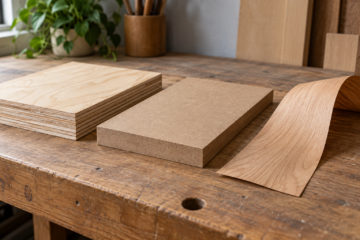
If the shelf will hold heavy dishes or books over a long span, consider a plywood shelf with a solid-wood front edge rather than a wide solid-wood board. Good plywood is more dimensionally stable across its width, and the edging hides the plies. For lighter cabinets, properly selected pine is not a compromise; it is simply the cheaper option when its knots, softness, and finish requirements fit the job.
0 Comments