What's inside
As an Amazon Associate I earn from qualifying purchases. This post may contain affiliate links at no extra cost to you.
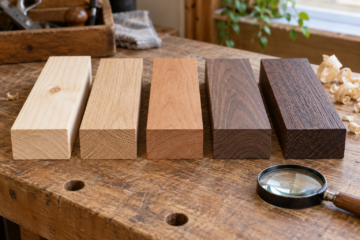
For painted kitchen cabinet frames, both hickory and white ash are strong hardwoods, but they do not behave the same under paint. White ash is usually the easier, more predictable choice. Hickory is tougher and more visually assertive, but its uneven density, tight grain, and tendency toward color variation make it more demanding to prepare.
The best choice depends on whether you are building face frames from scratch, replacing damaged parts, or painting existing cabinets. If the finished surface must look smooth and uniform, neither species is as forgiving as poplar or soft maple. Between the two, however, ash generally takes the simpler path.
As an Amazon Associate we earn from qualifying purchases at no extra cost to you.


Our Top Picks
 AquaCoat Water-Based White Cabinet Wood Grain Filler Gel16 Fl Oz (Pack of 1)10 x 10 x 10 inches1.2 poundsCheck on Amazon
Key differences between hickory and white ash
| Characteristic | Hickory | White ash |
|---|---|---|
| Approximate Janka hardness | 1,820 lbf | 1,320 lbf |
| Grain and pores | Strong, variable grain with prominent pores | Open, usually straighter grain with prominent pores |
| Machining | Hard on cutters; can tear out at changing grain | Easier to rout, plane, and sand |
| Paint preparation | Needs careful sanding and high-build priming | Needs pore filling or adequate primer for a smooth finish |
| Typical painted appearance | Grain and color variation may remain visible | More uniform, though pores can still telegraph through |
| Cost and availability | Can be costly, with more waste from defects or color variation | Often easier to source in consistent cabinet-grade stock |
When hickory makes sense
Hickory is the harder and more impact-resistant material. That matters on face frames that get knocked by chairs, vacuum cleaners, and cookware. It also holds screws and fasteners well, provided you drill proper pilot holes. For a heavy-use kitchen, hickory offers excellent durability.
The problem is that hickory is not uniform. Its light sapwood and darker heartwood can occur in the same board, and the grain can change direction abruptly. Those changes are attractive under clear finish but can look like patchy shadows under white or light-colored paint. Dense latewood can also sand differently from softer adjacent wood, leaving a slightly ridged surface if you work too aggressively.
Hickory’s hardness makes routing and crosscutting less forgiving. Use sharp carbide tooling, support the work, and take shallow passes on profiles. Tear-out at inside corners or rail-and-stile shoulders may require extra filling. A frame made from hickory can look excellent when the grain is intentionally part of the design, but it is a poor choice if you expect one coat of primer and two coats of paint to hide the wood.
Why white ash is usually easier
White ash is still a hard, durable cabinet wood, but it is easier to cut, sand, and shape than hickory. Its grain is commonly straighter and its color is often more consistent, making it easier to sort boards for a painted project. It is also less punishing on router bits and saw blades.
Do not mistake easier preparation for a naturally smooth painted surface. Ash is ring-porous, with large open pores that can remain visible after painting. On a satin or eggshell finish, these pores may show as small depressions or lines, especially when viewed across a door or frame in strong side lighting.
For a smooth ash frame, use a water-based wood grain filler or a suitable high-build surfacer before final primer. Grain filler is most important on broad, flat areas. On narrow face-frame members, two coats of high-build primer may be enough if a little texture is acceptable.
Surface preparation that prevents failures
Start with clean, dry wood. Sand new parts to 120 or 150 grit, then finish at 180 grit. Going much finer can burnish the surface and reduce primer adhesion, while stopping at 80 grit can leave scratches that remain visible through light paint.
Break sharp edges slightly with a sanding block. A small radius—about 1/32 to 1/16 inch—is important because paint tends to pull away from a razor edge. Bare sharp edges are a common location for early chipping.
Fill dents, end-grain gaps, and small defects with a quality paintable wood filler. Let it dry fully, then sand it flush. Do not rely on primer to fill deep scratches, open joints, or router tear-out. Those defects may shrink back or remain visible after the topcoat.
Remove dust with a vacuum and a clean, slightly damp microfiber cloth. Avoid soaking the wood, especially at joints. Moisture can raise the grain and complicate bonding.
Primer and paint choices
Use a bonding or cabinet primer rated for bare wood, not a general wall primer. Oil-based primers seal porous wood well, but they smell strongly and take longer to dry. Waterborne acrylic-alkyd and other cabinet primers clean up more easily and can perform well when applied to properly sanded wood.
Apply two thin primer coats rather than one heavy coat. Allow the stated recoat time, then sand lightly with 220 grit. On ash, inspect under raking light after the first coat. If pores or sanding scratches remain, apply another surfacing coat instead of burying the problem under finish paint.
Choose a cabinet enamel that cures hard. Apply with a fine synthetic brush, a short-nap microfiber roller, or a properly adjusted sprayer. Keep coats thin; heavy paint can sag on vertical frames and stay soft for days. Even a good coating may need two to four weeks before it reaches practical household hardness.
Which wood should you buy?
Choose white ash when you want a durable hardwood frame, easier machining, and a more consistent painted result. It is the sensible option for most painted kitchens, particularly with white, cream, or pale gray finishes.
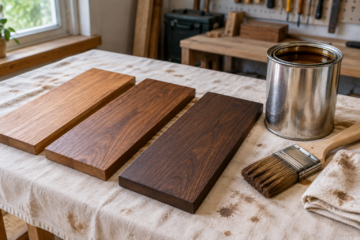
Choose hickory when impact resistance matters most, the material is already available at a good price, or you deliberately want some grain and color variation to remain visible. Before committing, paint a sample made from the actual stock. A six-by-six-inch test piece will reveal more than a species description, especially when the finish is light and the kitchen has strong overhead lighting.
If the goal is simply the smoothest and least expensive painted frame, compare both species with poplar or soft maple before buying. Hickory and ash are entirely workable, but their strength is more useful than necessary for many cabinet interiors—and their pores and grain add preparation work that cheaper woods can avoid.
0 Comments