What's inside
- Choosing Between Birch and Alder for Honey-Toned Cabinet Stains
- Birch vs. alder at a glance
- How honey-toned stains behave
- Preparation determines more than the stain
- Should you use wood conditioner?
- Solid wood, veneer, and construction differences
- Topcoats and long-term durability
- Which wood should you buy?
- Related Guides
- Choosing Between Birch and Alder for Honey-Toned Cabinet Stains
- Birch vs. alder at a glance
- How honey-toned stains behave
- Preparation determines more than the stain
- Should you use wood conditioner?
- Solid wood, veneer, and construction differences
- Topcoats and long-term durability
- Which wood should you buy?
- Related Guides
As an Amazon Associate I earn from qualifying purchases. This post may contain affiliate links at no extra cost to you.
Our Top Picks


Choosing Between Birch and Alder for Honey-Toned Cabinet Stains
Birch and alder can both produce warm, honey-colored cabinets, but they do not accept stain in the same way. Birch is harder, denser, and more closed-grained. Alder is softer, more porous, and usually more uniform in color. That difference matters more than the name of the stain on the can.
For a predictable honey finish, alder is generally the easier choice. It takes warm brown, amber, and golden stains with less blotching and has a subdued grain that resembles a lightly colored hardwood. Birch can look excellent, but it often develops dark patches, especially on end grain, around knots, or where sanding pressure varies.
As an Amazon Associate we earn from qualifying purchases at no extra cost to you.


The cheaper option is not automatically the wrong one. If the cabinets will be painted, or if you are using a solid or heavily pigmented finish, inexpensive alder or paint-grade birch may be perfectly adequate. The comparison becomes important when the wood itself will remain visible.
Birch vs. alder at a glance
| Characteristic | Birch | Alder |
|---|---|---|
| Typical appearance | Light cream to pale tan with subtle grain | Pinkish tan to light brown with soft, understated grain |
| Hardness | Harder; resists small dents better | Softer; dents and corner damage more easily |
| Stain behavior | More prone to blotching and uneven absorption | Usually more even, though end grain can still darken |
| Grain character | Subtle but sometimes visibly varied | Quiet, smooth, and relatively uniform |
| Best use | Durable doors, drawers, and budget-friendly stained parts with careful prep | Consistent stained cabinetry and rustic or clean, low-grain looks |
How honey-toned stains behave
“Honey” is not a single color. A light golden stain may leave both species looking natural, while an amber or medium-brown product can push alder toward orange and make birch look muddy if it absorbs unevenly. Oil-based stains usually add more amber and deepen over time. Water-based stains often preserve a lighter, cleaner color but can raise the grain and may look less rich.
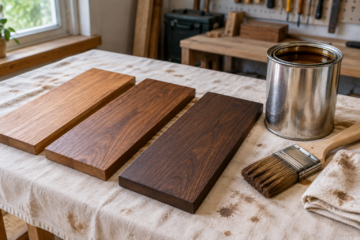
On alder, a honey stain tends to emphasize the wood’s natural warmth without creating a dramatic grain pattern. On birch, the same stain may appear lighter across the face and darker near joints, edges, and porous areas. A gel stain can reduce that difference because it stays closer to the surface instead of soaking deeply. It is worth comparing honey-toned gel stains if you are working with birch or mixed cabinet parts.
Always test the actual door, not just a loose sample board. A cabinet door may contain face grain, end grain, veneer, filler, and glue squeeze-out. Each reacts differently. Apply at least two complete test panels, including the clear topcoat, because polyurethane or waterborne finish can make a honey color look noticeably darker and warmer.
Preparation determines more than the stain
Sand bare wood evenly through the grits. For most cabinet doors, 120 grit followed by 150 or 180 grit is a practical stopping point. Sanding birch much finer than 180 grit can close the surface and make the stain lighter or streakier. Alder is more forgiving, but over-sanding still creates uneven absorption.
Use a firm sanding block on flat areas and avoid pressing hard with a random-orbit sander. Excess pressure can compress the fibers in spots, creating pale circles that remain visible after staining. Break sharp edges with a few light hand passes. A razor-sharp edge absorbs stain differently and is more likely to show wear.
Remove dust with a vacuum and a clean, dry cloth. Avoid leaving oily residue from household cleaners. Glue is a common failure point: a thin smear across a rail or around a pocket-hole joint may not be obvious before staining, but it will appear as a light, stubborn patch afterward. Scrape or sand it away before applying color.
Should you use wood conditioner?
Birch usually benefits from a pre-stain conditioner when using a penetrating oil stain. It can reduce the worst blotches, but it may also make the finished color lighter. Conditioner is not a substitute for consistent sanding, and it does not guarantee an even result on end grain.
Use a compatible conditioner from the same finish system as the stain, and follow its recoat window. Some products must be stained within a short period, often roughly 15 minutes to 2 hours. If you wait too long, the surface may not accept the color evenly. Compare pre-stain wood conditioner options if birch is your choice.
Alder often needs no conditioner with a thin, even stain coat, but it can still blotch around knots and end grain. Apply stain with a lint-free cloth or brush, work in manageable sections, and wipe off excess consistently. Leaving one area wet for five minutes longer than another can produce visible bands. For a deeper honey color, use a second controlled coat rather than allowing the first coat to dry as a puddle.
Solid wood, veneer, and construction differences
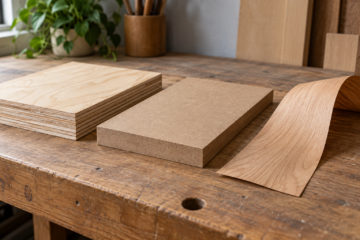
Many cabinet doors are not made entirely from solid lumber. Birch plywood may have a thin birch veneer, while alder cabinets can combine solid frames with alder veneer panels. Veneer can be sanded through surprisingly quickly. Use light pressure and stop at 150 or 180 grit; a few extra passes can expose the substrate and create a permanent color mismatch.
Drawer fronts and doors may also come from different boards. Even within one species, one alder panel may be pinker or more figured than another. Buy or prepare enough material to make a full test set, and arrange visible parts by color before staining. Do not expect stain to make naturally mismatched boards identical.
Topcoats and long-term durability
Once the color is dry, protect it with a cabinet-grade clear finish. Waterborne polyurethane keeps honey tones relatively clear and dries quickly. Oil-based polyurethane adds amber color and can make a pale stain look richer, but it increases yellowing and requires longer drying time. A sprayed lacquer or conversion finish is common in professional shops, but it requires suitable ventilation and equipment.
Apply two or three thin coats, sanding lightly between coats only when the product directions call for it. Do not judge durability by hardness the next morning; many finishes need several days or longer to cure. A tougher finish will not prevent alder from denting, so use felt bumpers and avoid dragging hardware or tools across the doors.
Which wood should you buy?
Choose alder if your priority is an even, soft-looking honey finish with straightforward preparation. It is the better choice for large visible runs of cabinets where color consistency matters more than dent resistance.
Choose birch when you want harder-wearing faces, already have birch components, or need a lower-cost cabinet material and are willing to test and condition it. For birch, a gel stain or a toner-style finish is often safer than a very thin penetrating stain. You can compare water-based cabinet clear coats for a less amber result, or use an oil-based topcoat when extra warmth is intentional.
The decisive step is not choosing the most expensive species. It is making a full-size sample with the exact sanding schedule, stain, number of coats, and topcoat you plan to use. If that sample shows blotches or an unwanted orange cast, change the process or the wood before committing to every cabinet door.
0 Comments