What's inside
As an Amazon Associate I earn from qualifying purchases. This post may contain affiliate links at no extra cost to you.
Beech and birch are both pale, fine-grained hardwoods that can make a strong furniture frame under clear finish. The practical difference is less about which is “better” and more about the look you want, the stock available, and how carefully you can control moisture and surface preparation. Beech is usually the straightforward choice for a sturdy, uniform frame; birch is often a good-value alternative, but its color and grain can vary more, especially across species and boards.
As an Amazon Associate we earn from qualifying purchases at no extra cost to you.

Quick comparison
| Factor | Beech | Birch |
|---|---|---|
| Appearance under clear coat | Usually even, pale cream to pinkish tan | Ranges from pale cream to light reddish brown; color can vary by species and board |
| Hardness | About 1,300 lbf Janka for European beech | About 1,260 lbf for yellow birch; paper birch is softer, around 910 lbf |
| Machining | Machines and turns cleanly, but can move with moisture changes | Machines well; figured or wavy grain can tear out |
| Best fit | Uniform, hard-wearing frames and turned parts | Cost-conscious frames where the selected boards look consistent |
| Main caution | Not especially stable when humidity changes | “Birch” may describe several species with different color and hardness |
How they look under clear finish
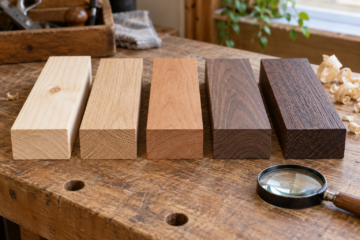
Beech tends to give a frame a calm, consistent appearance. Its fine, diffuse pores and subtle grain usually read as a smooth field rather than a strong pattern. Freshly sanded beech can look nearly white, then warm toward cream or pinkish tan under a clear coat. Steam-bent or steamed beech may be noticeably pinker.
Birch can be just as pale, but it is less predictable from a species name alone. Yellow birch often has a warm, slightly reddish cast; paper birch is generally lighter. Individual boards can differ, and some show curly or wavy figure. A clear coat makes color differences easier to see, not easier to hide. If the frame will be viewed as one continuous piece, compare boards side by side after sanding and dampening a small area with mineral spirits or water to preview the finish. Water can raise the grain, so sand lightly again before coating.
Strength and stability in a frame
Both woods are plenty hard for most chair, table, and cabinet frames when the design and joints are sound. Janka figures are useful for comparing dent resistance, but they do not tell you whether a rail or leg will split. Grain direction, member size, joint fit, and defects matter more. Avoid knots, checks, and short grain near a tenon, screw, or narrow leg section.
Beech has a reputation for strength and is widely used for chairs and bent parts. Its weakness is movement: it can shrink and swell noticeably as humidity changes. Birch also moves with moisture, so neither species should be treated as immune to seasonal gaps or loosened joints. Buy kiln-dried stock, acclimate it in the shop, and aim for roughly 6–8% moisture content for typical indoor furniture in a heated home. Check several boards with a moisture meter rather than relying only on a supplier’s label.
What to inspect before buying
Choose the actual boards, not just the species description. For clear-coated furniture, look at the full length for color shifts, mineral streaks, small knots, and grain that changes direction. A frame may use short pieces, but differences can still stand out across matching legs or rails. Buy a little extra so you can select parts from the most consistent areas.
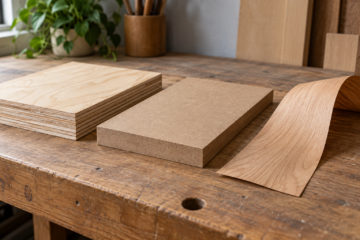
For birch, confirm whether the seller means yellow, paper, or another birch species, and ask whether the stock is solid wood or birch-faced plywood. For beech, check whether it has been steamed if a pale, neutral tone matters. If appearance is the priority, a sample board finished with the intended topcoat is more reliable than judging raw lumber. A pinless wood moisture meter can help screen stock, though readings vary with species, thickness, and meter calibration.
Machining, joinery, and common failures
Both species glue well when the surfaces are freshly prepared and the joints fit closely. Dry-fit each joint before applying adhesive; a gap is not fixed by adding more glue. For a frame, use a furniture-grade PVA wood glue suited to interior use, and follow its open and clamp times. Tight clamps should close the joint without bowing a rail or squeezing out nearly all the adhesive.
Beech cuts cleanly with sharp tools, but its movement can stress rigid assemblies if the design ignores seasonal expansion. Birch also cuts cleanly, though curly grain may tear out when planed or routed. Use a sharp cutter, take light passes, and test the direction of cut on scrap. Predrill screws near edges: even hard wood can split, particularly in narrow rails. A pilot hole should be close to the screw’s root diameter, adjusted for the screw and wood density.
Sanding and clear-coat preparation
Start with the least aggressive grit that removes milling marks—often 120 or 150—then progress through 180 to 220. Sanding to very fine grits can reduce absorption and make some finishes look less even; follow the finish maker’s instructions. Remove cross-grain scratches before moving on, because clear finish can make them conspicuous. Ease sharp edges slightly so the coating does not pull thin at corners.
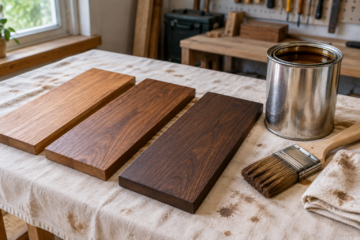
Both woods can show blotchy or uneven color with some penetrating oil and stain, especially when boards differ in density or figure. If you want the natural pale look, use a clear waterborne or oil-based topcoat on a test piece rather than adding stain to “even out” the wood. A water-based finish tends to preserve a lighter color; oil-based finishes usually add amber warmth. For a frame that will take knocks, consider a durable furniture-grade clear coat such as waterborne clear wood finish for furniture. Apply the specified number of coats and allow full cure before regular use; dry-to-touch is not the same as cured.
Which should you choose?
Choose beech if you want a fairly uniform, pale frame, need a proven furniture hardwood, and can keep the wood dry and properly acclimated. It is a sensible option for chairs and frames with turned or shaped parts. Choose birch if it is cheaper or easier to source locally and you can inspect the boards for matching color and grain. For a simple painted frame, either can work, and paying extra for beech may not buy a meaningful advantage once the wood is hidden.
For a clear-coated frame, the best choice is the better-matched, straight-grained, dry stock—not automatically the species with the better reputation. If two boards look equally good and cost similarly, beech is the safer pick for a uniform natural finish; if birch is noticeably less expensive, selected carefully, it is a reasonable buy.
0 Comments