What's inside
As an Amazon Associate I earn from qualifying purchases. This post may contain affiliate links at no extra cost to you.
Elm and ash can both make excellent clear-coated furniture, but they produce different-looking surfaces and behave differently during preparation. Ash is the easier, more predictable choice when you want a crisp open grain and a light, even appearance. Elm is the better choice when you want movement: interlocked grain, cathedral patterns, color variation, and a more individual piece of furniture.
For a dining table, cabinet, or desk where the wood will remain mostly natural, the decision is less about strength than about grain character, board selection, and how carefully the surface is prepared. A clear finish protects both species, but it will not hide poor sanding, uneven absorption, or unattractive boards.
As an Amazon Associate we earn from qualifying purchases at no extra cost to you.


Our Top Picks
 AquaCoat Water-Based White Cabinet Wood Grain Filler Gel16 Fl Oz (Pack of 1)10 x 10 x 10 inches1.2 poundsCheck on Amazon
Grain and appearance
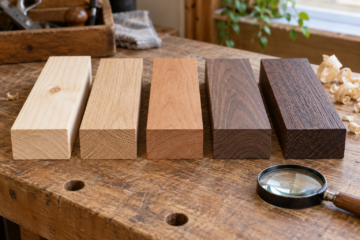
Ash usually has a straight, prominent grain with large open pores. Its color ranges from nearly white to pale tan, sometimes with a slightly gray or olive cast. Under a clear water-based finish, ash stays relatively light. Oil-based finishes add amber color and make the grain look warmer and deeper.
Elm is more variable. The grain can be straight, wavy, or strongly interlocked, and boards often show distinctive swirling or ribbon-like figure. The pores are visible, but the surface does not always look as evenly striped as ash. Elm commonly includes tan, brown, gray, and sometimes reddish areas. That variation is attractive on a single board, but matching several boards for a uniform tabletop takes more sorting.
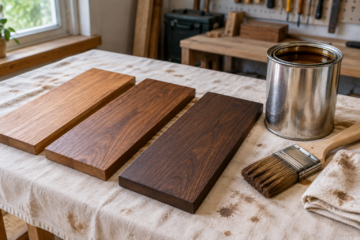
Clear coating does not make the two species look identical. A water-based finish preserves a pale appearance but can make ash look slightly stark. An oil-based varnish or hardwax oil gives both woods a warmer appearance, with elm usually showing more color variation. If you want the lightest result, test the actual finish on an offcut; photographs and sample boards from another log are not reliable enough.
| Characteristic | Ash | Elm |
|---|---|---|
| Grain pattern | Open, straight, pronounced | Variable, often interlocked or figured |
| Color consistency | Usually more uniform | More variation between boards |
| Clear-coat appearance | Clean, bright, strongly grained | Warm, lively, more individual |
| Ease of sanding | Generally straightforward | Interlocked grain can tear out |
| Best reason to choose it | Predictable modern or Scandinavian look | Distinctive figure and natural character |
Which wood is easier to finish?
Ash is usually easier for a first clear-coating project. Its grain direction is easier to read, and boards tend to produce a more consistent result after sanding. The open pores do show through the finish, though. If you want a flat, glass-smooth surface rather than visible texture, ash may need a grain filler.
Elm can be equally workable, but interlocked grain creates a greater risk of tear-out. A hand plane or aggressive power planer can lift fibers where the grain reverses direction. Those damaged areas may not be obvious until finish is applied, when they appear as dull patches or dark streaks. Use sharp cutters, take light passes, and rely on sanding for final correction.
Neither species is especially difficult to glue, but elm’s irregular grain can make edge joints look less continuous. For a tabletop, arrange boards so the grain direction and color changes look intentional. Dry-clamp the assembly first. A clear finish will emphasize mismatched boards rather than blend them together.
Sanding and surface preparation
Begin with the lowest grit needed to remove milling marks. On properly surfaced stock, 120 grit is often enough. Sand through 150 and 180, then stop at 180 or 220 depending on the finish. Going much finer than 220 can burnish the surface and reduce absorption, especially with oil finishes. Use a random-orbit sander on broad faces, but finish with hand sanding in the grain direction at 180 or 220 grit.
Inspect the wood under strong, raking light. Cross-grain scratches are easy to miss on pale ash and on elm’s busy figure. Wipe the surface with mineral spirits to reveal scratches and glue residue before the solvent evaporates. Do not use water for this inspection if the piece contains water-sensitive glue squeeze-out or unfinished end grain that could swell unevenly.
Elm’s interlocked grain deserves extra care at edges and around knots. A torn area should be sanded locally with a hard sanding block rather than attacked with a soft pad, which can round over the surrounding surface. Break sharp edges lightly—about one or two passes with 180 grit—so they do not absorb an excessive amount of finish or chip during use.
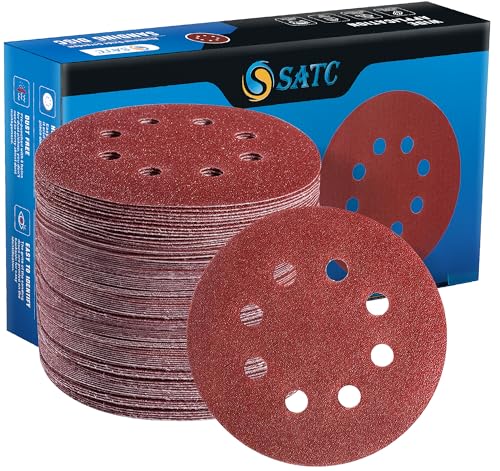
For sanding supplies, a random-orbit sander and wood sanding discs are usually more useful than a detail sander. Replace discs when they stop cutting; a worn disc creates heat and can polish the surface instead of smoothing it.
Choosing the clear finish
Water-based polyurethane is a good choice when you want ash or elm to stay close to its raw color. It dries quickly, usually allowing another coat in roughly 2 to 4 hours, but the fast drying time makes lap marks and brush texture more likely. Use thin coats and avoid going back over areas that have started to set.
Oil-based polyurethane warms the wood and generally gives more working time. Allow about 8 to 24 hours between coats, depending on temperature, humidity, and the product. It can highlight elm’s color variation beautifully, but it may make pale ash noticeably amber. Three coats is a practical minimum for a furniture top; four or more thin coats provide additional film thickness where spills and abrasion are expected.
Hardwax oil leaves a more natural-looking, low-build surface and is easy to repair locally. It does not provide the same thick barrier as a conventional film finish, so it is less forgiving on a heavily used dining table. For that application, compare hardwax oil furniture finishes with a polyurethane rather than assuming either is universally better.
If the pores are part of the look, do not fill them. If you want a perfectly smooth top, apply a compatible wood grain filler after sanding and before the clear coat. Ash usually needs more filler than elm for a uniformly flat result, but filler can reduce the natural depth of the grain.
Common failures and practical choices
The most common mistake is judging the wood before applying finish. Keep samples from every board and apply the complete finish schedule to them. A clear coat can darken end grain, expose glue spots, and make one board appear much warmer than its neighbor.
Choose ash when you need predictable color, strong visible grain, and a clean contemporary appearance. Choose elm when distinctive figure and variation matter more than uniformity. The cheaper option is fine when the furniture is painted, heavily stained, or built from small parts where grain matching is unimportant. For a natural clear-coated top, however, better board selection usually matters more than a small difference in species price.
0 Comments