What's inside
As an Amazon Associate I earn from qualifying purchases. This post may contain affiliate links at no extra cost to you.
Our Top Picks

Choosing Between Hickory and Ash
For a durable, oil-finished work surface, both hickory and ash are capable hardwoods. The better choice depends less on maximum hardness than on how the surface will be used, how much movement you can tolerate, and how easily you want to machine and refinish it.
Hickory is harder, denser, and usually more wear-resistant. It stands up well to dropped tools, clamps, abrasion, and repeated handling. Ash is slightly softer but still a strong, tough hardwood. It is generally easier to cut, plane, sand, and glue, and it often costs less—especially when sold as common-grade boards.
As an Amazon Associate we earn from qualifying purchases at no extra cost to you.


For a general-purpose shop top, assembly table, or workbench, ash is often the better value. Choose hickory when the surface will see unusually heavy abuse or when you specifically want its high contrast and dense, hard-wearing character.
| Characteristic | Hickory | Ash |
|---|---|---|
| Typical Janka hardness | About 1,880 lbf | About 1,320 lbf |
| Workability | Harder on blades and abrasives | Generally easier to machine |
| Impact resistance | Excellent | Very good |
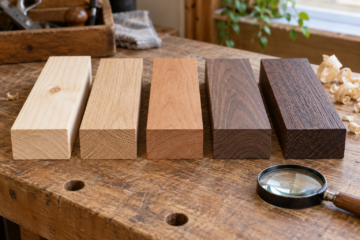
| Grain and appearance | Strong contrast, sometimes irregular | Open, straight grain with a lighter look |
| Oil maintenance | Needs regular renewal in working areas | Needs regular renewal in working areas |
| Relative cost | Often higher, depending on grade | Often the cheaper option |
Hardness, Dents, and Real-World Wear
Hickory’s higher Janka rating gives it a clear advantage against dents and surface bruising. A heavy steel tool dropped on hickory is less likely to leave a deep mark than on ash. That does not make hickory damage-proof. Sharp edges can still gouge it, and a hard surface can transfer impact into the tool or workpiece instead of absorbing it.
Ash is not a fragile substitute. It is tough, resilient, and commonly used for tool handles, where shock resistance matters more than maximum hardness. On a bench, ash may pick up dents sooner, but those dents are usually cosmetic and can be sanded out during maintenance. If the surface will be covered with sacrificial pads or used for light assembly, paying extra for hickory may offer little practical benefit.
Neither species is a good choice for leaving wet or dirty for long periods. Oil slows water absorption but does not create a waterproof film. Glue squeeze-out, metal filings, and damp rags can stain an unfinished or poorly maintained surface.
Movement and Panel Construction
Both woods expand and contract across their width as indoor humidity changes. Build the top from properly dried lumber, and let the boards acclimate in the shop for at least several days—one to two weeks is safer for thick stock. A moisture content around 6% to 9% is typical for many heated indoor shops, but the correct target depends on your local climate.
Use straight, stable boards and avoid including pieces with severe knots, reaction wood, or obvious twist. Narrower strips, roughly 2 to 4 inches wide, usually produce a more stable glued panel than a few very wide boards. Alternate growth-ring orientation only if it helps the boards lie flat; ring alternation is not a substitute for dry, well-machined stock.
Hickory’s density makes jointing and glue-up less forgiving. Dull blades can burn it, and excessive clamping pressure can force a panel out of alignment. Ash machines more easily, but its open pores can make glue squeeze-out harder to clean if it is allowed to dry. Use a sharp carbide woodworking planer blades setup for either species, particularly when working with rough or interlocked grain.
Sanding and Surface Preparation
Flatten the glued panel before sanding. A router sled, wide-belt sander, or carefully adjusted planer can work, but do not run a wide, heavy top through a small planer unless you can support it safely. After flattening, sand through 80, 120, and 150 grit. Stop at 150 or 180 grit for most oil finishes.
Going much finer than 180 grit can burnish the surface and reduce oil penetration, especially on dense hickory. Remove dust with a vacuum and a clean, slightly damp cloth or tack cloth compatible with the finish. Do not flood the surface with water to “raise the grain” unless you plan to let it dry fully and sand again; that extra step is rarely necessary for an oil-finished workbench.
Ease exposed edges with a small roundover, approximately 1/16 to 1/8 inch. A sharp edge chips more easily and feels uncomfortable against a forearm. Hickory’s hard fibers can splinter around end grain, so inspect corners carefully before finishing.
Choosing an Oil Finish
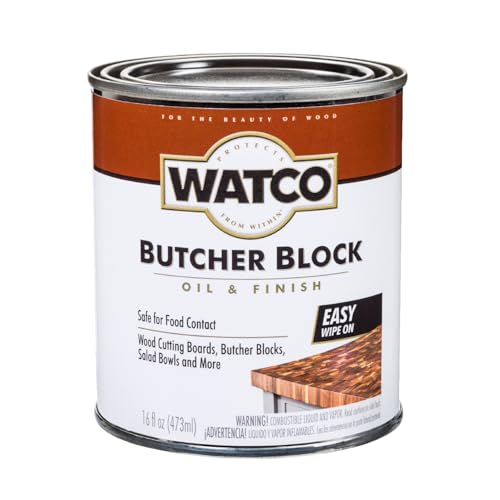
For a work surface, use a penetrating hardwax oil, polymerized tung oil, or a wiping varnish/oil blend rather than raw cooking oil or straight mineral oil. A finish containing resin or wax offers better resistance to dirt and moisture while remaining repairable. If food contact is not part of the use case, a durable hardwax oil wood finish is a practical choice.
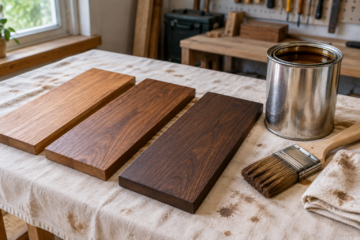
Apply thin coats. Flood the first coat only as directed by the manufacturer, then wipe off all excess after the stated soak time—often 10 to 30 minutes. Pooled oil can remain sticky for days, particularly in cool conditions. Two or three thin coats are usually more reliable than one heavy coat. Allow at least 24 hours between coats unless the label specifies otherwise, and give the completed surface several days to harden before heavy use.
Test the finish on an offcut first. Ash’s open pores may absorb noticeably more product than hickory, while hickory can show uneven sheen where dense and porous grain meet. If you want a smoother feel, a light hand sanding with 320 grit between cured coats can help, but do not sand through the finish on edges.
Maintenance and Repair
Wipe spills promptly and clean with a damp cloth and mild soap. Avoid soaking the top and avoid household cleaners containing ammonia, bleach, or strong solvents. Recoat high-use areas when water no longer beads briefly or when the surface looks dry and feels rough. Depending on use, that may be every 6 to 18 months.
Small dents can often be improved by placing a damp cloth over the mark and applying a warm iron for a few seconds at a time. This raises compressed fibers, but it will not fix torn grain or a deep cut. Let the area dry, sand it level with 120- to 180-grit paper, and apply matching oil. Keep woodworking sanding blocks and assorted grit paper available for these repairs; a power sander can quickly create a low spot.
Dispose of oil-soaked rags safely. Lay them flat outdoors to dry, or store them submerged in water in a sealed metal container until disposal. Never leave crumpled oil rags in a pile.
Which One Should You Buy?
Buy ash if you want a strong, attractive, easier-to-build top at a reasonable price. It is the sensible choice for most home workshops, especially when a replaceable hardboard or plywood sacrificial panel will cover the working area.
Buy hickory if maximum dent resistance matters, you expect hard daily use, or you prefer its dramatic grain enough to justify the added machining effort and cost. In either case, construction quality, dry lumber, a flat glue-up, and regular oil maintenance will matter more than the species difference alone.
0 Comments