What's inside
As an Amazon Associate I earn from qualifying purchases. This post may contain affiliate links at no extra cost to you.
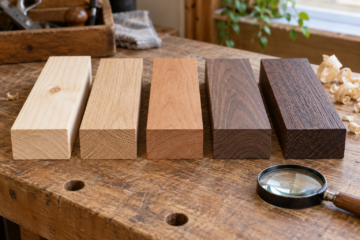
Choosing between sapele and white oak under a satin clear coat is mostly a decision about color, grain, and how much preparation you want to do. Both are durable hardwoods that finish well, but they do not produce the same result. Sapele gives a warmer, more reddish-brown appearance with a ribbon-like figure. White oak looks lighter, more neutral, and more visibly open-grained.
For interior trim, cabinet parts, doors, shelves, and furniture, the clear coat matters as much as the species. A water-based finish keeps white oak relatively pale and clean-looking, while an oil-based finish quickly adds amber color to both woods. Satin sheen hides minor scratches better than gloss, but it will still reveal poor sanding, glue spots, and uneven absorption.
As an Amazon Associate we earn from qualifying purchases at no extra cost to you.


Our Top Picks
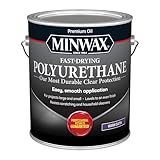
 Minwax Fast Drying Polyurethane Protective Wood FinishGallon6.5 x 6.5 x 7.62 inches8.5 PoundsCheck on Amazon
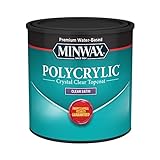
 Minwax 233334444 Polycrylic Protective Wood Finish8 fl oz2.9 x 2.9 x 3 inches0.66 poundsCheck on Amazon
 Varathane Water-Based Ultimate Satin PolyurethaneHalf Pint (Pack of 1)3 x 3 x 3 inches0.64 poundsCheck on Amazon
 AquaCoat Water-Based White Cabinet Wood Grain Filler Gel16 Fl Oz (Pack of 1)10 x 10 x 10 inches1.2 poundsCheck on Amazon

Appearance and grain
Sapele is naturally medium brown to reddish brown. Flat-sawn boards can show attractive ribbon striping, while quartersawn stock may have a pronounced, reflective figure. Its grain can be interlocked, so planing and scraping require care. Tear-out is possible, especially on figured boards, and sanding marks can show clearly after finish is applied.
White oak is usually pale tan to light brown with a more open, prominent grain. Quartersawn white oak can show broad medullary rays or “fleck.” Under a clear satin finish, it has a lighter, more understated appearance than sapele. If you want the wood to remain close to its raw color, choose a water-based clear coat. Oil-based varnish or polyurethane will make white oak noticeably warmer within the first coat.
| Factor | Sapele | White oak |
|---|---|---|
| Natural color | Warm reddish brown | Pale tan to light brown |
| Grain | Medium to coarse; may be interlocked and figured | Open, prominent grain; quartersawn boards show ray fleck |
| Clear-coat appearance | Deepens to a rich brown and can become more amber | Water-based finish stays lighter; oil finish adds warmth |
| Preparation risk | Tear-out and sanding scratches on figured grain | Open pores and tannin-related discoloration |
| Best practical match | Warm traditional interiors and strong visual figure | Light, modern, Scandinavian, or mission-style interiors |
Choosing the clear coat
For the least color change, use a water-based polyurethane or another waterborne interior clear finish labeled satin. It dries quickly, has lower odor than solvent finishes, and generally leaves white oak lighter. On sapele, it preserves more of the existing red-brown color instead of adding a heavy orange cast.
An oil-based polyurethane or wiping varnish is a good choice when you want depth and warmth. It is forgiving to apply and tends to flow out well, but it ambers as it ages. White oak can shift from pale tan to a noticeably golden brown. Sapele may become quite dark, especially after several coats.
For a hard-wearing surface, compare products in the satin water-based polyurethane category. If maximum color depth is more important than keeping the wood light, a satin oil-based polyurethane is reasonable.
Shellac can work as a sealer, but it is not my first choice as the only finish for a frequently handled tabletop or door. It dries fast and can provide a warm appearance, but it has less resistance to alcohol and standing water than a good polyurethane or varnish.
Surface preparation
Sand both species evenly. Start at 100 or 120 grit if the boards are already milled and fairly smooth. Remove machine marks with 120, then progress through 150 and 180 grit. Stop at 180 for most clear-coated work. Sanding to 220 can slightly reduce absorption and make some finishes sit unevenly, particularly on dense areas of sapele.
Use a firm sanding block on flat surfaces and vacuum between grits. Do not rely only on a tack cloth; some tack cloths contain resin that can interfere with waterborne finishes. A clean, slightly damp microfiber cloth can raise the grain before the final sanding, especially when using a water-based product.
On sapele, inspect the surface under strong side lighting. Interlocked grain can make scratches run in different directions, and a finish will make those defects more visible. On white oak, check glue joints carefully. Dried glue in the open pores often appears as a pale, shiny patch after finishing.
A reliable application schedule
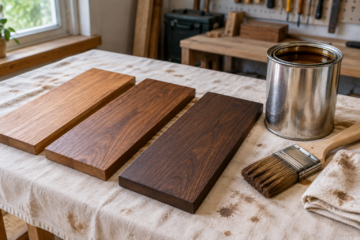
Make a sample board from the actual species, preferably from the same batch. Apply the intended finish to at least 12 by 12 inches of each wood. One coat is not enough for a color decision; compare the samples after two or three coats because satin finishes become more uniform and slightly deeper with each coat.
For water-based polyurethane, apply thin coats with a quality synthetic brush or a finish-rated microfiber roller. Avoid over-brushing once the film starts to set. Allow the label’s recoat time—commonly about 2 to 4 hours, depending on temperature and humidity—then scuff lightly with 320-grit abrasive if the surface feels rough. Apply three coats for trim and cabinet surfaces, and four coats for a tabletop or heavily handled door.
Oil-based finishes commonly need 8 to 24 hours between coats. Use ventilation and keep dust down, but do not create a strong draft while the wet film is leveling. Scuff with 320 grit or a fine synthetic abrasive after the finish is hard enough to sand without clogging. Two or three coats are typical, but thin coats are safer than one heavy coat.
For a smoother final result on open-grained white oak, use a grain filler only if you want a flatter, furniture-grade surface. Leaving the pores open is not a defect; it is part of the species’ appearance. A water-based wood grain filler can reduce pore texture, but it adds a preparation step and may slightly alter the color.
Common failure modes
The most common problem on white oak is unexpected darkening or gray-brown discoloration from tannins. Waterborne products can sometimes pull tannins to the surface, especially over iron contamination from steel wool, dirty water, or metal sanding dust. Use clean abrasives and tools, and test the finish first. If tannin bleed is severe, a compatible stain-blocking sealer may be necessary.
On sapele, the usual failures are sanding scratches, uneven sheen over figured grain, and an overly orange final color. A clear coat will not hide cross-grain scratches. If the color looks too red or dark on the sample, change the finish before coating the project; adding fewer coats rarely solves a color mismatch.
The cheaper option is fine when the wood is inexpensive, the surface is not exposed to standing water, and you are comfortable with normal wear. White oak is often the safer budget choice if you want a light, predictable result under water-based satin finish. Choose sapele when its color and figure are the reason for the project, not merely because it is being used as a substitute for oak.
0 Comments