What's inside
As an Amazon Associate I earn from qualifying purchases. This post may contain affiliate links at no extra cost to you.
Our Top Picks
 Varathane Water-Based Ultimate Satin PolyurethaneHalf Pint (Pack of 1)3 x 3 x 3 inches0.64 poundsCheck on Amazon


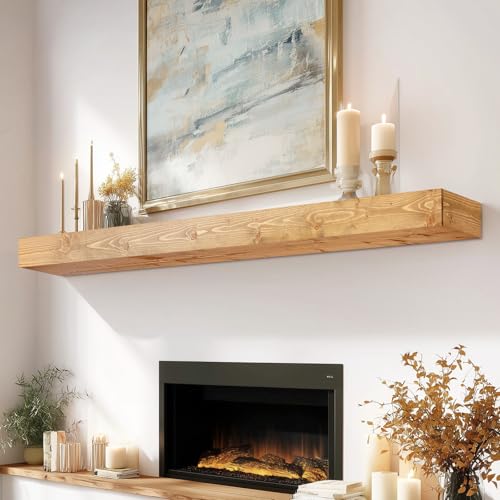


Choosing the Right Wood for a Stained Fireplace Mantel
The best wood for a stained fireplace mantel is usually a stable, close-grained hardwood with an appearance you actually want to see. Oak, maple, cherry, walnut, and alder all work, but they do not stain or move in the same way. Pine can be a good budget choice, especially for a painted or rustic mantel, but it takes more preparation to produce an even stain.
Before buying lumber, check the fireplace manufacturer’s clearance requirements and local building code. A mantel is not safe simply because it is made from hardwood. Wood near a fireplace must remain outside the required combustible-material zone. Measure from the firebox opening, not just from the top of the surround, and follow the appliance manual. If the fireplace is unusually hot, has a shallow surround, or burns solid fuel, get the clearance confirmed before building.
As an Amazon Associate we earn from qualifying purchases at no extra cost to you.



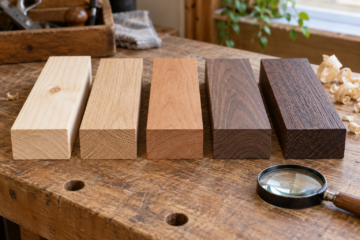
Best Wood Species for a Stained Mantel
| Wood | Stain performance | Strength and stability | Best use |
|---|---|---|---|
| Red oak | Even, pronounced grain; accepts most stains well | Strong, moderately stable | Traditional mantels and lower-cost hardwood projects |
| White oak | Even, slightly tighter grain; excellent with medium and dark stains | Strong and more moisture-resistant than red oak | High-quality traditional or modern mantels |
| Hard maple | Can look blotchy with dark stain; better with light colors | Very hard and durable | Contemporary mantels and clear or lightly tinted finishes |
| Cherry | Warm, attractive color; darkens naturally over time | Stable and easy to machine | Furniture-quality mantels with clear or warm stains |
| Walnut | Rich dark color; often needs only clear finish | Stable, expensive, relatively soft for a hardwood | Premium modern or architectural mantels |
| Poplar | Uneven natural color; stains can look muddy or green | Stable and inexpensive | Painted mantels, not usually a first choice for stain |
| Clear pine | Strong earlywood absorption can cause blotching | Soft and more likely to dent or move | Rustic, budget, or painted mantels |
For the most predictable stained result, choose red oak or white oak. Their open grain gives stain somewhere to settle, so the color is usually more uniform than it is on maple or pine. White oak costs more, but it has a tighter, more refined appearance and works especially well with natural, medium-brown, and smoked finishes.
Hardwood Versus Pine
Hardwood is worth the added cost when the mantel will be a prominent focal point or when you want a smooth, furniture-like finish. A hardwood board is less likely to show dents from decorations, picture frames, or cleaning. It also tends to hold crisp eased edges better.
Pine is fine when the mantel is painted, distressed, heavily textured, or part of a rustic design. It is often the cheaper option by a wide margin. Select straight, clear boards rather than construction lumber, which may have knots, uneven moisture content, and twist. Pine also expands and contracts noticeably with seasonal humidity. Use a stable construction and allow the wood to acclimate indoors for at least three days before cutting.
Alder sits between pine and premium hardwoods. It is relatively affordable, machines easily, and has a quiet grain. However, it is soft and can absorb stain unevenly. It is a sensible choice for a warm, subdued mantel when you are willing to use conditioner or a toner.
Prepare the Wood Before Staining
Surface preparation matters more than the label on the stain. Mill the parts flat, then sand through the grits rather than jumping directly to a fine abrasive. A practical sequence is 80 grit for flattening, 120 grit for removing milling marks, and 150 or 180 grit for the final sanding. Stop at 180 grit on most species. Sanding to 220 grit can partially close the surface and produce a lighter, less even color.
Break sharp edges with a small round-over or chamfer. A sharp corner absorbs excess stain and is easily damaged. Sand end grain carefully; it absorbs much more stain than face grain. On oak, a light pass with 180 grit is usually enough. On pine, maple, and alder, test the complete finishing schedule on a cutoff first.
For softwoods and blotch-prone hardwoods, apply a compatible wood stain pre-conditioner according to its label. It can reduce dark patches, but it may also make the final color weaker. A better-looking result sometimes comes from using a gel stain or a tinted topcoat instead. Always judge the sample after the clear finish has dried, since polyurethane can deepen the color.
Choose the Stain and Topcoat
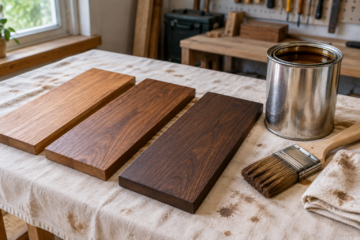
Oil-based penetrating stain gives oak and cherry a rich appearance and provides a longer working time for wiping. Water-based stain dries faster and produces less odor, but it can raise the grain and show lap marks if applied unevenly. Gel stain stays closer to the surface and is useful on pine, maple, and vertical or detailed parts, though it can look painted if overworked.
Apply stain to a manageable area, keep a wet edge, and wipe off the excess at the manufacturer’s stated time. Do not leave oily rags crumpled; oil-soaked rags can self-heat and ignite. Lay them flat outdoors to dry or store them submerged in water in an approved metal container.
Protect the stained mantel with a durable water-based polyurethane or an oil-based polyurethane. Water-based finishes stay clearer over maple, oak, and painted surroundings. Oil-based polyurethane adds amber color and can suit cherry, walnut, and traditional interiors. Apply at least two coats to the top and shelf, lightly sanding between coats with 320 grit when the label permits.
Build for Seasonal Movement
Do not make a wide mantel shelf from one poorly dried board and expect it to remain flat. Wide solid panels are vulnerable to cupping. Where possible, use kiln-dried, furniture-grade lumber, or glue up narrower boards with alternating growth-ring orientation. A woodworking parallel clamp set helps keep a glue-up aligned, but clamp pressure will not correct badly warped stock.
Use a quality interior woodworking glue for edge joints, and spread a thin, continuous film over the mating surfaces. Do not rely on glue alone for a heavy floating mantel. Use a properly anchored cleat, hidden brackets, or structural fasteners rated for the load. Leave small clearance around a wood panel where it meets masonry or other surfaces so seasonal movement does not split the finish.
The Practical Choice
Choose white oak or red oak when you want the easiest path to a consistent stained finish. Choose cherry when you want warmth that will deepen naturally, and walnut when a dark premium look justifies the price. Use pine or poplar when the mantel will be painted or intentionally rustic. Whatever species you buy, purchase an extra piece for testing: one hour spent sanding and staining a sample can prevent an expensive mantel from becoming firewood.
0 Comments