What's inside
As an Amazon Associate I earn from qualifying purchases. This post may contain affiliate links at no extra cost to you.
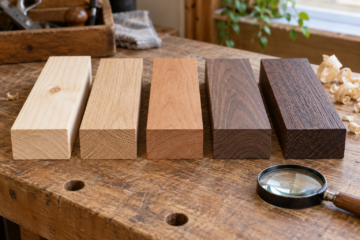
For detailed painted woodwork, both poplar and basswood are easy to cut, sand, glue, and paint. The better choice depends on the detail itself. Poplar is the more useful all-around board for cabinet parts, trim, and larger painted projects. Basswood is usually the better carving and modeling material when crisp, shallow details matter more than dent resistance.
As an Amazon Associate we earn from qualifying purchases at no extra cost to you.


Our Top Picks


Poplar vs. basswood at a glance
| Factor | Poplar | Basswood |
|---|---|---|
| Typical hardness | About 430 lbf Janka | About 410 lbf Janka |
| Grain and texture | Usually straight, with a slightly more visible grain | Very fine, even, and subdued grain |
| Small carved details | Good, but can feel stringy in some boards | Excellent; cuts cleanly with knives and carving tools |
| Dent resistance | Low to moderate | Low; dents easily under clamps and handling |
| Painted appearance | Good after primer; color variation can show through thin finishes | Very uniform and easy to hide with paint |
| Typical cost and availability | Widely available and often cheaper in larger boards | Common in hobby sizes, but larger clear pieces can cost more |
Choose poplar for larger painted parts
Poplar is the practical choice for painted cabinet doors, face frames, furniture parts, shelves, appliqués, and trim. It is soft enough to machine without excessive tool wear, but usually tougher than basswood during assembly and installation. A poplar rail is less likely to crush when you clamp it, drive a brad, or handle it before painting.
Poplar also comes in useful board sizes at most hardwood dealers and home centers. That matters when the project includes long stiles, wide panels, or several matching parts. Its grain is generally straight, so routing, planing, and sanding are predictable.
The main drawback is color. Poplar can be cream, pale green, gray, or purple-brown, sometimes within the same board. This is not a problem under a solid, opaque paint system, but it can affect the amount of primer needed. Poplar end grain and porous areas may absorb paint unevenly, causing dull spots or visible flashing.
For most painted poplar work, start with a high-build wood primer or a quality stain-blocking primer. Apply one coat, sand with 220 grit after it dries, and add a second coat if the surface still looks uneven.
Choose basswood for fine carving and small details
Basswood has a fine, nearly featureless grain that makes it a favorite for relief carving, miniature parts, decorative plaques, lettering, and small architectural details. A sharp knife or gouge tends to follow the cut instead of tearing across prominent grain. It is also easy to shape with rotary tools and fine abrasives.
That softness is both its advantage and its main failure mode. A fingernail, clamp jaw, or careless sanding block can leave a depression. Thin basswood edges can break during routing or assembly, especially where a profile ends in a sharp point. Keep unsupported areas thick enough to survive handling, and use light clamp pressure with scrap pads between the clamp and the work.
Basswood’s pale, consistent color is convenient for painting. It normally needs less effort to achieve an even base color than heavily varied poplar. However, the wood is absorbent, and a thin coat of paint can raise the surface fibers or leave a dry-looking finish. A sealer or primer is still worthwhile, particularly on end grain and carved recesses.
For small projects, basswood carving blanks are often easier to select than random boards because they are sold in clear, consistent sizes.
Sand and seal without erasing detail
Start with sharp tools and a clean cut. Sanding cannot reliably repair torn grain around a tiny profile; it usually rounds the detail instead. For machine-cut poplar, begin around 120 or 150 grit only when there are visible tool marks. Move through 180 and finish at 220 grit. Basswood often needs only 180 followed by 220 because aggressive sanding removes material quickly.
Use a firm sanding block on flat faces and folded abrasive or small foam-backed abrasives on profiles. Avoid pushing coarse paper into inside corners. For carved work, a light pass with 220 grit is safer than trying to make every surface perfectly smooth with 80 or 120 grit.
Remove dust with a vacuum and a soft brush. Wiping with a wet rag can raise fibers, especially on basswood. If the surface does become fuzzy, let it dry fully, then knock down the fibers with 220 or 320 grit. Do not keep sanding until the wood feels glassy; that can make primer adhesion less reliable.
Seal porous end grain before the main primer coat. A thin coat of sanding sealer, dewaxed shellac, or compatible primer works well. Follow the label’s recoat instructions, because trapping solvent or water between coats can cause soft film, wrinkling, or poor adhesion.
Painting details and avoiding common failures
Use a small synthetic brush for water-based acrylic or enamel paint, and apply several thin coats instead of one heavy coat. Heavy paint collects in corners and fills shallow carving. Allow each coat to dry, then inspect under angled light. Lightly sand raised nibs with 320 grit before the next coat, but avoid sanding through the primer on exposed edges.
Poplar’s uneven color can telegraph through pale paint if the primer is thin. Basswood’s softness can show dents through a flawless topcoat, so inspect the piece after priming rather than assuming the primer hid damage. Both woods can fuzz when routed with a dull bit; replace or sharpen the cutter instead of trying to bury the fuzz under paint.
For a durable smooth finish, use a compatible water-based cabinet paint. Two or three thin topcoats are usually better than one thick coat. Let the finish cure for several days before installing detailed parts, since soft paint picks up fingerprints and clamp marks even when it feels dry.
Which one should you buy?
Buy poplar when you need affordable boards, stronger handling, long parts, or a painted result with no concern about natural color. It is the better default for most furniture and trim work, and the cheaper option is completely adequate when the design uses broad profiles rather than delicate carving.
Buy basswood when the project is small, highly detailed, knife-carved, or made from thin decorative pieces where uniform color and easy cutting save time. If the part will be frequently touched, bumped, or clamped, poplar’s slightly greater toughness is worth choosing instead.
For either species, select straight-grained, dry stock with no loose knots near the detail. Store it flat, acclimate it indoors for several days, and keep wood moisture close to the surrounding shop conditions—roughly 6 to 8 percent for typical heated interiors. Good stock and careful preparation matter more than the modest hardness difference between these two woods.
0 Comments