What's inside
As an Amazon Associate I earn from qualifying purchases. This post may contain affiliate links at no extra cost to you.
Poplar and basswood are both easy to cut, sand and paint, but they behave differently under a smooth painted finish. Poplar is usually the better choice for a frame that needs to stay straight and take everyday handling. Basswood is lighter and especially easy to shape, making it useful for small, decorative profiles. Neither is naturally a flawless paint surface: preparation matters more than the species name.
As an Amazon Associate we earn from qualifying purchases at no extra cost to you.


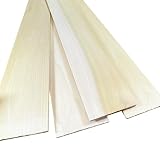

Our Top Picks


Quick comparison
| Factor | Poplar | Basswood |
|---|---|---|
| Typical color | Pale cream to greenish brown, often with darker streaks | Usually pale cream with less color variation |
| Density and handling | Heavier and generally firmer | Lighter and very easy to cut or carve |
| Machining | Machines well, but can fuzz or burn if tools are dull | Cuts easily; soft fibers can dent, crush or tear |
| Paint preparation | Streaks may need an opaque primer; grain and dents need filling | Often visually uniform, but dents and fuzzy edges need attention |
| Best fit | General-purpose frames and longer or more substantial moldings | Small, lightweight frames and intricate profiles |
Which wood should you buy?
Choose poplar for a typical rectangular frame, especially if the molding is wide, the frame is large, or it may be bumped during use. Its extra firmness makes it less vulnerable to pressure marks than basswood. It is also widely available as frame stock and paint-grade trim. Poplar’s main drawback is its color: green, gray or brown streaks can show through thin white or light-colored paint if the primer does not block them.
Choose basswood when low weight or easy shaping matters more than dent resistance. It is a practical choice for a small frame with carved details, delicate corners or a profile you plan to shape by hand. The pale, fairly even color can be an advantage beneath paint, but do not mistake a smooth-looking board for a hard surface. A fingernail, clamp jaw or dropped tool can leave a dent that will still show after painting.
For a simple frame under about 12 inches on a side, basswood is often perfectly adequate if it will be handled gently. For larger frames, compare actual straightness and stock dimensions rather than buying by species alone. A warped length of poplar is a worse buy than a straight basswood one.
Inspect the stock before cutting
Look down each length from one end and reject pieces with a noticeable bow, twist or cup. Also check for loose knots, cracks, dents and rough patches. Poplar can have color streaks that are harmless structurally but troublesome under a pale finish. Basswood may have compressed spots or fuzzy grain near edges. Buy a little extra length if possible; a short test piece lets you check the paint system before committing the whole frame.
Wood movement still matters. Let the stock sit in the room where you will assemble and finish it for at least a day, particularly if it came from a cold vehicle or damp storage. Keep all four frame sides from the same stock when practical, and avoid leaving a finished frame in direct sun or against a damp wall.
Prepare the surface for paint
Cut and dry-fit the joints before finishing. For a mitered frame, small gaps become conspicuous after paint, so correct the cut or fill the assembled joint rather than expecting primer to hide it. Sand faces with 120- or 150-grit paper to remove milling marks, then finish with 180 grit. On basswood, use light pressure: aggressive sanding can round over sharp molding details or polish soft areas unevenly. On either species, sand with the grain and ease sharp arrises just enough to prevent paint from pulling away.
Remove dust with a vacuum and a clean, dry cloth. Fill nail holes, small dents and open joints with a paintable filler; let it dry fully and sand it flush. A filler that shrinks may need a second pass. Test it first if the molding has a visible profile, because filler can obscure fine details.
Apply one even coat of a suitable primer, then inspect under side lighting. Poplar streaks that bleed through, knots, or stubborn discoloration may need a stain-blocking primer. For most clean, knot-free stock, a paint-grade wood primer is a sensible starting point. If you are uncertain which type suits the wood and topcoat, compare wood primers for painted trim and follow the label for compatible paints and recoat times.
After the primer dries, sand lightly with 220 grit to knock down raised fibers and nibs. Do not sand through the primer on edges; bare patches can absorb the topcoat differently and look dull. Apply two thin coats of paint rather than one heavy coat. Heavy coats can bridge detail, sag on the inner edge and stay soft longer. Allow the stated drying time between coats, and give the frame extra time before hanging or wrapping it so the paint does not stick to glass, wall surfaces or packing material.
Common failures and how to avoid them
Green or brown shadows under white paint: This is most likely with poplar. Use a primer that blocks discoloration, and judge the test piece only after the primer and topcoat have dried. If stains return, switch to a stronger stain-blocking primer rather than adding more paint coats.
Dents that appear after painting: This is especially common with basswood. Fill and sand dents before priming; paint does not level them. Protect the molding from clamps with scrap pads and avoid stacking unfinished pieces where they can rub.
Fuzzy edges or raised fibers: Sand the edge smooth, prime it, then sand lightly again. If the wood continues to fuzz during sanding, use a fresh abrasive and gentler pressure rather than moving to a very coarse grit.
Visible joints: A mitre that is out of square will remain obvious beneath paint. Check cuts with a reliable angle or a dry-fit frame, and clamp the assembly without crushing soft stock. A small amount of paintable filler can hide a hairline gap, but it is not a substitute for a sound joint.
Make the choice on the actual frame
For most painted picture frames, poplar is the safer all-around buy because it is firmer and commonly sold as paint-grade molding. Its color streaks are manageable with the right primer. Basswood is a good, often cheaper option for small frames and detailed work where its light weight and easy shaping are useful, provided you protect it from dents. If the frame is simple and the stock is straight, either species can give a clean finish with careful sanding, filling and priming. A small test piece is the quickest way to catch color bleed or surface defects before they become a finished-frame problem.
0 Comments