What's inside
As an Amazon Associate I earn from qualifying purchases. This post may contain affiliate links at no extra cost to you.
Why Grain and Color Can Mislead
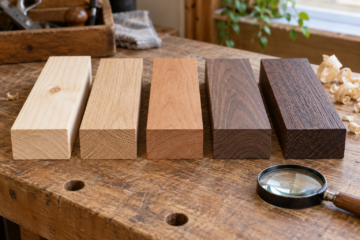
Wood identification starts with grain and color, but neither is a guarantee by itself. Stain, sunlight, oxidation, mineral streaks, and different cuts can make the same species look unrelated. A quarter-sawn board may show straight stripes, while a flat-sawn board from the same log shows cathedral-shaped arches.
Look at a freshly sanded, unfinished area whenever possible. Scrape or sand through paint and old finish, stopping around 120 or 150 grit. Wipe the surface with a damp cloth or a small amount of mineral spirits to preview the wood’s natural color. Do not judge from a glossy finish alone; ambered varnish can make pale woods look orange.
What to Check First
Examine the end grain, face grain, and edge grain separately. End grain reveals pore size and arrangement, which often separates hardwoods more reliably than color. Face grain shows the figure and growth pattern. Also note the board’s weight, hardness, smell, and whether the grain is open or closed.
Large, visible pores usually indicate an open-grained hardwood such as oak, ash, or mahogany. Fine, barely visible pores are typical of maple, cherry, birch, and many softwoods. Softwood grain often has a clear contrast between earlywood and latewood, creating bands or stripes. These clues narrow the choices, but old furniture may contain replacement parts or mixed species.
Common Species by Grain and Color
| Species | Typical color | Grain and pores | Useful identification clues |
|---|---|---|---|
| Red oak | Pinkish tan to reddish brown | Bold, open pores; strong cathedral figure | End grain may show open pores; often has a faint salmon cast |
| White oak | Light tan to medium brown | Open pores, usually straighter and less pink than red oak | Ray fleck is prominent in quarter-sawn boards; pores often look plugged at the ends |
| Maple | Creamy white to pale tan | Fine, closed pores; generally subtle grain | Hard maple is very pale and dense; figured maple may show curls or tiger stripes |
| Cherry | Pinkish tan when fresh, deepening to warm reddish brown | Fine, mostly straight grain; small gum pockets are possible | Darkens noticeably with light, sometimes within weeks |
| Walnut | Chocolate brown to purplish brown | Moderately open pores; straight, wavy, or irregular grain | Often has lighter sapwood along one or both edges |
| Ash | Nearly white to light brown | Large, open pores and strong growth lines | Can resemble oak, but usually looks lighter with a more open, coarse texture |
| Pine | White to yellow, often ambering with age | Soft earlywood and darker latewood bands; resin pockets common | Knots, pitch smell, and easily dented earlywood are strong clues |
Hardwoods Worth Learning
Oak is one of the easiest species to recognize because its pores are large and its grain is assertive. Red oak tends toward pink or salmon, while white oak is more beige, olive, or gray-brown. The distinction is not perfect, especially after stain. If you are matching a replacement board, compare end grain and pore pattern rather than relying on color.
Maple is pale, dense, and generally quiet-looking. Hard maple is commonly used for workbenches, flooring, and cutting boards. Its tight grain can look almost featureless after sanding. Soft maple may be slightly darker and less dense. A dark stain often turns maple blotchy because its tight grain absorbs unevenly; use a pre-stain conditioner or a washcoat when an even color matters. A wood pre-stain conditioner is inexpensive insurance for small projects.
Cherry is usually pink or salmon when freshly machined, then becomes richer and browner with exposure to light. It has fine pores and a smooth feel. Avoid matching a new cherry repair to an old piece by color alone: the new part may continue darkening for years. Clear water-based finishes preserve more of its pale starting color, while oil finishes add warmth and ambering.
Walnut is usually unmistakable when unfinished, with brown heartwood and occasional purple, gray, or chocolate variation. Its sapwood is much lighter. Many commercial boards are steamed to reduce the sapwood contrast, so a nearly uniform walnut board is not necessarily stained. Walnut sands easily but can show scratches if you skip grits or use a dull abrasive.
Softwoods and Common Lookalikes
Pine has alternating light and dark bands, visible knots, and a soft surface that dents with modest pressure. It often absorbs stain unevenly, especially around end grain and resinous knots. If you want a predictable result, paint-grade pine is often the cheaper sensible choice; use a stain-blocking primer before paint when knots bleed through.
Poplar is another frequent source of confusion. It is usually pale green, gray, or creamy white, with subtle grain and fine pores. It machines easily and costs less than many cabinet woods, making it excellent for painted furniture. It often turns muddy green or brown under transparent stain, so clear finish or paint is usually a better choice.
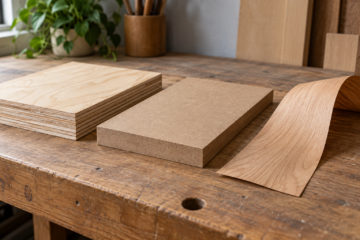
Birch resembles maple but is often slightly warmer and more yellow. Its grain is fine, though flat-sawn boards may show attractive curl. Birch plywood has a smooth face veneer but can blotch under penetrating stain. Use a light gel stain, a conditioner, or a tinted topcoat if uniform color is more important than visible grain.
How to Confirm a Suspected Species
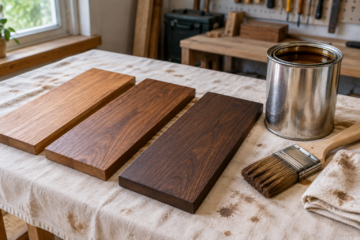
Make a small test area before buying finish. Sand through the existing surface, wipe it clean, and apply the same clear coat or stain you plan to use. Compare the result with a known sample under daylight. A wood species identification guide with end-grain photographs is more useful than a color-only chart.
Do not use a burn test indoors, and do not assume smell proves identity. Some species have recognizable odors when freshly cut, but dust and old finishes obscure them. If the species matters for structural strength, outdoor durability, food contact, or allergy concerns, obtain a seller’s documentation or have a lumber professional identify it. Visual identification is good for choosing a finish; it is not a substitute for a verified material specification.
Choose the Finish After Identification
Open-grained woods such as oak and ash can accept a grain filler for a flatter, smoother surface, but filler is optional for a natural textured look. Tight-grained woods usually need careful sanding rather than filler. Stop at 150 or 180 grit before most stains; sanding to 320 grit can reduce absorption and create a pale, uneven result. Always sand with the grain and remove dust before coating.
If you are unsure whether the board is valuable hardwood or inexpensive utility lumber, start with a clear finish on a hidden area. A water-based polyurethane preserves pale color, while oil-based finishes add amber warmth and emphasize grain. The cheaper finish is fine when the project is painted or used in a low-wear location; spend more on surface preparation and a durable topcoat when the wood will see water, abrasion, or frequent handling.
0 Comments