What's inside
As an Amazon Associate I earn from qualifying purchases. This post may contain affiliate links at no extra cost to you.
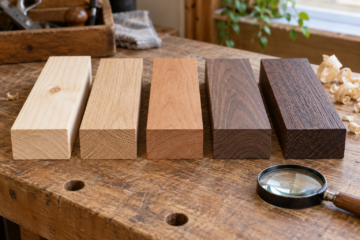
A clear-finished console shelf puts the wood itself on display, so species, grain direction, and surface preparation matter more than they would under paint. The best choice is usually a stable, straight board with a consistent grain—not necessarily the most expensive hardwood. For most indoor consoles, oak, maple, walnut, cherry, and quality pine can all work, but they produce very different results in cost, appearance, and finishing difficulty.
As an Amazon Associate we earn from qualifying purchases at no extra cost to you.
Our Top Picks
 Varathane Water-Based Ultimate Satin PolyurethaneHalf Pint (Pack of 1)3 x 3 x 3 inches0.64 poundsCheck on Amazon



What Makes a Good Console Shelf
A console shelf needs enough stiffness to resist sagging between supports. A practical starting point is a board 3/4 inch thick and 10 to 14 inches deep, with supports spaced no more than 24 to 30 inches apart. Heavy books, records, or equipment may require a thicker board, a front edge stiffener, or closer brackets.
Choose boards that are flat, dry, and free of loose knots. Sight down the length and width before buying. A slight bow can sometimes be corrected during installation, but a twisted board will remain troublesome. Avoid boards with end checks, deep cracks, or large knots near screw locations. Wood moisture should generally be around 6% to 10% for a heated indoor room. A wood moisture meter is useful if you are buying rough or reclaimed stock.
| Wood | Appearance under clear finish | Workability | Typical trade-off |
|---|---|---|---|
| White oak | Prominent grain, tan to medium brown | Good; can splinter at edges | Durable and stable, but heavier and pricier than pine |
| Hard maple | Light, subtle grain | Good, though hard on cutters | Clean modern look; can appear bland without careful finishing |
| Walnut | Rich brown with dark grain | Excellent | Beautiful and easy to finish, but usually the most expensive option |
| Cherry | Warm pink-brown, darkens with age | Excellent | Finishes smoothly; color changes noticeably in sunlight |
| Clear pine | Warm, knotty or plain depending on grade | Very easy | Affordable, but soft and prone to dents and blotchy stain |
Best Hardwood Choices
White oak is the safest all-around recommendation. Its open grain looks good under oil, varnish, or water-based polyurethane, and it stands up well to everyday bumps. Quarter-sawn or rift-sawn oak has a straighter, calmer appearance than ordinary flat-sawn boards. Oak’s open pores can be left visible for a natural texture or filled for a flatter, more furniture-like surface.
Walnut is the premium choice when the shelf is a focal point. It usually needs little more than careful sanding and a clear finish. Avoid over-sanding walnut with very fine paper before finishing; stopping around 180 grit often gives better adhesion and leaves enough texture for the finish to wet the surface. Walnut is softer than maple but still appropriate for normal console use.
Cherry is easy to machine and sands to a notably smooth surface. Its initial color can look lighter and pinker than expected, then deepen to reddish brown with light exposure. That change is attractive to many people but makes matching new shelves to existing cherry furniture difficult.
Hard maple suits a light, minimalist console. It is dense and resists dents, but its pale surface shows scratches, glue spots, and sanding inconsistencies. Maple is also one of the woods most likely to show uneven color when stained. If you want maple’s natural color, a clear water-based finish is usually more predictable than adding a dark stain.
When Pine Is Good Enough
Clear, knot-free pine is a sensible choice for a painted console, a rustic design, or a shelf carrying light objects. It costs much less than hardwood and is easy to cut and sand. It is not a poor material simply because it is soft; it is a poor choice when you expect a pristine, dent-free surface in a high-contact area.
Pine’s biggest finishing problem is uneven absorption. Dark stain can produce dark bands around knots and blotchy patches across earlywood. If staining pine, apply a compatible wood conditioner or a thin washcoat first, then test the complete finishing schedule on an offcut. A clear finish without stain is simpler and often looks better. Choose furniture-grade edge-glued pine panels rather than construction lumber, which may be wet, twisted, or full of loose knots.
Solid Wood or Panel Material?
Solid wood gives the most convincing edge and grain, but wide boards move across their width as humidity changes. A 12-inch-wide solid shelf can change roughly 1/8 inch or more across the seasons, depending on species and indoor conditions. Fasten it so it can move—using figure-eight fasteners, tabletop clips, or elongated screw holes—rather than locking it rigidly to a frame.
High-quality veneered plywood is often the most stable choice for a long console shelf. It stays flatter than solid wood and can have an attractive hardwood face, but the exposed edge needs hardwood edging or a carefully applied band. MDF is flat and inexpensive, but its edges are absorbent and easily damaged. It works best when painted, not when you want a convincing clear-finished shelf.
Surface Preparation and Finish
Start with 80 or 100 grit only when the board has milling marks or scratches. Otherwise begin at 120 grit, then move to 150 and 180 grit. Sand with the grain and use a sanding block on edges. Do not round over the front edge aggressively; a small 1/16-inch easing is enough to prevent sharp corners and reduce finish wear.
Remove dust with a vacuum and a clean, lightly damp microfiber cloth. Avoid soaking the surface or relying on compressed air alone, which can spread dust into nearby wet finish. Glue squeeze-out must be removed before sanding. Dried glue left on the surface creates pale, finish-resistant spots that are especially obvious on oak and walnut.
For a durable, low-odor finish, choose a water-based polyurethane. It dries quickly, stays relatively clear, and usually needs three or four thin coats. Oil-based polyurethane adds warmth and offers good durability, but it ambers pale woods and requires longer drying time. Hardwax oil is easy to repair and leaves a natural feel, but it generally provides less protection against standing water and abrasion than polyurethane.
Apply finish to every face, including the underside and end grain, to reduce uneven moisture exchange. Lightly sand between coats only as directed by the product, commonly with 220 or 320 grit. Let the final coat cure fully before loading the shelf; “dry to the touch” may mean hours, while full hardness can take several days.
What to Buy
For the best balance of appearance, durability, and finishing reliability, buy a straight-grained white oak or walnut board if the budget allows. Choose maple for a pale contemporary look, cherry for a warm traditional look, and furniture-grade pine when low cost or a rustic appearance matters more than dent resistance. For a long, wide shelf where movement and flatness are major concerns, compare a hardwood-veneered plywood panel before committing to solid lumber.
Use a foam brush set for wood finish or a quality synthetic brush, test the finish on a cutoff, and judge the result only after it dries. The finish cannot hide poor wood selection, glue marks, or uneven sanding; it simply makes those problems permanent and easier to see.

0 Comments