What's inside
As an Amazon Associate I earn from qualifying purchases. This post may contain affiliate links at no extra cost to you.
Our Top Picks
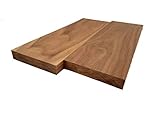
 Barrington Hardwoods Walnut Lumber 3/4 in x 43/4" x 4" x 12"0.75 x 4 x 12 inches2 poundsCheck on Amazon
 Minwax 233334444 Polycrylic Protective Wood Finish8 fl oz2.9 x 2.9 x 3 inches0.66 poundsCheck on Amazon
 1/2 pt Minwax 13407 Clear Pre-Stain Wood Conditioner1/2 Pint3 x 3.25 x 3 inches0 PoundsCheck on Amazon
What matters in a clear-finished desk top
For a desk that will stay natural-looking, choose wood for the appearance you want, but also consider hardness, grain, board width and price. Clear finish does not hide mismatched color, knots or glue lines; it often makes them more noticeable. A desk also gets abrasion from keyboards, cups and sliding objects, so very soft wood can dent even under a careful finish.
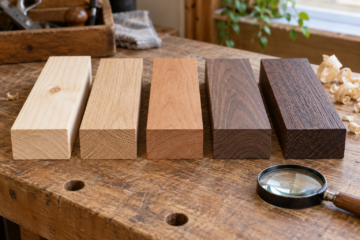
For most buyers, oak, hard maple, walnut and birch are practical options. Oak is durable and has pronounced grain; maple is hard and usually subtle; walnut is dark and easy to work but costs more; birch is a budget-friendly hardwood that can look uneven under stain. Pine can work for a low-cost or intentionally rustic desk, but it dents readily.
As an Amazon Associate we earn from qualifying purchases at no extra cost to you.
Compare the main options
| Wood | Typical character | Hardness and wear | Clear-finish considerations |
|---|---|---|---|
| Red or white oak | Open, prominent grain; tan to brown | Hard and suitable for daily use | Usually straightforward to finish. Grain pores remain visible unless filled. |
| Hard maple | Light, fine, fairly quiet grain | Very hard | Can show sanding marks or blotchy color if stained. Clear finish keeps it pale. |
| Black walnut | Rich brown, often with varied grain | Hard enough for a desk, though softer than maple | Looks good under clear finish; sunlight can change its color over time. |
| Birch | Light and fine-grained | Hard enough for normal desk use | Can turn patchy with stain. A clear coat is usually more predictable than dark stain. |
| Pine | Light, with knots and strong growth-ring contrast | Soft; dents and scratches more easily | Affordable and easy to cut, but clear finish will not make it harder underneath. |
These are general comparisons, not guarantees. A board’s grade, grain direction and defects matter as much as its species. Check the actual top under the lighting where it will be used. If buying a glued-up panel, inspect its joints and make sure it is flat, dry and large enough to trim to your final dimensions.
Which wood should you buy?
Choose oak if you want a tough, forgiving top with visible grain. White oak is often a little lighter and less pink than red oak, but color varies. Choose maple for a light, restrained look and good dent resistance. It is a strong choice if you plan to leave the wood natural rather than apply a dark stain.
Walnut is the premium-looking choice, but its price and color variation are the trade-off. If you like walnut, compare boards in person: sapwood can be much paler than the heartwood, and a clear coat will preserve that contrast rather than conceal it. Birch is a sensible lower-cost hardwood when left natural. Pine is fine for a spare-room desk, a painted top or a rustic project; it is a poor match for someone who expects a pristine surface after years of hard use.
For a straightforward purchase, consider a pre-glued hardwood panel in oak or maple, such as a unfinished oak desktop panel. Confirm the listed thickness, dimensions and finish status. “Butcher block” describes construction, not necessarily a food-safe finish or a solid-wood panel of any particular quality.
Check the top before finishing
Let a new top acclimate indoors for several days before sanding or coating. Keep it flat and supported, not leaned against a wall for a long period. Wood moves as humidity changes, so attach it to the desk frame with fasteners or clips that allow movement across its width. Rigidly fixing a wide top at every point can cause splits or bowed boards.
Look for raised glue, dents, loose knots and open cracks. A clear film finish will not level major flaws. Fill small defects only if the filler matches the final color; many fillers look conspicuous once coated. If a panel has a joint that opens or rocks when pressed, return it or repair the construction before finishing.
Sand and apply a practical finish
Start with the coarsest paper needed to remove defects, commonly 120 grit on a reasonably smooth panel, then progress through 150 and 180 grit. Sand with the grain on the final pass. Going much finer can reduce adhesion for some finishes and may leave a slick surface that takes stain unevenly. Vacuum thoroughly between grits and wipe away dust with a clean, lint-free cloth.
For a clear, repairable surface, use a furniture-grade water-based or oil-based polyurethane. Water-based products usually keep pale woods lighter and have less odor; oil-based products tend to add warmth and amber over time. Follow the product label for coats, recoat windows and ventilation. A water-based clear polyurethane is a reasonable starting point for maple or birch when you want to limit yellowing.
Apply thin coats rather than one heavy coat. After the first coat, lightly sand raised grain with the grit specified by the maker, often 220, then remove all dust. Two or three coats are a practical minimum for an ordinary desk; more may be appropriate for heavy use if the product allows it. Coat the underside and edges as well as the top to reduce uneven moisture exchange. Do not assume a finish is fully cured just because it feels dry; wait for the label’s cure time before placing equipment or a desk mat on it.
Avoid the common failures
Staining a light, fine-grained wood dark without testing is a frequent mistake. Maple and birch can absorb stain unevenly, leaving cloudy or striped patches. If color matters, test the complete sanding and finishing schedule on an offcut from the same panel. A pre-stain wood conditioner can reduce blotching on some woods, but it may also lighten the result; a test is still necessary.
Also avoid sanding through veneer. Some inexpensive tops are veneered, and the surface layer may be thin. Do not use coarse paper or aggressive power sanding unless you know the top is solid wood. Finally, use coasters and lift heavy objects rather than dragging them. No clear finish prevents dents in soft wood, and even a hard top can be scratched or damaged by prolonged moisture.

0 Comments