What's inside
As an Amazon Associate I earn from qualifying purchases. This post may contain affiliate links at no extra cost to you.
A clear finish puts the apron’s grain, color, and defects on display, so the best wood is usually the one that matches the tabletop and stays straight—not the hardest or most expensive species. For a typical indoor table, kiln-dried hardwood around ¾ inch thick is a dependable starting point. Choose clear, straight stock with few knots, and let it acclimate in the room before milling.
As an Amazon Associate we earn from qualifying purchases at no extra cost to you.


Our Top Picks
 Varathane Water-Based Ultimate Gloss PolyurethaneHalf Pint (Pack of 1)3 x 3 x 3 inches1.22 PoundsCheck on Amazon
 Varathane Water-Based Ultimate Satin PolyurethaneHalf Pint (Pack of 1)3 x 3 x 3 inches0.64 poundsCheck on Amazon

Best choices by table style
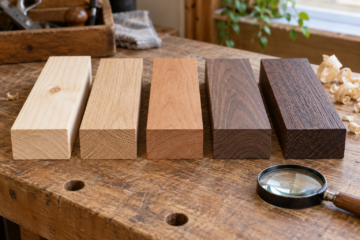
For an oak top, use oak for the apron; for a walnut top, use walnut. Matching species makes differences in color and grain look intentional, and it avoids the risk that stain will make two unlike woods clash. If the apron will be painted, poplar or paint-grade maple is usually a more economical choice.
When the top is a different species or the budget is tight, cherry, maple, and birch can work with many lighter-colored tops. Test the actual finish on offcuts: clear coating often darkens wood and brings out color differences that are subtle when the pieces are unfinished.
Wood comparison
| Wood | Typical clear-finish look | Practical strengths | Watch-outs |
|---|---|---|---|
| Red or white oak | Prominent open grain; warm tan to brown | Widely available, durable, suits traditional tables | Grain can look busy beside a fine-grained top; pores may need filling for a glass-smooth finish |
| Hard maple | Light, subtle grain | Hard and wear-resistant; good with pale tops | Can show blotchy color under stain; clear finish may yellow slightly |
| Cherry | Fine grain; reddish-brown tone that deepens with light | Machines and finishes well; pairs naturally with cherry tops | Color changes with age, so new apron stock may not match an older top |
| Walnut | Dark brown with varied grain | Distinctive, often looks good under a simple clear coat | Costs more; sapwood can create sharp light-dark contrast |
| Poplar | Often greenish or grayish when clear-coated | Affordable, stable, easy to work | Usually a poor visual match for a clear-finished hardwood top |
Prices and availability vary by region, and boards sold under the same species name can look quite different. Buy the apron stock in person if appearance matters, or ask for photos of the actual boards.
Choose straight, dry stock
Aprons help connect and stiffen the table base. A warped board can pull joints out of square, while a badly twisted apron may leave the table rocking. Look down each edge for bow and sight across the face for twist. Reject boards with loose knots, checks at the ends, or splits where a joint or fastener will go.
For indoor furniture, wood near 6–8% moisture content is a useful target in many heated homes. A moisture meter is helpful, but the more important rule is to avoid stock that is noticeably wetter than the room’s stable furniture. Let lumber sit indoors, stickered so air can reach both faces, for several days at minimum; thicker or recently delivered stock may need longer. Milling too soon can lead to shrinkage, open joinery, or a bowed apron after assembly.
Do not choose solely by hardness. Oak and maple resist dents, but the apron is not the table’s main wear surface. Straight grain, sound joints, and correct moisture matter more to its service life.
Size and movement
Many dining-table aprons are roughly ¾ inch thick and 3–5 inches tall, though the right size depends on the table span, leg layout, and design. A taller apron generally adds stiffness, but it can reduce knee clearance. For a long table, follow a tested design or have the base sized for the top rather than assuming any species will prevent sagging.
Wood expands and contracts mostly across the grain as humidity changes. If the apron is attached to a solid-wood top, do not rigidly fasten the top across its width. Use figure-eight fasteners, tabletop clips, or slotted screw holes so the top can move. A seasonal crack or a split screw hole is a common result of locking a wide top in place.
Prepare for a clear finish
Mill the boards flat and square, then sand through a consistent sequence such as 120, 150, and 180 grit. For many film finishes, sanding to 180 or 220 is enough; going much finer can reduce absorption and make some finishes adhere less reliably. Remove dust with a vacuum and a clean, lint-free cloth. Avoid a tack cloth if it leaves residue that could interfere with the coating.
Before assembly, test the finish on a cutoff sanded the same way as the apron. Apply the full schedule, including sealer or stain if used, and let it dry as directed. A clear coat is not always colorless: oil-based finishes tend to warm and amber wood, while many water-based finishes preserve a paler look. If matching a tabletop, finish samples from both species side by side.
For a straightforward protective coating, compare water-based clear polyurethane with oil-based clear polyurethane. The former usually keeps light wood lighter and dries faster; the latter adds warmth but can take longer to recoat and cure. Follow the product label for coat count and sanding between coats rather than rushing the next layer.
When a cheaper wood is fine
If the apron is hidden by a skirt, tablecloth, or dark paint, paying for walnut or cherry is hard to justify. Sound poplar, pine, or another suitable paint-grade board can be perfectly serviceable when it is straight, dry, and securely joined. Pine is soft and can dent during handling, but those marks matter less under paint or in a concealed location.
For a visible clear-finished apron, cheaper wood is a good choice only if its appearance suits the table. Poplar’s green cast and pine’s knots can remain obvious under clear coating; stain may make blotching worse rather than disguise it. In that case, spend the difference on a matching species, or choose paint instead of trying to force an unlike board to imitate the top.
0 Comments