What's inside
As an Amazon Associate I earn from qualifying purchases. This post may contain affiliate links at no extra cost to you.
A clear finish leaves nowhere to hide uneven grain, glue smears, or sloppy sanding. For a dining table base, the best wood is stable, strong enough for the design, and attractive under the finish you plan to use. Oak and maple are reliable choices; walnut is a premium option. The right pick also depends on whether you want the base to match the top or provide contrast.
As an Amazon Associate we earn from qualifying purchases at no extra cost to you.


Our Top Picks
 ComfyCorner 47" Round Dining Table47.24"D x 47.24"W x 29.52"H47.24 x 47.24 x 29.52 inches78.71 PoundsCheck on Amazon
 DM Furniture 47" Round Dining Table with Wooden47.5"47.5 x 47.5 x 30 inches37.4 PoundsCheck on Amazon
 Modway Crossroads 63" Oval Wood Dining Table63" Oval Dining Table43.5 x 63 x 29 Inches58 PoundsCheck on Amazon
 East West Furniture DLT-AWA-TP Dublin Dining Room Table42 x 29.542 x 42 x 29.5 inches10.7 poundsCheck on Amazon
 Varathane Water-Based Ultimate Satin PolyurethaneHalf Pint (Pack of 1)3 x 3 x 3 inches0.64 poundsCheck on Amazon
What matters in a clear-finished base
Start with the appearance. A clear coat deepens color and contrast but does not make pale wood look like walnut or hide color differences between boards. Choose boards in person when appearance matters, and check both the face and the end grain. A base can use less expensive wood than the tabletop, but its legs and aprons are visible from across the room.
Stability matters too. A leg that twists after assembly can rack the table or stress its joints. Buy kiln-dried stock intended for furniture, not green or construction lumber. For indoor furniture, roughly 6–8% moisture content is a useful target in many heated homes; allow lumber to acclimate in the shop and verify it with a moisture meter if you can. Wider boards move more across their width as humidity changes, so laminated legs or narrower, well-dried stock may be safer than a single wide piece.
Finally, consider strength and workability. A table base takes knocks from shoes and chairs. Dense hardwoods hold up well, but very hard stock can be slower to cut and sand. Softwood can work for a lightly used or painted base, but a clear finish makes dents and uneven color easier to see.
Wood choices at a glance
| Species | Appearance under clear finish | Practical strengths | Trade-offs |
|---|---|---|---|
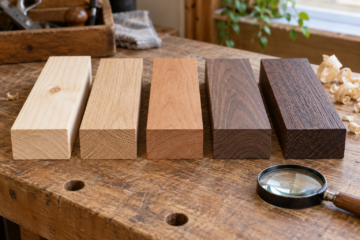
| White oak | Tan to brown, with pronounced grain | Hard, durable, widely suited to furniture | Strong grain can compete with a patterned top; open pores take care to finish evenly |
| Hard maple | Pale cream, often subtle | Hard and abrasion-resistant; clean, modern look | Can show sanding scratches and finish unevenly if preparation is rushed |
| Walnut | Rich brown, varied grain | Distinctive color; works well for a contrasting base | Usually costs more; sunlight can lighten its color over time |
| Cherry | Warm reddish brown that darkens with age | Machines and sands well; refined grain | Color changes with light, so a newly built base may not match an older top |
| Poplar | Pale, sometimes greenish or streaked | Affordable and easy to work | Soft, dents readily, and its color can look unattractive under a clear coat |
Which species to buy
White oak is the safest all-around choice for a durable, visible base. It suits many dining tables and is generally forgiving in use. Its open pores are part of the look, not a defect; if you want a glass-smooth surface, you may need pore filler before finishing. Use it when you want visible grain and a base that can take daily wear.
Hard maple is a good choice for a pale, restrained look, especially with a lighter tabletop. Its hardness helps resist dents, but it does not forgive careless preparation. Scratches from coarse sanding can remain visible after clear coat. Maple can also take some stains unevenly, so a clear finish is often a more predictable route than trying to darken it with stain.
Walnut makes sense when the base is meant to stand out or the table already includes walnut. It is not necessary to spend extra on walnut if the base will be visually quiet or hidden by a table skirt. Cherry is another attractive furniture wood, but allow for its gradual color shift when matching it to existing furniture.
Poplar is fine when cost matters and the base will be painted. Under clear finish, its variable color and lower dent resistance are harder to justify for a dining table. If painting, choose straight, dry stock and use a suitable primer; the species’ inexpensive price can outweigh its appearance limitations.
Match the base to the tabletop
Matching species is not mandatory. A walnut base under a maple top can look deliberate, while oak under a busy oak top may feel too uniform. If you want a close match, remember that boards from the same species still vary, and finish changes their color. Test scraps from the actual stock with the full finish schedule before building. A sample that looks right after the first coat may darken or warm under later coats.
Also check the finish sheen. A satin finish can soften visual differences between boards, while gloss emphasizes surface defects and reflections. For most dining furniture, satin or low-sheen finishes are easier to live with than high gloss.
Prepare the wood before coating
Cut and dry-fit the base before final sanding. Remove glue squeeze-out promptly; dried glue blocks finish and can leave pale patches. Sand visible faces progressively, commonly through 120, 150, and 180 grit. Going much finer is not automatically better: very smooth sanding can reduce finish adhesion or make stain uptake less even, depending on the product. Follow the finish maker’s instructions.
On maple or other pale, fine-grained wood, inspect under raking light and wipe with mineral spirits if compatible with your finish to reveal scratches before coating. Let it evaporate fully. Avoid rounding crisp edges excessively; a small eased edge helps the finish hold, but heavily rounded joints can look soft and collect wear.
For a clear protective coat, compare water-based polyurethane finishes with oil-based options. Water-based products tend to preserve pale wood color and dry faster; oil-based finishes usually add amber warmth and take longer to cure. Either can work, but protect the base from use until the coating has reached its stated cure time—not just its touch-dry time. For a stained base, test a wood conditioner for stain on scrap first, especially with blotch-prone woods. Conditioner is not a substitute for careful sanding, and it can lighten the final color.
A practical buying checklist
For a clear-finished table base, buy straight, kiln-dried hardwood with a color and grain you like, then match the top only if the design calls for it. Pick white oak for durability and pronounced grain, maple for a pale modern look, walnut for richer contrast, or cherry for warm color that will mature. Choose poplar when the base will be painted or budget is the priority. Reject boards with significant twist, deep checks, or defects where a leg joint must be cut. Spending a little more for sound, dry stock is usually cheaper than correcting a moving or visibly mismatched base after assembly.

0 Comments