What's inside
As an Amazon Associate I earn from qualifying purchases. This post may contain affiliate links at no extra cost to you.
A clear finish shows everything: the wood’s color, grain, glue lines, sanding scratches, and any unevenness in the surface. For a dining chair, the best species combines attractive grain with enough hardness for daily knocks and enough stability to resist loose joints. The ideal choice depends on whether you are building the chair from solid stock, buying replacement parts, or simply choosing a finish for an existing chair.
As an Amazon Associate we earn from qualifying purchases at no extra cost to you.


Our Top Picks
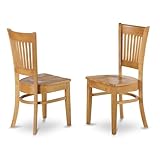
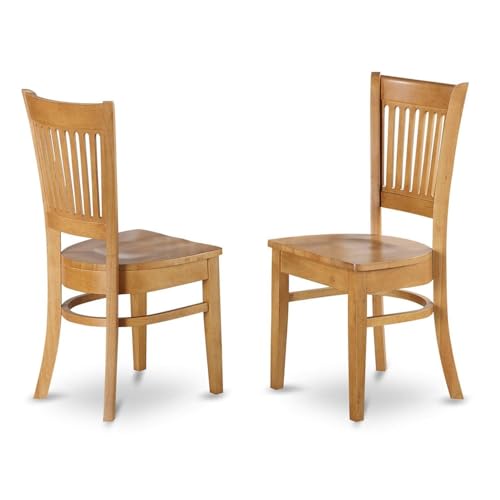 East West Furniture VAC-OAK-W Vancouver Kitchen Dining ChairsSet of 220 x 17 x 37 Inches18 poundsCheck on Amazon
 Polyurethane Wood Finish Water Based Polyurethane Clear Gloss100 ml1.6 x 1.6 x 4.7 inchesCheck on Amazon


Best overall: hard maple
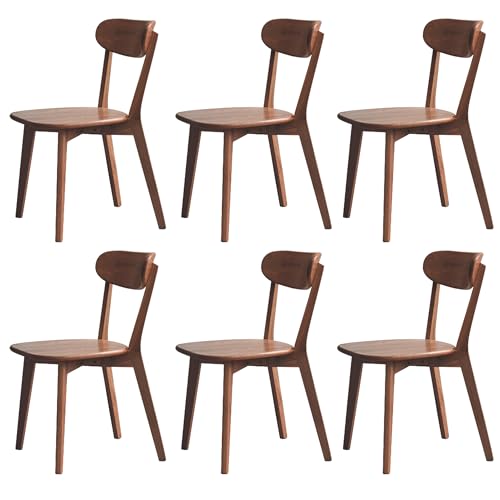
Hard maple is the safest all-purpose choice for a clear-finished dining chair. It is hard, fine-grained, and naturally pale, so it gives the chair a clean modern appearance without a strong color shift. Its closed pores also make it relatively easy to wipe smooth and keep clean.
Maple is not effortless to work with. Its hardness makes hand shaping and sanding slower, and it can show burn marks from a dull router bit or aggressive sanding. It also tends to blotch when stained. For a clear finish, however, blotching is usually not a concern. Sand through 180 or 220 grit, ease sharp edges, and apply a water-based or oil-based clear finish.
Choose straight, clear boards with consistent color. Short, knotty maple can be cheaper, but defects near a leg, stretcher, or back joint are poor savings. A chair has many narrow parts, so buying extra stock for grain matching and rejected pieces is sensible.
How the main options compare
| Wood | Appearance under clear finish | Strength and durability | Best use |
|---|---|---|---|
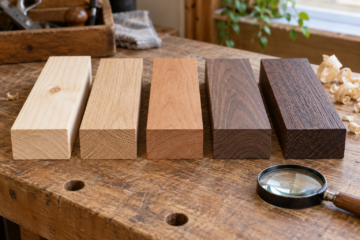
| Hard maple | Pale, subtle grain | Very hard and wear resistant | Modern chairs and light-colored interiors |
| White oak | Prominent grain, warm tan | Strong and durable | Traditional, farmhouse, and everyday chairs |
| Beech | Quiet grain, cream to pink | Hard, strong, and stable when properly dried | Painted or understated clear-finished chairs |
| Cherry | Fine grain, reddish brown | Moderately hard | Furniture where a richer color is wanted |
| Walnut | Dark brown, varied grain | Strong but softer than maple or oak | Premium accent chairs and high-end furniture |
| Pine | Light with visible knots | Soft and dent-prone | Budget chairs and rustic designs |
White oak and beech: practical alternatives
White oak is arguably the best choice when you want the wood itself to be a visible design feature. Its open grain gives a clear-coated chair texture and character, and it stands up well to dropped utensils, belt buckles, and everyday use. Quarter-sawn white oak can show dramatic ray fleck, but it costs more and may be harder to source in narrow, clear pieces.
Oak’s open pores are not a structural problem, but they collect grime more readily than maple’s tight grain. Use several thin coats of finish and sand lightly between coats. Do not flood the surface with finish in an attempt to fill the pores quickly; thick coats can sag, remain soft, or trap dust.
Beech is a good cheaper alternative when you want a smooth, restrained appearance. It is hard enough for chair parts and has a relatively uniform texture. Beech is commonly used in bent furniture, but solid beech can move noticeably if its moisture content is unsuitable for your home. Let lumber acclimate indoors for at least several days, and preferably a week or two, before final machining.
Cherry and walnut for appearance
Cherry machines cleanly and finishes beautifully. It starts fairly light but darkens with light exposure, eventually developing a warm reddish-brown color. That change is normal, not a finishing failure. Cherry is softer than maple and can dent on a frequently used chair, but it remains a sound furniture wood.
Walnut offers the strongest visual contrast and usually needs no stain. Its dark color hides some minor marks, though scratches can show as pale lines. Walnut is expensive, and its softer surface is not as resistant to impact as hard maple. Use it when appearance justifies the price, not because it is automatically stronger.
When pine is acceptable
Pine is fine for a budget chair, a lightly used breakfast nook, or a rustic design where dents and knots are part of the look. It is inexpensive and easy to cut and sand. The trade-off is substantial: pine dents easily, resinous knots can bleed through some finishes, and clear-coated boards may look patchy because of uneven earlywood and latewood.
For pine, select kiln-dried furniture-grade stock rather than construction lumber. Seal knots with a compatible knot sealer, and test the complete finishing schedule on scrap. A clear water-based finish keeps pine pale; oil-based products add amber color and can make the soft grain look more pronounced.
Preparation matters more than the species
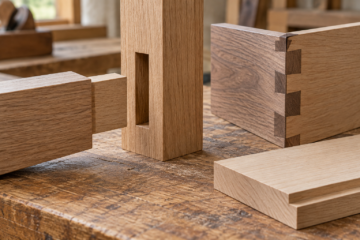
Chair parts need clean joinery before finishing. Dry-fit every joint, remove squeeze-out, and do not rely on finish to hide gaps. For most indoor chairs, a quality interior PVA wood glue is appropriate. Apply enough glue to wet both surfaces, clamp firmly without crushing the wood, and remove squeeze-out before it dries. Dried glue left on the surface will resist stain and often appears as a pale shiny patch under clear finish.
Sand flat surfaces through 180 grit, then use 220 grit if the finish manufacturer recommends it. Sanding beyond 220 can burnish some woods and reduce finish adhesion. On end grain, progress to the same grit used on the face, then soften the edges with a light hand pass. Vacuum thoroughly and wipe with a clean, slightly damp cloth if compatible with the finish; avoid leaving water in open pores.
Choose the clear finish for the chair’s use
For a dining chair, a durable film finish is usually more practical than an oil alone. Water-based polyurethane preserves pale maple and beech better and dries quickly. Oil-based polyurethane adds amber color, flows well, and gives strong wear resistance, but it has more odor and a longer recoat time. A water-based polyurethane is the straightforward choice for a light-colored chair.
Apply three or four thin coats rather than one heavy coat. Lightly scuff between coats with 320-grit abrasive after the finish has fully dried. Pay particular attention to seat edges, front rails, and the tops of stretchers, where hands and shoes cause wear. A satin sheen is generally more forgiving than gloss: it reflects fewer scratches and fingerprints while still showing the wood clearly.
Before committing to a species or finish, make a sample board with the same sanding schedule, glue, and number of coats. The sample reveals the actual color and surface feel far more reliably than a store display or online photograph.
0 Comments