What's inside
As an Amazon Associate I earn from qualifying purchases. This post may contain affiliate links at no extra cost to you.
A clear finish shows everything: the wood’s color, grain, glue lines, sanding marks, dents, and uneven stain absorption. For a dining bench, the best wood is usually a stable hardwood with attractive grain and enough hardness to resist dents without being miserable to machine. The right choice depends on whether you want a pale modern look, a warm traditional color, or the lowest reasonable cost.
As an Amazon Associate we earn from qualifying purchases at no extra cost to you.
Our Top Picks
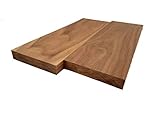
 Barrington Hardwoods Walnut Lumber 3/4 in x 43/4" x 4" x 12"0.75 x 4 x 12 inches2 poundsCheck on Amazon
 Varathane Water-Based Ultimate Satin PolyurethaneHalf Pint (Pack of 1)3 x 3 x 3 inches0.64 poundsCheck on Amazon

Best overall: hard maple
Hard maple is my first choice for a clear-finished dining bench when the goal is a clean, light-colored surface. It is hard enough for daily seating, has fine grain, and sands to a smooth surface without large open pores. A water-based clear coat keeps it nearly white; an oil-based finish adds a warm amber cast.
The trade-off is appearance consistency. Hard maple can look somewhat plain, and it often has subtle color variation between boards. It also shows machining scratches and glue spots clearly. Use sharp cutters, avoid excessive sanding in one area, and remove all glue squeeze-out before finishing. Maple is not a forgiving species for rushed preparation.
Other strong choices
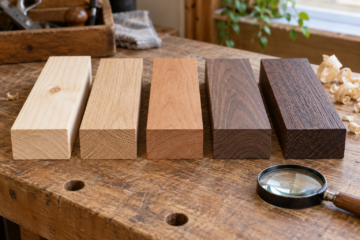
| Wood species | Appearance under clear finish | Durability | Best use | Main drawback |
|---|---|---|---|---|
| Hard maple | Very pale, fine and clean grain | Very high | Modern or Scandinavian-style bench | Shows scratches, glue, and uneven sanding |
| White oak | Warm tan with prominent grain | High | Most homes and traditional designs | Open pores need more finish and sanding |
| Walnut | Rich brown, usually darkens slightly | Medium-high | Premium-looking furniture | Cost and visible color variation |
| Cherry | Pink-brown, deepens to reddish brown | Medium-high | Refined furniture with a warm tone | Uneven light exposure can cause color differences |
| Ash | Pale with bold, open grain | High | Oak-like appearance at a lower price | Less stable supply and pronounced pores |
| Clear pine | Light with knots and strong contrast | Low-medium | Budget or casual bench | Dents easily and can blotch |
White oak: the safest all-around recommendation
White oak is often the best compromise between appearance, strength, availability, and price. It has enough hardness for a dining bench, a recognizable grain pattern, and a warm color that looks good under oil, water-based polyurethane, or hardwax oil. Quarter-sawn or rift-sawn boards produce straighter, calmer grain than ordinary flat-sawn stock.
Its open pores are not a defect, but they affect the finish. A film finish will leave the texture visible unless you fill the grain. That is usually desirable on a bench. If you want a glass-smooth surface, apply a compatible grain filler before the final finish, then sand it level. Grain filling adds labor and can make a large project look muddy if the filler color does not suit the oak.
Buy water-based polyurethane when you want oak’s color to stay relatively light. Choose an oil-based product when a deeper amber tone is welcome. Either option needs a properly sanded surface; finish cannot hide coarse scratches across the grain.
Walnut and cherry for a higher-end bench
Walnut gives the most immediately luxurious result. It is easier to make attractive with a clear finish because small color variations tend to look intentional, and its grain is generally less distracting than oak. Walnut is somewhat softer than hard maple or oak, so the seat will eventually show small dents and wear. That is normal, not a finishing failure.
Cherry machines and sands well, but sunlight changes it. Fresh cherry may look pale pink or salmon-colored; over months and years it becomes a deeper reddish brown. Do not judge a cherry bench against an unexposed offcut. Keep the bench away from strong direct sunlight during the first few weeks if even color matters.
When pine is good enough
Clear pine is a reasonable choice for a rustic, painted, or deliberately casual bench. It costs much less than hardwood and is easy to cut and glue. The problem is compression: a dropped plate, belt buckle, or knee can leave a dent. Clear pine also has resinous areas and uneven absorption, so a clear coat may emphasize light and dark patches.
Use pine if you accept that wear will become part of the appearance. Select straight, dry boards with few knots, and avoid construction lumber unless its moisture content is stable and the boards have been milled flat. For a better budget option, consider poplar only if you plan to paint it. Poplar is inexpensive and stable, but its greenish or gray color is rarely attractive under a clear finish.
Build for movement before finishing
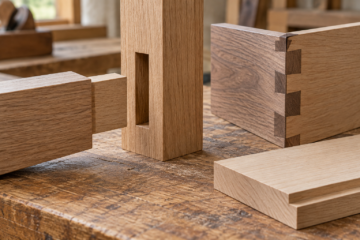
Use furniture-grade, kiln-dried stock rather than wet or twisted boards. Let lumber acclimate indoors for at least several days, preferably one to two weeks, with spacers between boards. A typical bench seat made from several boards should be edge-glued, but do not glue a solid seat across its width to a rigid frame without allowing seasonal movement.
For ordinary indoor furniture, Type II PVA wood glue is sufficient. Apply a thin, continuous film to both mating edges, clamp until a small bead appears, and remove squeeze-out while it is rubbery. Dried glue left on the face will resist stain and clear finish, creating pale patches. Epoxy is useful for repairs or difficult gaps, but it is not a substitute for accurately jointed edges.
Sanding and clear-finish preparation
Flatten the assembled seat before fine sanding. Start with 80 or 100 grit only where necessary, then progress through 120 and 150 grit. Stop at 180 grit for most film finishes. Sanding much finer can reduce absorption and make some water-based finishes sit unevenly. Always finish with the same grit across the entire visible surface.
Break sharp edges with a small chamfer or two or three light sanding passes. A perfectly sharp edge chips easily and holds too little finish. Vacuum thoroughly, then wipe with a clean, slightly damp cloth if the finish manufacturer permits it. Do not use a greasy household cleaner or tack cloth that leaves residue.
For a dining bench, apply at least three thin coats of a durable clear finish to the seat, sanding lightly between coats when directed. Hardwax oil furniture finish is easy to repair and gives a natural feel, but it generally offers less protection against standing water than a quality polyurethane. Whichever finish you choose, coat the underside and end grain too. Uneven coverage can let moisture enter one face and contribute to cupping or checking.
For most buyers, white oak is the practical default, hard maple is best for a pale minimalist bench, and walnut is worth the cost when the wood itself is the centerpiece. Pine is fine when budget and rustic character matter more than dent resistance.
0 Comments