What's inside
As an Amazon Associate I earn from qualifying purchases. This post may contain affiliate links at no extra cost to you.
A clear finish leaves the wood itself on display, so a chair back has to look good and hold up to repeated contact. Hands, clothing and chair movement can wear through a thin finish, while sweat and skin oils can darken pale wood. For most clear-finished dining chair backs, straight-grained hard maple is the safest all-around choice. White oak is a strong option when a visible grain pattern suits the design; cherry is appealing if you welcome its gradual darkening.
As an Amazon Associate we earn from qualifying purchases at no extra cost to you.

Our Top Picks
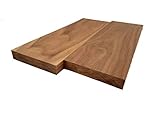
 Barrington Hardwoods Walnut Lumber 3/4 in x 43/4" x 4" x 12"0.75 x 4 x 12 inches2 poundsCheck on Amazon

What matters in a chair back
Choose wood for both appearance and construction. A back can be a broad panel, a curved crest rail, or several narrow slats. Curved parts and thin slats put more demands on grain direction than a flat panel does. Look for straight grain that runs along the part, especially at bends and narrow sections. Grain that angles sharply across a rail can split under stress, even if the board looks attractive.
Wood movement matters too. A solid panel changes width as humidity changes; a frame-and-panel back needs room for that movement. For a glued-up panel, use boards with similar grain and moisture conditions, and orient growth rings thoughtfully to reduce visible cupping. Avoid building from damp stock. A practical target for indoor furniture is about 6–8% moisture content, though the right figure depends on your local climate.
Best species by use
| Wood | Appearance and finishing | Best fit | Trade-off |
|---|---|---|---|
| Hard maple | Pale, subtle grain; can show blotchy color under stain | Light, clean designs and painted-clear combinations | Hard to stain evenly; use a clear finish or test a washcoat |
| White oak | Prominent grain; ray fleck can show on quarter-sawn stock | Traditional or grain-forward chairs | Open pores take more work for a glass-smooth surface |
| Cherry | Fine grain, warm color that deepens with light exposure | Warm, refined furniture where color change is welcome | Freshly finished boards can vary; sapwood remains much lighter |
| Beech | Fine, fairly uniform texture; pale pink-brown cast | Simple shapes and bent or turned parts | Can look plain, and its appearance varies by board |
| Walnut | Dark brown with expressive grain | Contrast pieces or a dark, natural finish | Costs more, and darkens or lightens unevenly with exposure |
How to choose
Choose hard maple for a pale, understated back. It is dense and wears well, and its restrained grain pairs easily with many table styles. It is also a poor candidate for casual dark staining: uneven absorption can leave cloudy patches. If you want maple darker, test the complete schedule on offcuts from the same board, including any conditioner, stain and topcoat. A clear finish is simpler and usually more predictable. For a durable option, compare water-based polyurethane for furniture with other clear topcoats.
Choose white oak when grain is part of the design. It is hard-wearing and its pronounced figure stays visible beneath clear finish. Red oak is also common and may cost less, but its pinker cast and more open-looking grain give a different result. If you want a smooth feel, sand carefully and consider a pore filler; without one, the surface can look and feel textured. Quarter-sawn oak can add ray fleck, but costs more and may be unnecessary on a small back.
Choose cherry for warmth, not color stability. Cherry starts relatively light and deepens toward reddish brown with light exposure. The change is natural, but parts shaded by a table or rail may age differently. Board selection matters: pale sapwood beside darker heartwood can create a strong contrast that a clear finish will not hide.
Choose beech for simple, economical parts when a subtle grain is acceptable and stock is readily available. It is used in furniture and can work well for slats or shaped components. For a darker statement, walnut looks rich under a clear finish, but its price and changing color make it a less practical default.
Prepare the surface for clear finish
Sand uniformly, moving through grits rather than skipping straight to a fine abrasive. For many hardwood chair backs, a sequence such as 120, 150 and 180 grit is enough before a film finish; follow the finish maker’s directions, since sanding too fine can reduce adhesion or make stain absorption less even. Break sharp edges lightly so finish does not leave a thin, easily worn line. Do not round over joinery shoulders or alter a fitted curve while sanding.
Remove dust with a vacuum and clean, lint-free cloth. Test the finish on an offcut prepared with the same final grit. A water-based finish tends to preserve pale color better, while oil-based finishes usually add warmth and ambering. Neither choice prevents wear. Apply the number of coats and recoat schedule specified on the label, and allow the finish to cure fully before the chair goes into use; “dry to touch” is not the same as fully cured.
For oak, decide whether you want open pores visible or filled. For maple, skip stain unless a test proves the color even. If coloring is essential, a wood conditioner for stain on maple may help, but it is not a guarantee against blotching. Always test on the actual species and board.
Buying stock and avoiding failures
Buy clear, straight-grained stock wide enough to yield the back’s parts without cutting through knots, checks or abrupt grain changes. Inspect both faces and edges; a clean-looking face can hide a defect on the opposite side. For curved rails, prioritize continuous grain through the curve over a dramatic figure. If you are choosing between a premium board with attractive but wandering grain and a plainer straight-grained board, the plainer board is usually the safer structural choice.
Budget-conscious builders can use a stable, straight-grained domestic hardwood rather than paying extra for walnut or quarter-sawn oak. The cheaper choice is fine when the design calls for a painted chair, a subtle appearance, or a replaceable part. Do not save money by using stock with cracks, loose knots or grain that runs out at a narrow rail: those defects can lead to splits, visible finish lines or early failure. For a clear-finished chair back that must look good without special staining work, start with hard maple or white oak and let the wood’s natural color do the work.

0 Comments