What's inside
As an Amazon Associate I earn from qualifying purchases. This post may contain affiliate links at no extra cost to you.
Our Top Picks
 Hrbjunuo Solid Walnut Floating Shelves for Wall 16.516.5 Inch16.5 x 6 x 1 inches1 PoundsCheck on Amazon


What “soft brown” means on a shelf
A soft brown finish is a warm, low-contrast color that lets the grain show without looking orange, red, or nearly black. The wood underneath matters: the same stain can look honey-colored on maple and much darker on oak. For wall shelves, choose the species and finish as a pair, and test them on an offcut from the actual board before committing.
Also account for the room’s light. Warm bulbs can make brown finishes look more amber; daylight may bring out gray or pink undertones. A sample that looks right in the workshop can shift noticeably on the wall.
As an Amazon Associate we earn from qualifying purchases at no extra cost to you.


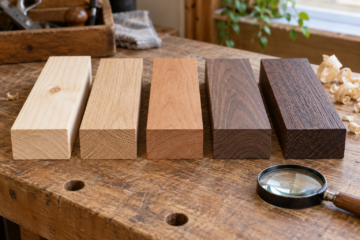
Best wood species for the look
| Species | Typical result with a light brown finish | Trade-off |
|---|---|---|
| White oak | Clear grain with a steady, natural-looking brown | Open pores can make stain look more pronounced; usually costs more than common softwoods |
| Maple | Fine, subtle grain and an even, quiet color | Can take stain unevenly, especially without preparation |
| Birch | Light, close grain that can suit a pale brown | Stain may blotch or turn muddy if applied heavily |
| Poplar | Affordable, smooth surface; brown paint or an opaque finish works well | Green or gray areas may show through transparent stain |
| Pine | Warm, prominent grain at a low price | Soft earlywood absorbs stain differently from harder bands and may blotch |
| Cherry | Warm reddish-brown that deepens with age | Its natural red cast can be hard to steer toward a neutral brown |
White oak is the most dependable choice for a visible, natural grain. Its strong grain gives a soft brown finish definition without requiring a dark stain. It is a solid pick for shelves that will be seen up close, provided the budget allows and you like pronounced grain.
Maple or birch suits a quieter look, but neither is the easiest wood to stain evenly. If you want barely visible grain and a pale brown, use a light stain or a tinted clear finish, and test carefully. A medium-brown stain applied generously can make these woods look blotchy rather than richer.
Pine is fine when cost matters. Choose boards with a consistent grain pattern and avoid expecting a perfectly uniform stained surface. For inexpensive utility shelves, a brown-tinted paint or a darker, more opaque finish can hide color differences better than transparent stain.
Choose the finish before buying boards
For a natural appearance, start with a light brown wood stain made for interior furniture or trim. Water-based stains usually preserve a lighter, less amber appearance than many oil-based options, but the product label and sample board matter more than the category. Stain colors vary by brand, and names such as “walnut” or “provincial” are not reliable color standards.
On blotch-prone maple, birch, or pine, test a pre-stain conditioner or a thin washcoat on scrap. Conditioner can reduce uneven absorption, but it can also make the color lighter or less intense. Follow the stain maker’s instructions on timing and compatibility; do not assume every conditioner works with every stain.
If you prefer the wood’s natural color, skip stain and apply a clear finish. A water-based clear coat generally adds less amber than an oil-based finish. On cherry, remember that the wood itself darkens with exposure to light, so the shelf may become richer over time even under a clear coating.
Prepare and apply the finish
Sand evenly through the grits, commonly 120, 150, then 180. For most stains, stopping around 180 is a practical balance: very fine sanding can burnish the surface and reduce stain absorption. Follow the coating label if it specifies a different preparation. Sanding across the grain can leave scratches that show clearly after color is applied.
Remove dust thoroughly, then make a test sample using the same sanding, stain, and topcoat planned for the shelf. Apply stain in a thin, even coat and wipe off excess within the stated working time. Leaving a wet puddle to dry does not make the color better; it can leave tacky patches, dark edges, or a streaky surface. Do not judge the final color until the stain has dried and the clear coat is on, since topcoat often deepens the appearance.
Seal the stained surface with a compatible clear finish. A water-based polyurethane or furniture topcoat is a practical choice for shelves that will be handled or cleaned occasionally. Apply multiple thin coats rather than one heavy coat, lightly sanding between coats if the product instructions call for it. Let the finish cure as directed before loading the shelf; dry-to-touch is not the same as fully hardened.
Buying boards and planning for shelf use
Inspect boards in person when possible. Reject pieces with a twist, deep checks, or a large knot in a high-stress area, and check both faces for color changes that will remain visible after finishing. For a stained project, buy a little extra material so you can make samples and avoid a last-minute replacement from a different batch.
Finish every face and edge, including the underside and the back edge. This does not make a shelf waterproof, but it helps the board take up and release moisture more evenly. Allow the coating to cure before installation, and size the shelf and its supports for the expected load; a strong finish cannot prevent a long, thin shelf from sagging.
If you want simple, reliable results, choose white oak for visible grain or pine for a budget shelf, then test a light brown stain on an offcut. If a perfectly even color matters more than seeing wood grain, paint or a more opaque tinted finish is often the less frustrating choice.

0 Comments