What's inside
As an Amazon Associate I earn from qualifying purchases. This post may contain affiliate links at no extra cost to you.
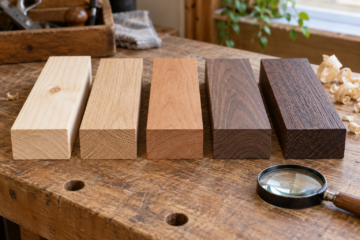
A low-contrast grain finish keeps the surface from looking striped or busy. It does not mean the wood has no character: figure, color variation, and pore texture still show, just without strong light-dark bands. The best species depend on whether you want a nearly uniform painted look, a quiet natural finish, or a subtle stained surface.
For most projects, start with the wood rather than trying to hide a strongly contrasting grain with stain. Stain often makes earlywood and latewood absorb color differently, increasing the contrast you meant to reduce. A clear finish or a light, even-toned stain is usually easier to control.
As an Amazon Associate we earn from qualifying purchases at no extra cost to you.


Our Top Picks
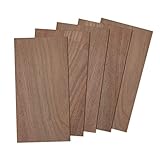
 Walnut Lumber Sheets Unfinished Walnut Wood Sheets Thick17x4x7/8 Inch - 1PCS3.93 x 7.87 x 0.8 inches1.4 PoundsCheck on Amazon
 10 Walnut Boards for Making Cutting Boards24"L x 2"W x 3/4"Th24 x 2 x 0.75 inches8 PoundsCheck on Amazon
 1/2 pt Minwax 13407 Clear Pre-Stain Wood Conditioner1/2 Pint3 x 3.25 x 3 inches0 PoundsCheck on Amazon
 Varathane Water-Based Ultimate Gloss PolyurethaneHalf Pint (Pack of 1)3 x 3 x 3 inches1.22 PoundsCheck on Amazon

What to look for in the wood
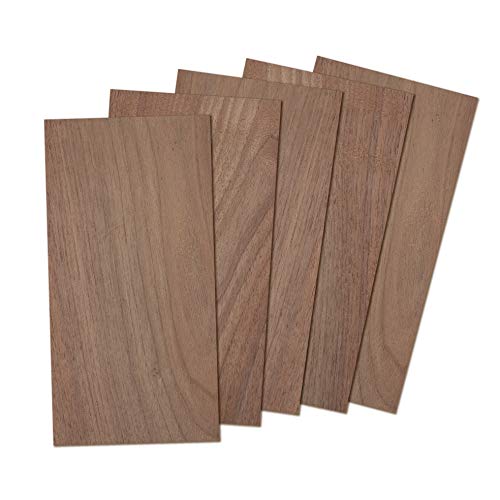
Look for straight, even grain and a small difference between the light and dark bands. A board’s appearance can vary substantially within a species, so inspect the actual stock under neutral light. Avoid cathedral grain, knots, and abrupt color changes if the goal is a calm, consistent panel.
Wood structure matters, too. Diffuse-porous species, such as maple and alder, tend to have less obvious growth-ring bands than ring-porous oak or ash. But diffuse-porous wood is not automatically plain: maple can show curly figure, and cherry can develop strong color variation. Grain contrast and figure are related, but they are not the same thing.
Species comparison
| Species | Typical grain appearance | Best use | Main trade-off |
|---|---|---|---|
| Hard maple | Fine, usually subtle; can show figure | Light clear finishes, furniture parts, work surfaces | Hard to stain evenly; figure varies by board |
| Alder | Even and relatively quiet | Cabinetry and painted or lightly stained work | Softer than maple; dents more easily |
| Birch | Fine, with mild color variation | Cabinet parts and plywood projects | Blotches under many stains |
| Beech | Fine, with visible small flecks and growth-ring variation | Furniture and interior parts | Can move with humidity; not the most uniform option |
| Cherry | Generally calm, with occasional streaks or figure | Natural warm-toned furniture | Darkens with light exposure; color may vary across boards |
| Poplar | Often quiet, but can have green or purple streaks | Paint-grade trim and furniture | Unpredictable color makes it less reliable under clear finish |
Best choices by finish
For a pale, clear finish, hard maple is a dependable starting point. Its fine texture and light color keep the surface restrained, especially when you choose straight-grained boards. It is dense, though, so it takes effort to machine and sand, and a clear finish can make small scratches more visible. Sand progressively to 180 or 220 grit; going much finer can reduce finish adhesion or leave uneven sheen with some products.
For a quiet, affordable painted project, alder or poplar may be enough. Alder is usually more uniform in color and grain, while poplar is often cheaper and easy to work. Poplar’s green and purple streaks matter under clear finish but are usually hidden by an opaque primer and paint. If you are painting shelving, face frames, or trim, the cheaper poplar is often the sensible choice. Use a suitable wood primer for interior paint and check coverage on the actual stock.
For a warm natural tone, cherry gives a calm grain without looking blank. Its color deepens over time, so an unfinished sample will not remain the same shade. Keep boards from different batches together when possible, and make a sample with the intended finish before assembling a large piece.
Birch is a reasonable budget choice for light-colored work, especially in plywood, but it needs care if you want a stained finish. A conditioner or washcoat can reduce blotching, though it may also make the color lighter. A pre-stain conditioner is worth testing on offcuts, not applying blindly to the finished project.
Sanding and staining without exaggerating grain
Stain is pigment or dye, not a way to erase growth-ring contrast. On oak, stain commonly collects in open pores; on maple and birch, absorption can be uneven. If low contrast is the priority, use a clear coat or choose a stain close to the wood’s natural color rather than a dark color that emphasizes every difference.
Prepare a test board from the same species and sand it exactly as you will the project. For most clear finishes, 180-grit sanding is a practical stopping point; for stain, follow the finish maker’s directions, since sanding too fine can leave color weak or patchy. Remove dust thoroughly and apply the finish in the same way you plan to use on the full piece. Compare the sample after it dries, because wet wood and wet finish both look darker than the cured surface.
For a more even stained result on blotch-prone wood, a thin washcoat or conditioner can help, but it is not a guarantee. Too much sealer can prevent stain from taking at all. Test at least two approaches—conditioned and unconditioned—before committing. For a low-contrast appearance, a water-based clear wood finish can preserve a lighter look than many oil-based finishes, which add warmth and amber color.
Buying and inspecting boards
Ask for straight-grained, clear stock if appearance matters, and inspect both faces rather than judging a board from its edge. For a wide panel, buy boards from the same bundle when practical; mixing stock can produce obvious differences in color and grain even within one species. On a small project, a few minutes of sorting boards can matter more than switching to a pricier wood.
Choose based on the finished use. Maple is a strong all-around choice for a light, durable surface; alder is easier to machine and often visually even; cherry suits a warm clear finish; and poplar is fine when paint will cover it. None guarantees a uniform result. Board selection, sanding, and a finish sample are the reliable ways to keep grain contrast under control.

0 Comments