What's inside
As an Amazon Associate I earn from qualifying purchases. This post may contain affiliate links at no extra cost to you.
A low-gloss finish reflects less light than satin or gloss, but it does not hide every flaw. On a tabletop, cabinet door, or trim board, the wood’s grain, pores, color variation, and sanding marks still show through. Choose a species for the appearance you want before choosing stain or finish: a clear matte coating usually changes the look less than a stain does, but it can still deepen the wood’s color.
As an Amazon Associate we earn from qualifying purchases at no extra cost to you.

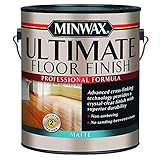


Our Top Picks
 Varathane Triple Thick Polyurethane Matte Wood Finish1 Quart (Pack of 1)3 x 1 x 2 inches1 PoundsCheck on Amazon
Start with the finished look
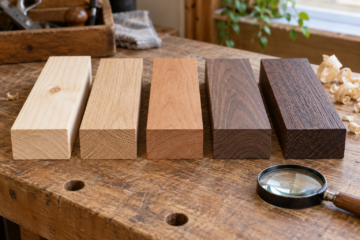
Decide whether you want a quiet, even surface or visible grain and texture. Maple and birch have relatively fine, subdued grain; oak and ash have pronounced pores and strong figure. Walnut brings dark brown color and varied grain without needing stain. These differences remain visible under matte finishes, which scatter light rather than making the surface disappear.
Ask for offcuts of the actual stock, not just a small sample from the lumberyard. Sand them to the same grit you plan to use, then apply the finish you intend to buy. Test stain and clear finish on separate samples: stain changes color, while clear finish can make pale wood look warmer or darker. Check the samples in the room’s daylight and evening light.
Compare common species
| Species | Appearance under low gloss | Practical trade-offs |
|---|---|---|
| Maple | Light, fine grain; can look clean and restrained | Hard and durable, but blotches with many stains. Clear finish is often the safer choice. |
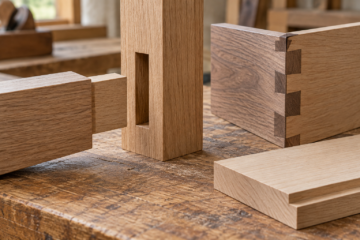
| White oak | Strong, open grain with prominent rays in some boards | Durable and widely used for furniture. Pores may need filling for a smooth, closed surface. |
| Walnut | Dark, varied grain that reads clearly without stain | Costs more than many domestic hardwoods; sunlight can lighten or shift its color over time. |
| Birch | Pale, fairly subtle grain | Often affordable, but stain can turn uneven or muddy. Test before committing. |
| Poplar | Usually painted; color can include green or gray streaks | Inexpensive and easy to machine. A clear finish may emphasize color variation many people do not want. |
Match species to the job
For a light, low-contrast cabinet or shelf, maple or birch with a clear water-based finish is a reasonable starting point. For visible grain and a natural furniture look, consider oak or walnut. If the piece will be painted, poplar is often a practical choice for interior trim or face frames; spending extra on walnut or oak adds little if the grain will be covered.
For a kitchen table or frequently handled cabinet, hardness matters as well as appearance. Maple is harder than walnut, but no species prevents dents or scratches. A low-gloss sheen can make small surface defects less conspicuous than gloss, yet it does not make a finish more protective. Choose the finish for the wear and cleanup the piece needs, then choose sheen.
If you are buying lumber, inspect boards for color and figure across their full length. A low-gloss coating makes differences between adjacent boards easy to see, especially on a wide panel. Buying boards from the same batch can help with consistency, but grain and color will still vary naturally.
Prepare the surface before finishing
Sand evenly, usually through 120, 150, and 180 grit for furniture. On many species, sanding much finer before staining can reduce absorption and leave color lighter or less even; follow the stain maker’s directions. Remove dust with a vacuum and a clean cloth that will not leave lint or residue. Glue squeeze-out is a common failure: it blocks stain and can show up as pale patches under a matte topcoat.
Open-pored woods such as oak can retain visible grain texture. That is part of their character, but it may not suit a smooth cabinet door. A grain filler can reduce the texture, though it adds work and may alter the color. If you do not need a glass-smooth surface, skip the filler and save the time.
Maple and birch are particularly likely to show uneven stain absorption. A test board is more reliable than assuming a product labeled “for all woods” will behave evenly. If the sample blotches, try a compatible conditioner or a gel stain, and test again; either can change the final color. For a natural pale look, clear finish may be simpler than trying to stain light wood evenly.
Choose the finish and sheen
“Matte,” “flat,” and “satin” are not perfectly consistent terms across brands. Check the product label and sample its actual appearance. Many furniture finishes are available in satin or matte; a matte water-based polyurethane is one option when you want a clear, relatively low-odor coating that preserves a lighter color. Water-based finishes can still raise the grain slightly, so lightly sand between coats as directed.
Oil-based finishes commonly add an amber tone, which can flatter walnut and oak but make maple or birch look yellower. A matte oil-based polyurethane can suit pieces where that warmth is welcome. Read the label for recoat times and ventilation requirements; rushing a coat or applying it too heavily can leave a soft, uneven surface.
For floors or other high-wear surfaces, select a finish rated for that use rather than relying on the word “matte.” Keep coats thin and follow the specified drying time. Dust nibs and brush marks are easier to notice when light skims across a broad surface, so work in clean conditions and use a test panel to check your technique.
Avoid common mistakes
Do not pick a species from a photo alone: lighting, white balance, and finish can all distort color. Do not assume low gloss means low maintenance; grease and fingerprints can still show, particularly on dark wood. And do not coat the whole project before testing stain, sheen, and color on a scrap from the same boards. A small sample costs little; correcting an uneven cabinet face or tabletop can mean sanding back to bare wood.

0 Comments