What's inside
As an Amazon Associate I earn from qualifying purchases. This post may contain affiliate links at no extra cost to you.
Oak and ash can both take a clear finish well, but their grain reads differently once the surface is coated. Oak usually has broader, more obvious rays and a stronger contrast between earlywood and latewood. Ash tends to show long, open growth-ring lines with less prominent ray fleck. The difference matters most on wide panels, tabletops, doors, and other surfaces viewed in raking light.
Compare the actual boards you plan to use, not just species photos. Growth conditions, cut, color, and board quality can change the look as much as the species does. A small finish sample will tell you more than a label on a lumber rack.
Spot the grain before you buy
Oak’s rays are the short, shiny-looking lines that cross its longer grain. They are easiest to see on quarter-sawn boards, where they may form broad flecks or ribbons. Flat-sawn oak usually has cathedral-shaped arches and less dramatic ray figure. White oak and red oak also differ in tone, though stains and clear coats can narrow or exaggerate that gap.
Ash commonly has a straight, prominent grain with long lines and a pale, creamy color. Flat-sawn ash can show cathedral patterns too, but its rays are generally less conspicuous than those on quarter-sawn oak. Ash is not automatically plain: figured boards can have striking variation, and large, open pores can make the grain look bold after finishing.
Look at the end grain and face together. Oak’s pores are large and ring-porous, meaning the earlywood pores form conspicuous bands near the start of each growth ring. Ash is also ring-porous and can have similarly visible pores, so pore size alone is not a reliable way to identify a board. If the species matters, buy from a supplier who can verify it.
Compare boards under useful conditions
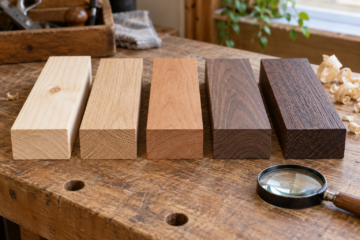
Ask to see several boards of the same cut and grade. Put them side by side, then look from several feet away and from a low angle. Strong shop lighting can make grain look more dramatic; raking light from a window or work lamp reveals raised fibers, sanding scratches, and abrupt color changes.
If you can, take a small offcut and wet it with mineral spirits or water to preview the color shift. Mineral spirits evaporate without raising the grain as much as water, but they do not exactly predict every finish. A clear oil or varnish can warm the wood more than a water-based clear coat. Test with the finish you intend to use before committing to a large project.
| Feature | Oak | Ash |
|---|---|---|
| Typical grain impression | Bold contrast, visible rays; quarter-sawn boards can show prominent fleck | Long, open lines; often a lighter, less ray-dominated look |
| Natural color | Ranges from pale to medium brown; red and white oak differ | Often pale cream to light brown, with board-to-board variation |
| Clear-finish effect | Oil-based finishes can deepen color and emphasize contrast | Clear coats can yellow or warm the pale surface; water-based finishes usually keep it lighter |
| Best reason to choose it | You want pronounced figure or a traditional oak appearance | You want a light, lively grain without strong oak ray fleck |
Make a sample that predicts the real result
Use an offcut from the same board or a matching piece from the same lot. Sand it using the same sequence planned for the project. For furniture, a practical starting point is 120 grit followed by 150 or 180 grit; going much finer can reduce absorption and make some finishes look less even. Follow the finish maker’s instructions if they specify a different preparation.
Apply the intended clear finish in the intended number of coats. Check the sample after it dries, not while it is wet. Compare it in the room where the piece will live, both in daylight and under evening lights. A sample that looks pale in a workshop can turn amber under an oil-based finish or warm indoor lighting.
For a cooler, lighter result, test a water-based clear finish. It generally adds less amber color than many oil-based products, though it can raise the grain and may make the wood look less deep. Sanding lightly between coats, as directed on the label, helps knock down raised fibers. If you want more warmth and a traditional appearance, test an oil-based polyurethane or varnish; expect more color change. Browse water-based clear wood finishes or oil-based polyurethane finishes by finish type, then check the label for interior or exterior use.
Prepare the surface to avoid finish problems
Oak and ash both have open pores. A clear film finish usually leaves those pores visible; it does not make the surface smooth by itself. If you want a glass-smooth top, pore filling adds work and can alter the grain contrast. If visible pores are acceptable, skip the filler and save time.
Sand evenly and remove dust before coating. Cross-grain scratches can become obvious when clear finish deepens the color, especially on oak’s contrasting grain. Check the surface with light held at a low angle. Vacuum first, then use a clean, dry cloth or the cleaning method recommended by the finish manufacturer. Avoid oily tack cloths unless the product maker approves them; residue can interfere with adhesion.
Do not use stain just to “bring out” grain unless a sample proves you like the effect. Stain can make earlywood and latewood contrast harsher, and uneven sanding may show up as blotches or pale patches. If color adjustment is needed, compare a clear finish against a lightly tinted product on scrap first.
Choose by the look and maintenance you want
Choose oak if you want obvious grain character, especially visible rays on quarter-sawn stock, and you are comfortable with a warmer or more traditional appearance. Choose ash if you prefer a pale base color and long, energetic grain without as much ray fleck. Neither species guarantees a uniform surface: sort boards carefully and arrange them before gluing up panels.
For a low-cost project or a surface where grain is secondary, the cheaper species is fine if the boards are straight, dry, and visually consistent enough for the job. Spend extra only when the specific grain pattern, cut, or color matters to the finished piece. A few minutes comparing boards and finishing an offcut is cheaper than discovering after assembly that the clear coat changed the look you chose.

0 Comments