What's inside
As an Amazon Associate I earn from qualifying purchases. This post may contain affiliate links at no extra cost to you.
Clear shellac is a good finish when you want wood to look warmer and more finished without burying its grain. It dries quickly, sands easily, and can be repaired without stripping the entire surface. The wood species underneath still matters, though. Shellac adds a mild amber cast, and it can emphasize uneven porosity, blotching, or dark end grain.
For the most predictable results, choose a species with an attractive grain pattern, reasonably even color, and a surface that sands cleanly. The best choice depends on whether you want a pale, natural appearance or a warmer traditional look.
As an Amazon Associate we earn from qualifying purchases at no extra cost to you.
Our Top Picks
Best overall wood species for clear shellac
Hard maple is one of the safest choices for a clear shellac finish. It has a tight, fairly uniform grain and a naturally light color. Shellac gives it a soft golden tone without making the surface look dramatically darker. It is a strong option for cabinet doors, small furniture, boxes, and trim where you want a clean appearance.
Cherry is another excellent match, especially if you want shellac to bring out warmth. Fresh cherry can look pinkish or pale, but it darkens naturally with exposure to light. Clear shellac accelerates the warm, reddish-brown appearance. This is attractive on furniture, although it can become darker and more orange than expected after several coats.
Walnut works well when you want a deep, traditional finish with visible grain. Clear shellac adds a little warmth and contrast without the muddy appearance that some dark stains produce. Walnut is usually expensive, so shellac is useful because it can provide a finished look without adding a separate stain. Use a dewaxed shellac if you plan to apply another finish over it.
White oak and red oak are also reliable choices. Their open pores remain visible under shellac, giving the surface a pronounced texture and grain pattern. White oak usually looks more neutral and refined, while red oak becomes warmer and more orange. If you want a glass-smooth surface, fill the pores before finishing; if you like a tactile, open-grain look, shellac alone is sufficient.
How common species behave under clear shellac
| Wood species | Appearance under clear shellac | Preparation difficulty | Best use |
|---|---|---|---|
| Hard maple | Pale gold, clean and even | Low to medium | Cabinetry, boxes, modern furniture |
| Cherry | Warm amber to reddish brown | Low | Furniture and traditional interiors |
| Walnut | Rich brown with stronger contrast | Low | Furniture, desktops, decorative work |
| White oak | Warm tan with prominent grain | Medium | Tables, cabinets, trim |
| Pine | Honey-colored, with possible blotching | Medium to high | Rustic projects and inexpensive builds |
| Ash | Pale tan with strong open grain | Medium | Paint-grade or light-grain furniture |
Best light-colored woods
Birch, beech, and ash can all take clear shellac, but their results differ. Birch is pale and attractive when evenly sanded, though it can show cloudy or uneven areas if the surface has scratches or glue residue. Beech has a fine, understated grain and takes a clear finish evenly, making it a sensible choice for turned parts, workbenches, and utility furniture.
Ash resembles oak but generally has a slightly lighter, more linear grain. Shellac highlights its open pores. It is a good cheaper alternative to white oak when the exact color and prestige of oak are not important. The trade-off is that ash can look visually busy, particularly on wide panels.
Poplar is inexpensive and easy to work, but it is not usually the best choice when the wood itself is the feature. Its green, gray, and purple streaks can look uneven under clear shellac. It is often a better substrate for paint. If you already have poplar and want a clear finish, test an offcut first; the result can be attractive on smaller parts but inconsistent across a whole project.
Softwoods and problem areas
Pine, spruce, fir, and cedar are inexpensive and can look good under shellac, especially for rustic work. Their main problem is uneven absorption. Earlywood is soft and porous while latewood is harder, so the finish can make the grain look striped or blotchy. Knots may also bleed resin or remain visibly darker.
Sand softwoods carefully through 150 or 180 grit. Going much finer can burnish the soft fibers and make absorption less even. A thin washcoat of shellac—roughly a 1-pound cut—can reduce blotching before the first full coat. Let it dry, sand lightly with 320 grit, and remove the dust. This is often enough; buying a separate conditioner is not essential for a small project.
For a predictable result on cheap pine, clear shellac is fine when variation is acceptable. If you need a uniform color, paint or use a dedicated stain-and-conditioner system instead.
Surface preparation and application
Sand the wood progressively to 180 or 220 grit. Remove all glue squeeze-out, especially around joints, because shellac will not hide it. On end grain, sanding to 220 or 240 grit can reduce excessive darkening. Break sharp edges slightly with one or two light sanding passes; a sharp edge holds very little finish and is easy to wear through.
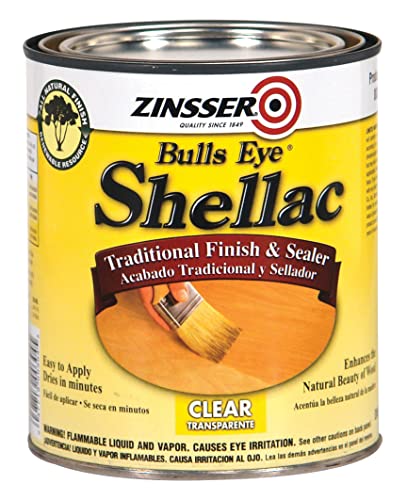
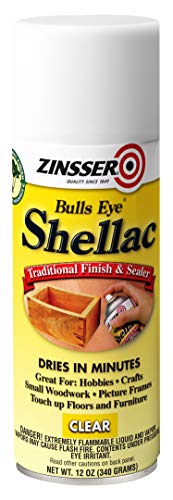
Use a fresh dewaxed clear shellac when you want the least added color or intend to topcoat with water-based polyurethane. For ordinary shellac work, premixed clear shellac is convenient, but check its age. Old shellac may dry slowly or remain soft. Flakes dissolved in denatured alcohol are more controllable, though they require mixing and filtering.
Apply two to four thin coats rather than one heavy coat. A 1.5- to 2-pound cut works well for brushing, padding, or spraying. Allow about 30 minutes of drying time in normal conditions, then scuff lightly with 320 or 400 grit after the second coat if the surface feels rough. Shellac can dissolve into its previous layer, so avoid aggressive sanding that exposes bare wood.
Choosing the finish for the project
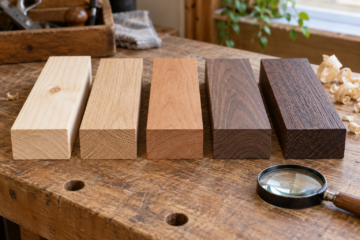
Choose hard maple or beech for a pale, even result; cherry or walnut for warmth; and oak or ash when you want strong, open grain. Pine is a reasonable budget option when you accept natural variation. For finishing supplies, a natural-bristle finishing brush is useful for small projects, while a lint-free finishing cloth works well for padding thin shellac coats.
Always test the complete schedule on a cutoff, including sanding, washcoat, shellac, and any topcoat. The test reveals more than the species name alone, particularly with cherry, pine, birch, and figured boards where color and absorption can vary considerably.

0 Comments