What's inside
As an Amazon Associate I earn from qualifying purchases. This post may contain affiliate links at no extra cost to you.
A bathroom shelf needs two different kinds of durability: the wood must tolerate humid air, and the finish must resist splashes and wipe-downs. No clear finish makes wood waterproof. The best choice depends on whether the shelf sits well away from the shower or regularly gets wet, and on how much grain and color you want to see.
As an Amazon Associate we earn from qualifying purchases at no extra cost to you.


Our Top Picks
 Varathane Water-Based Ultimate Satin PolyurethaneHalf Pint (Pack of 1)3 x 3 x 3 inches0.64 poundsCheck on Amazon


What matters in a bathroom
For a shelf outside the direct splash zone, many stable hardwoods work if they are sealed on all faces and given time to cure. Near a shower or sink, favor durable wood, careful joinery, and a finish intended for repeated moisture exposure. Standing water, wet towels, and leaks can defeat any clear coating, so use a shelf design that drains and does not trap water against the wall.
Wood movement is a common failure point. Seasonal humidity changes make solid boards expand and shrink across their width; a wide shelf fastened rigidly to a wall can crack, cup, or pull at its fasteners. Use a shelf about ¾ inch thick or more for typical spans, allow movement in the attachment, and seal the back, ends, and underside as well as the top. End grain absorbs finish quickly and is especially vulnerable to water, so give it extra coats.
Wood species compared
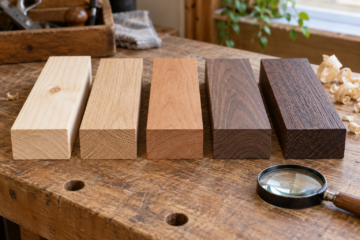
| Species | Appearance and workability | Bathroom trade-off | Best fit |
|---|---|---|---|
| White oak | Prominent grain; fairly hard | Good moisture resistance for a domestic hardwood, but not waterproof; open grain needs careful finishing | A durable, visible-grain shelf |
| Teak | Golden to brown; oily, often stable | Handles moisture well, but its natural oils can complicate glue and finish adhesion; costs more | Frequently damp areas, if properly prepared |
| Maple | Light, fine grain; hard and smooth | Can show blotchy color with some stains; clear finish is simpler than trying to darken it evenly | A clean, pale look outside direct spray |
| Cherry | Fine grain; deepens with light exposure | Moderately hard, but not a first choice for repeated wetting | A warm-toned shelf in a well-ventilated bathroom |
| Pine | Light, knotty, easy to cut | Cheaper and workable, but softer, dents easily, and can move; knots may bleed through some finishes | A budget shelf away from regular splashes |
Which wood should you buy?
White oak is a strong all-around choice when you want visible grain and a shelf likely to see occasional splashes. Its tyloses help block water movement through the pores, but that does not make it suitable for standing water. Teak is a better candidate for a persistently damp location, though it is expensive and can be harder to glue or coat. Wipe oily surfaces as directed by the finish maker, and test adhesion on an offcut before committing.
Maple is a sensible pick for a light, understated shelf. A clear finish usually keeps the color fairly natural, while stain can turn uneven on its dense, variable grain. Cherry suits a warmer room and gradually darkens with light. For either, choose a location where the shelf can dry between uses rather than treating the species as a substitute for ventilation.
Pine is fine when the shelf is inexpensive, lightly loaded, and outside the splash zone. Select a straight, dry board with few large knots; soft or damp stock is more likely to cup or dent. If the shelf is next to a shower, spending more on oak or teak is generally more sensible than asking a low-cost pine board and a finish to withstand frequent soaking.
Choose a finish for the exposure
For most bathroom shelves, a film-forming clear finish offers better splash protection than a penetrating oil alone. A water-based polyurethane tends to preserve a pale wood color and has lower odor; an oil-based polyurethane usually adds warmth and amber color. Follow the label for indoor use, number of coats, recoat time, and full cure. “Dry to touch” is not the same as ready for regular water exposure; curing can take days or longer depending on the product and conditions.
Apply at least three thin coats to the exposed surfaces, with the specified sanding between coats. Seal the underside, rear edge, mounting holes, and end grain too. A water-based polyurethane clear finish is a practical option when you want to limit color change. For a warmer tone, consider an oil-based polyurethane clear finish, allowing for longer drying and stronger odor during application.
Do not rely on wax or a light coat of furniture oil near regular splashes. They are easy to refresh but provide less durable water protection and may need frequent maintenance. If water beads on the shelf, that is useful, but it is not proof that water cannot get through a scratch, pinhole, or unsealed edge.
Preparation and application
Buy boards that are straight and dry, then let them acclimate indoors for several days before cutting. Sand progressively—typically 120, 150, then 180 grit. Going much finer can reduce finish adhesion or make some surfaces appear uneven. Remove dust thoroughly without leaving oily residue. Round sharp edges slightly; a sharp corner holds less finish and chips more readily.
Test the finish on an offcut from the same board, especially with maple, pine knots, or oily teak. Brush or wipe thin coats rather than trying to build protection in one heavy layer. Thick coats can stay soft, sag, or wrinkle. Let each coat dry as directed, sand lightly only when the label calls for it, and wait for full cure before placing toiletries or damp items on the shelf.
Installation and upkeep
Fasten the shelf into studs or suitable anchors for the expected load, and avoid trapping an unsealed edge against tile. A small gap at the wall helps water escape and lets air circulate. Check the shelf periodically for dull patches, cracks, peeling finish, or dark spots at end grain; repair damage before water reaches bare wood. Wipe up puddles and do not store wet sponges or bottles with water collecting underneath.
For a shelf outside the shower, clear-coated pine or maple can be an economical choice if you seal every face and accept occasional touch-ups. For frequent splashes, white oak offers a useful balance of durability, appearance, and availability; teak is worth considering when exposure is higher and the budget allows. In every case, good preparation, complete coverage, and a place for water to drain matter as much as the species.
0 Comments