What's inside
As an Amazon Associate I earn from qualifying purchases. This post may contain affiliate links at no extra cost to you.
Our Top Picks
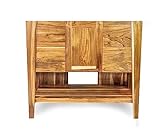
 Modway EEI-5087-NAT Birdie 36" Teak Wood Bathroom Vanity36 Inch18 x 35 x 34 inches58 poundsCheck on Amazon
 EcoDecors 36" Solid Teak Bathroom Vanity Cabinet36x21.25x3221.25 x 36 x 32 inches90 poundsCheck on Amazon
 Signature Hardware 48" Novak Vanity Cabinet in Natural48" W x 34" H x 21.5" D21.5 x 48 x 34 inches535.13 poundsCheck on Amazon
 Polyurethane Wood Finish Water Based Polyurethane Clear Gloss100 ml1.6 x 1.6 x 4.7 inchesCheck on Amazon
 AquaCoat Water-Based White Cabinet Wood Grain Filler Gel16 Fl Oz (Pack of 1)10 x 10 x 10 inches1.2 poundsCheck on Amazon

What matters in a bathroom
A clear finish shows the wood’s natural color and grain, so species choice matters more than it would under paint. But a vanity door also sees humid air, splashes, and repeated wiping. No wood species is waterproof: sound joinery, sealed end grain, and a finish maintained before it wears through matter at least as much as the species.
For most projects, rift- or quarter-sawn white oak is the dependable all-around choice. Cherry suits a warmer, smoother look, while maple gives a pale, restrained face but takes more care to finish evenly. Walnut is attractive but darker and usually costs more. If the door is near a shower or often gets wet, favor stable, well-dried stock and a durable film finish rather than relying on naturally rot-resistant wood.
As an Amazon Associate we earn from qualifying purchases at no extra cost to you.



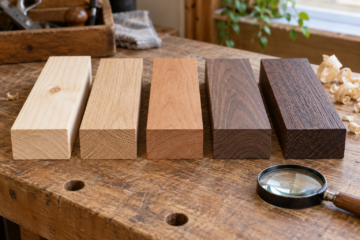
Species comparison
| Species | Appearance under clear finish | Bathroom-door strengths | Main trade-offs |
|---|---|---|---|
| White oak | Prominent grain; tan to brown, with ray fleck on quarter-sawn stock | Hard, durable, and relatively stable when quartersawn; good for a long-wearing door | Open pores need filling for a glass-smooth finish; can darken with age |
| Cherry | Fine, smooth grain; pale pink-brown to reddish brown | Easy to machine and sand; attractive without pore filling | Darkens noticeably with light exposure; softer than oak and dents more readily |
| Hard maple | Very subtle grain; cream to light tan | Hard, clean-looking, and readily available | Can show blotchy color with some stains; pale wood makes finish defects obvious |
| Walnut | Rich brown, often with varied grain | Easy to work and visually distinctive with a clear finish | Higher cost; can lighten or shift in color with sunlight, and dents more easily than oak or maple |
| Birch | Fine grain; pale with occasional darker streaks | Often an economical choice for a simple, light-toned door | Can blotch with stain; color and figure vary, especially in lower-cost stock |
Choose for the look you want
White oak is the safest starting point if you want visible grain and a sturdy door. Rift-sawn boards produce straighter, quieter lines; quarter-sawn boards show more medullary ray fleck. Flat-sawn oak has broader cathedral patterns and may move more across its width as humidity changes. That movement is normal, but it can make a wide solid-wood panel harder to keep flat.
Cherry is a good choice for a warm, furniture-like vanity. A clear finish preserves its natural variation, but don’t expect the color to stay fixed: light exposure gradually deepens it, and a door partly shaded by a towel or cabinet edge can age unevenly. If matching an existing vanity, test the actual boards under the intended finish instead of relying on a color sample.
Maple and birch work when you prefer a light face or need to control cost. With clear finish alone, both can look clean and understated. If you plan to stain either species, test scraps first: uneven absorption can create dark patches, especially around end grain and figure. A compatible washcoat or stain conditioner may help, but it will not make every board take color uniformly. For a natural look, skipping stain is often the better choice.
Walnut is worth the extra cost when its dark color is central to the design. Its pores are less open than oak’s in many boards, but grain still varies, and a clear finish can make the surface look substantially richer. If you want a pale vanity that will remain pale, choose another species.
Solid wood, frame, or panel?
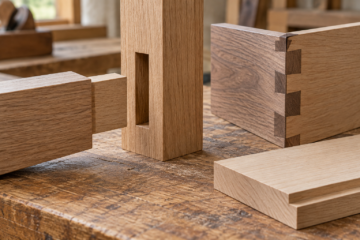
Wood expands and contracts across the grain as indoor moisture changes. A solid slab door is therefore a risky choice, particularly if it is wide. A frame-and-panel door accommodates movement better: the center panel floats in grooves and should not be glued firmly around its perimeter. A stable plywood panel with a matching veneer is another practical option for a flat, wide face. Veneer edges still need sealing, and cheap, thin veneer is easy to sand through.
Buy straight, dry lumber without checks or loose knots near the joinery. For solid panels, use stock from the same batch and arrange the grain before gluing. A moisture meter is useful if lumber storage conditions are uncertain; for interior work, wood near 6–8% moisture content is a common target, though local indoor conditions affect the right number. Do not glue a damp panel and expect the finish to prevent later movement.
Prepare and finish for damp air
Sand with the grain, typically progressing through 120, 150, and 180 grit. For many clear film finishes, stopping at 180 is enough; sanding very fine can reduce adhesion or leave the surface less receptive to some products. Remove glue squeeze-out completely—clear finish will not hide it—and ease sharp edges slightly so the coating does not pull thin at corners.
Seal every face, edge, hinge recess, and exposed end grain, not just the visible front. Apply the same coating schedule to both sides to reduce uneven moisture exchange. Follow the finish maker’s instructions for coats, recoat times, and cure time. A water-based clear finish generally keeps pale woods closer to their raw color; oil-based finishes usually add warmth and can amber over time. For a bathroom door, consider a quality water-based or oil-based polyurethane intended for interior woodwork, and let it cure fully before installation. An interior clear polyurethane is a reasonable category to compare, but check the label for application and cure requirements rather than assuming every clear coating offers the same protection.
Open-pored oak may need grain filler if you want a level, furniture-smooth surface; without it, the pores remain visible and tactile. That is a look preference, not a defect. For a compatible filler, compare water-based wood grain filler options and test one on an offcut, since filler can change the color and contrast of the grain.
Avoid common failures
Water that sits at a bottom edge can get behind a finish and cause dark staining, swelling, or peeling. Leave a sensible gap above the floor, wipe standing water promptly, and inspect the bottom edge and hinge areas periodically. Avoid trapping moisture with a weak finish schedule or installing the door before the coating has cured.
For a low-cost build, birch or maple can be perfectly fine, especially with a clear, unstained finish and careful prep. Spend extra on white oak when you want prominent grain, a hard-wearing face, and the look to justify the price—not because oak makes a door maintenance-free. Whichever species you choose, a well-made frame-and-panel door with complete, intact finish protection is a better bathroom bet than an unsealed slab of premium lumber.

0 Comments