What's inside
As an Amazon Associate I earn from qualifying purchases. This post may contain affiliate links at no extra cost to you.
A clear finish shows the wood, so the bathroom door needs to look good and tolerate repeated changes in humidity. The best choice depends on how close the door is to the shower, how well the room ventilates, and whether you want a uniform appearance or visible grain. No wood species makes a poorly sealed door waterproof; the finish and the door’s construction matter just as much.
As an Amazon Associate we earn from qualifying purchases at no extra cost to you.


Our Top Picks
 Varathane Water-Based Ultimate Satin PolyurethaneHalf Pint (Pack of 1)3 x 3 x 3 inches0.64 poundsCheck on Amazon

Short answer
For a clear-finished bathroom door, quartersawn white oak is a strong all-around choice: it is durable, relatively stable, and has an attractive grain under clear finish. Mahogany is another good option if you prefer a quieter, reddish-brown look. Sapele is often a practical, less expensive substitute, though its color and grain can vary.
If the door is in a small, poorly ventilated bathroom or gets splashed, consider a painted door instead. A clear finish can slow moisture uptake, but it cannot prevent damage indefinitely if water repeatedly reaches the wood or an unfinished edge.
How the main choices compare
| Wood | Appearance under clear finish | Stability and durability | Best fit |
|---|---|---|---|
| Quartersawn white oak | Prominent grain; ray fleck may show | Durable; quartersawn boards are relatively stable | Traditional or contemporary doors where visible grain is welcome |
| Mahogany | Usually even grain and warm reddish-brown color | Generally stable and easy to work | A smoother, less busy appearance |
| Sapele | Reddish-brown, sometimes ribbon-striped | Good durability; appearance can vary between boards | A mahogany-like look at a lower cost when the stock is selected carefully |
| Cherry | Fine grain that deepens with light exposure | Works well indoors but dents more readily than oak | A warm, understated finish in a lower-traffic home |
| Maple | Pale, subtle grain; can look plain | Hard, but blotching can be conspicuous | A light look when you are prepared to test the finish first |
Choose for the room, not just the species
In a bathroom with a working exhaust fan and no direct shower spray, a well-made solid-wood door can do well with regular care. For a door beside an open shower, or one exposed to wet towels and frequent splashing, the risk is higher. Water commonly causes trouble first at the bottom edge, hinge mortises, and joints, where finish is thin or damaged.
A stable core matters. A solid-wood door can move across its width as humidity changes; narrow rails and stiles joined properly are less likely to cup than a wide slab made from one board. A veneer-faced engineered door may be more stable, but only buy one intended to accept a clear finish, and check that its edges and face veneer are real wood. Thin veneer leaves little room for sanding out damage.
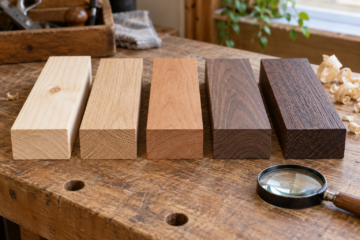
Quartersawn white oak is a sensible default when you want visible grain and a hard-wearing surface. Flatsawn oak is usually cheaper and has a more cathedral-like pattern, but it can move more across the board. Mahogany and sapele are good alternatives when you want a more even, warm color; compare actual boards, because “mahogany” covers several woods with different appearance and supply. Cherry is a pleasant choice if you accept that it darkens over time. Maple is not a bad bathroom wood, but clear finish can make uneven sanding or glue residue stand out as blotches.
What to inspect before buying
Look at the whole door or the boards that will make it. Avoid stock with twist, open checks, loose knots, or abrupt changes in color that will be hard to hide under clear finish. If the door will be assembled from boards, choose pieces with similar color and grain, then let them acclimate in the house for several days before machining. Keep the bathroom ventilated during and after showers; a fan that runs for about 20 minutes afterward helps remove moisture.
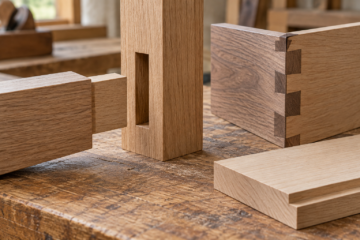
For a custom door, use dry interior stock and sound joinery rather than relying on a thick coating to hold the assembly together. A door that is already bowed or poorly fitted will not be fixed by finish. Leave normal fitting clearance for the manufacturer’s instructions and local humidity, and do not trim a veneered door without confirming how much solid material its edges contain.
Prepare and finish all surfaces
Sand consistently, typically progressing through 120, 150, and 180 grit for most hardwoods. Follow the door maker’s instructions if it is veneered; aggressive sanding can cut through the face. Remove dust thoroughly, and test the complete finish schedule on an offcut or hidden area. A clear coat often darkens wood and increases contrast, while water-based products tend to preserve a paler look.
Use a finish intended for interior woodwork and suitable for high-humidity rooms. A quality water-based or oil-based polyurethane can work; follow its label for coats, recoat time, ventilation, and cure time. Two or three coats on broad faces are common, but the critical step is sealing every surface, including the top and bottom edges, hinge and lock cutouts, and any freshly trimmed areas. Do not install the door before the finish has cured enough for handling. For a straightforward application, compare water-based interior polyurethane options, and check the label rather than assuming every product is suitable for a bathroom.
Common failures and maintenance
Peeling or cloudy finish often points to moisture getting under a damaged coating, incompatible products, or recoating before the previous layer was ready. Black marks near the bottom can mean standing water or moisture trapped against the wood. Swelling and sticking are usually seasonal movement or water exposure, not a reason to plane the door immediately; first check whether humidity has fallen and the door has returned to size.
Wipe splashes promptly, keep the fan working, and inspect the lower edge and hardware cutouts once or twice a year. Repair chips before water gets beneath the finish. If the room routinely stays damp, the cheaper painted option is often more sensible: paint hides mismatched wood and is easier to touch up. For a clear-finished door, however, quartersawn white oak offers the best balance of appearance, durability, and predictable performance when properly built and sealed.
0 Comments