What's inside
As an Amazon Associate I earn from qualifying purchases. This post may contain affiliate links at no extra cost to you.
Clear finish leaves the grain visible, so the best door-panel wood is not automatically the hardest or most expensive. It needs a face you like, stable construction, and a surface that will take stain or clear coat without blotching. For most interior doors, good-quality veneer plywood is the practical choice; solid wood makes sense when you want a traditional raised panel or plan to shape the panel yourself.
As an Amazon Associate we earn from qualifying purchases at no extra cost to you.


Our Top Picks
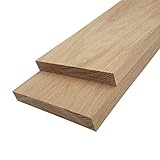
 Barrington Hardwoods Red Oak Lumber Board3/4" x 2" x 48"100 x 100 x 50 Centimeters5 poundsCheck on Amazon
 Barrington Hardwoods Domestic Variety Pack 5 Walnut3/4" x 2" x 12"12 x 2 x 0.75 inchesCheck on Amazon
 1/2 pt Minwax 13407 Clear Pre-Stain Wood Conditioner1/2 Pint3 x 3.25 x 3 inches0 PoundsCheck on Amazon

Start with panel construction
Most interior doors use a floating panel set into grooves in the stiles and rails. The panel is allowed to expand and contract across its width; glue is generally applied to the frame joints, not around the panel’s edges. If you glue a solid panel all the way around, seasonal movement can split the panel or open a joint. Follow the door design’s construction details rather than treating every panel like a glued-up tabletop.
For a flat panel, cabinet-grade plywood with a real-wood face is usually easier to keep flat than a wide solid-wood slab. Choose the face species for appearance, then check the panel’s core and veneer quality. A thin or uneven face veneer can sand through quickly, especially at edges and corners.
Wood options at a glance
| Material | Appearance and finish | Movement and workability | Best use |
|---|---|---|---|
| Birch plywood | Fine, light grain; can blotch under stain | Stable panel; face veneer may be thin | Paint-like pale clear finish or a budget project |
| Maple plywood | Subtle grain; can look plain and uneven when stained | Stable; hard to sand evenly without care | Light, restrained appearance |
| Red oak plywood | Strong open grain; takes many stains clearly | Stable panel; prominent texture | Traditional oak interiors |
| White oak plywood | Distinctive grain, often less pink than red oak | Stable; generally pricier | Higher-end natural or medium-brown finish |
| Solid poplar | Fine grain, but green or gray streaks can show | Moves with humidity; easy to machine | Paint, or a small panel where color variation is acceptable |
| Solid oak | Strong, familiar grain and good stain clarity | Moves across the grain; shapes well with sharp tools | Traditional raised panels and matched solid-wood work |
Best choices by look and budget
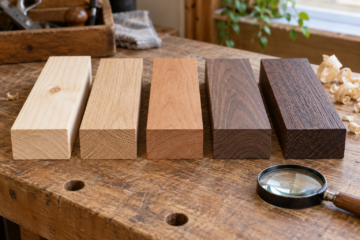
For a clear, natural finish, start with oak. Red oak is widely available and shows a bold grain under clear coat. White oak often reads less pink and can suit a quieter, modern palette, but costs more in many markets. Buy the actual panel or a cutoff from the same sheet before committing: color varies between boards and even across one veneer face.
For a pale, low-grain look, consider maple or birch. Both can be attractive under a clear finish, but neither is a safe bet for an evenly dark stain without testing. Maple often shows cloudy patches; birch can absorb stain unevenly. A pre-stain conditioner or sanding sealer may reduce blotching, but it can also lighten or mute the color. Test the full stain-and-topcoat schedule on scrap, not just stain on bare wood.
For a tight budget, birch plywood is often adequate. It is a sensible choice for a secondary room or a simple painted door, provided the face is sound and the panel edges will be hidden in the frame. For a prominent clear-finished door, the price saved may not justify mismatched veneer, patches, or a face too thin to sand safely. Compare the plywood’s stated face grade and inspect it under raking light.
What to check when buying plywood
Look for a panel sold for cabinet or furniture work, with a face species and core suited to a visible interior surface. Avoid sheets with open face splits, lifted veneer, conspicuous patches, or a core that crumbles at the edge. A 1/4-inch panel is common in light interior doors, but use the thickness specified by the door’s grooves and design; forcing a thicker panel into a groove can damage the frame.
Store the sheet flat in the room where you will work, supported evenly, for at least a day before cutting. This gives it time to adjust to the indoor conditions and makes it easier to spot warping. For a coordinated door, cut all visible panels from the same sheet and keep their grain direction consistent.
For solid panels, use straight, dry stock and allow the panel to acclimate before machining. Wide panels are usually edge-glued from narrower boards with matched color and grain. A moisture meter is useful; indoor furniture stock is commonly around 6–8% moisture content, though local conditions vary. A panel made from wet stock can shrink after assembly and leave gaps.
Sanding and finishing without damaging the face
Start with a smooth, clean surface. On solid wood, sand progressively through about 120, 150, and 180 grit; going much finer can reduce stain absorption and make color less even. Plywood face veneer may be only a fraction of an inch thick, so skip aggressive leveling and avoid power-sanding an edge or corner. If the face already looks smooth, a light pass at 150 or 180 grit may be enough.
Vacuum the dust and wipe with a clean, dry cloth. Do not use a damp rag immediately before finishing unless the finish instructions allow it; raised grain can create extra sanding work. Apply the intended stain or clear coat to a sample first, including any conditioner or sealer. Then use the same number of coats and sanding steps on the door. For clear finishes, a water-based product tends to preserve a pale wood color, while oil-based finishes add warmth and ambering. Check the label for recoat times and ventilation requirements.
A common failure is sanding through veneer while trying to remove a small scratch. If a defect is deeper than the face layer, replacing the panel is often cleaner than trying to disguise the exposed core. Another is applying stain before removing glue squeeze-out: glue blocks absorption and leaves pale marks. Clean joints carefully during assembly, and inspect the face before sanding and again under strong angled light.
A practical buying plan
For a flat panel, compare oak veneer plywood and maple veneer plywood by face quality and sheet cost, not just species name. If staining birch or maple, a pre-stain wood conditioner is worth testing, but it is not a guarantee against blotching. For a solid raised panel, buy well-dried stock from a local lumber supplier where you can inspect color, grain, and defects before paying.
Choose oak for visible grain and reliable stained results, maple or birch for a lighter, quieter look, and inexpensive plywood when the door is less prominent or will be painted. In every case, a small finish sample and careful sanding matter more than an expensive species chosen without seeing the actual wood.

0 Comments