What's inside
As an Amazon Associate I earn from qualifying purchases. This post may contain affiliate links at no extra cost to you.
A clear-finished pantry door is a good place to show attractive wood, but the door also has to stay flat, resist dents, and tolerate fingerprints and occasional moisture. The best all-around choice is usually quarter-sawn white oak. It is stable, hard enough for daily use, widely available, and looks good under clear water-based or oil-based finishes.
That is not the only sensible option. Cherry gives a smoother, warmer appearance, maple provides a clean modern look, and pine is an inexpensive choice for a painted or deliberately rustic door. The right species depends on whether you want prominent grain, a pale color, low cost, or the easiest finishing process.
As an Amazon Associate we earn from qualifying purchases at no extra cost to you.


Our Top Picks
 AquaCoat Water-Based White Cabinet Wood Grain Filler Gel16 Fl Oz (Pack of 1)10 x 10 x 10 inches1.2 poundsCheck on Amazon


Best Species for a Clear-Finished Pantry Door
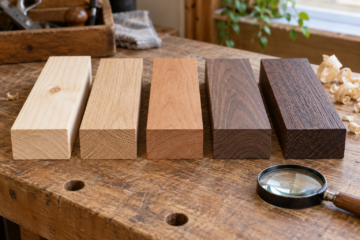
| Wood species | Appearance under clear finish | Stability and durability | Best use |
|---|---|---|---|
| White oak | Strong grain, tan to light brown | Very good; hard and reasonably stable | Best overall choice |
| Cherry | Fine grain, pink-brown that darkens with age | Good; machines and sands easily | Warm, furniture-like doors |
| Hard maple | Very pale, subtle grain | Good; hard but can show machining marks | Clean contemporary designs |
| Walnut | Dark brown, dramatic grain | Good; expensive | High-end accent or full door |
| Poplar | Greenish-white with color variation | Moderate; relatively soft | Painted doors, not usually clear finished |
| Pine | Visible knots and strong light-dark variation | Less stable; dents easily | Low-cost rustic projects |
Why White Oak Is the Safest Choice
White oak has enough hardness for a door that gets opened by its edge or pulled around the handle. Its open grain adds visual interest without requiring stain, and it accepts both oil and water-based finishes reliably. Quarter-sawn or rift-sawn boards also show less dramatic seasonal movement across the width than flat-sawn stock.
Choose boards or panels with similar grain direction and color. A pantry door assembled from mismatched pieces can look patchy after clear coating, especially when one board contains sapwood. If you want a calm, modern face, select rift-sawn oak with mostly straight grain. If you want a traditional look, flat-sawn oak shows more cathedral figures.
White oak is not the cheapest hardwood, and its open pores require more finish to look uniformly smooth. That is a cosmetic issue, not a structural problem. For a door that will be viewed from several feet away, one additional coat is usually enough. For a glass-smooth surface, use a grain filler before finishing.
When Cherry, Maple, or Walnut Make More Sense
Cherry is easier to make look refined than many species. It sands smoothly, has relatively fine pores, and needs no stain to look finished. Its color changes significantly with light, moving from pinkish tan toward a deeper reddish brown. If you want the door to keep its original pale color, use a finish with UV resistance, although no clear finish completely stops darkening.
Hard maple suits a white, minimalist kitchen. It is hard and wear-resistant, but its smooth, pale surface exposes scratches, glue spots, uneven sanding, and swirl marks. Avoid aggressive sanding and inspect the face under raking light before applying finish. Maple can also look blotchy with many oil stains, so clear coating is usually preferable to staining.
Walnut is attractive without stain and can make a pantry door look like fine furniture. The trade-off is price and the risk of wasting expensive boards on defects or poor layout. Use it when the door is a visible feature, not because it performs dramatically better than oak or cherry.
Why Pine Is Not Always a Bargain
Clear-finished pine is inexpensive and perfectly acceptable for a cottage, utility, or rustic kitchen. It is also easy to dent, more likely to contain knots, and more prone to movement than properly dried hardwood. Wide pine boards can cup or twist as indoor humidity changes. Select kiln-dried, clear or nearly clear stock, and avoid a single wide board for a large door.
Pine absorbs finish unevenly. A clear coat will emphasize its natural variation, but a stain can produce dark blotches around knots and earlywood. If you want stained pine, apply a wood conditioner for pine or a compatible washcoat first. Test the entire finishing schedule on an offcut; conditioner changes color and can reduce stain intensity.
Construction Matters More Than Species
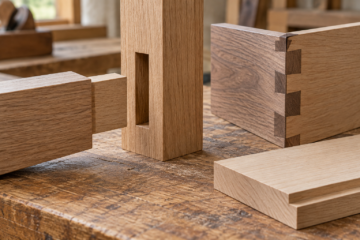
A stable design is more important than choosing an exotic species. For a solid-wood door wider than about 24 inches, use frame-and-panel construction or a glued-up panel with appropriate allowance for movement. Do not permanently glue a solid panel into a frame groove. The panel needs to expand and contract across its grain.
For a simple slab door, narrow boards are safer than one wide board. Arrange the growth rings in alternating directions, use well-jointed edges, and let the wood acclimate indoors for roughly one to two weeks before final assembly. Target indoor moisture content is commonly around 6% to 8%, though the correct range depends on your climate.
Use a quality interior woodworking glue for ordinary dry kitchens. Apply enough for a thin, continuous film without flooding the joint. Squeeze-out left on the face will resist stain and clear finish, so remove it carefully while it is rubbery or clean the surface after the glue fully dries.
Sanding and Surface Preparation
Mill the wood flat before sanding. Start at 80 or 100 grit only when necessary, then progress through 120 and 150 grit. Stop at 180 grit for most oil or water-based clear finishes. Sanding much finer can burnish some woods and reduce finish absorption, particularly when you plan to stain.
Break sharp edges with a light pass of 180-grit paper. A tiny eased edge holds finish better than a razor corner, which is easily chipped. Vacuum the surface, then wipe with a clean, barely damp lint-free cloth if the finish manufacturer allows it. Do not rely on a tack cloth that leaves wax or silicone residue.
Inspect for glue spots using angled light. A small water wipe can reveal uneven sanding, but let the wood dry completely before coating. For oak, use water-based wood grain filler if you want filled pores and a flatter surface. Apply it to both faces and edges so the door does not receive a different moisture barrier on each side.
Choosing the Clear Finish
Water-based polyurethane stays relatively clear and dries quickly, making it a strong choice for maple, oak, and light-colored kitchens. Oil-based polyurethane adds amber color and usually provides a longer working time, but it can deepen cherry and yellow pale woods. Hardwax oils are easy to repair and produce a natural low-sheen appearance, but they generally offer less film protection than several coats of polyurethane.
Finish every face, edge, and cutout, not just the front. Apply at least two finish coats to a low-wear interior door and three to four thin coats where hands frequently touch the surface. Lightly sand between coats only when the product instructions call for it. Let the door cure before installing hardware; “dry to touch” is not the same as fully hardened.
For most buyers, quarter-sawn white oak with a clear water-based polyurethane offers the best balance of appearance, durability, and predictable results. Choose cherry for warmth, maple for a pale modern face, walnut for a premium statement, and pine when low cost or rustic character matters more than dent resistance.

0 Comments