What's inside
As an Amazon Associate I earn from qualifying purchases. This post may contain affiliate links at no extra cost to you.
A bathroom shelf needs two kinds of moisture resistance: the wood must tolerate occasional humidity and splashes, and the finish must slow water absorption at every surface, edge, and end grain. For a clear-finished shelf, teak is the safest premium choice. White oak and sapele are usually better values for an indoor shelf, especially when the shelf is not directly over a sink or inside a shower enclosure.
No wood species is waterproof once it has been cut, drilled, sanded, and assembled. A well-finished white oak shelf can outlast a poorly finished teak shelf. The important details are stable stock, sealed end grain, waterproof glue, and a finish applied in enough coats to close the surface.
As an Amazon Associate we earn from qualifying purchases at no extra cost to you.


Our Top Picks
 Varathane Water-Based Ultimate Satin PolyurethaneHalf Pint (Pack of 1)3 x 3 x 3 inches0.64 poundsCheck on Amazon


Best wood species for a bathroom shelf
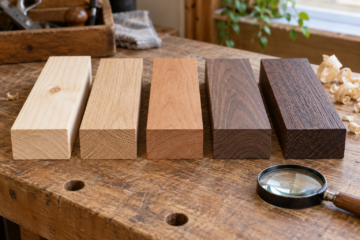
| Wood | Moisture resistance | Appearance under clear finish | Best use |
|---|---|---|---|
| Teak | Excellent | Golden brown, often with dark grain | Wet locations and premium shelves |
| White oak | Very good | Light to medium brown, prominent grain | Best overall value |
| Sapele | Very good | Reddish brown with ribbon-like grain | Decorative shelves and trim-matching |
| Black walnut | Good | Dark brown with attractive variation | Dryer bathrooms and appearance-focused projects |
| Red oak | Fair | Open, strong grain | Budget projects with careful sealing |
| Soft pine | Poor to fair | Light, knotty, easily dented | Low-cost shelves away from splashing |
Teak versus white oak
Teak contains natural oils that help it resist moisture and decay. It is a good choice for a shelf near a tub, shower, or frequently used sink. It is also dimensionally stable compared with many domestic hardwoods. The drawbacks are price, limited availability in wide clear boards, and difficulty gluing oily surfaces. Freshly machined teak should be wiped with acetone or the solvent recommended by the adhesive manufacturer, then glued promptly.
White oak is the practical choice for most bathrooms. It is hard, widely available, and takes clear water-based or oil-based finishes well. Quarter-sawn white oak is especially stable and has a distinctive ray pattern, but ordinary flat-sawn boards are fine for a shelf. A clear finish will make white oak somewhat darker and warmer; water-based finishes preserve a lighter color better than oil-based polyurethane.
Sapele is a strong alternative when you want a richer reddish color. It is stable and naturally durable, but its interlocked grain can tear out during planing or routing. Walnut looks excellent with a clear finish but costs more than oak and is not as forgiving of standing water or repeated wetting. Pine is acceptable for a cheap guest-bath shelf, but it dents easily and absorbs water quickly through knots and end grain.
For a straightforward purchase, compare local hardwood prices with teak wood boards before deciding. Online boards are useful for small shelves, but shipping can make larger pieces expensive.
Choose and prepare the stock
Use boards at least 3/4 inch thick for a typical shelf up to about 30 inches long. A 1-inch board resists sagging and feels more substantial, particularly at widths over 8 inches. Avoid boards with cracks, loose knots, or visible cupping. Sight down the length before buying and check both faces for twist.
Let the wood acclimate indoors for three to seven days, separated by stickers so air can reach both sides. Do not finish wood that feels damp or cold compared with the room. Bathroom temperature and humidity change, so a shelf should not be fitted tightly between walls. Leave roughly 1/16 inch of clearance at each side if it is installed in a recess.
Sand progressively to 120, 150, and finally 180 grit. Going much finer than 180 can reduce finish adhesion on some products. Break sharp edges with a small chamfer or a few sanding passes. Sharp edges hold less finish and are the first places to wear through.
Glue and assembly details
For a laminated shelf, use a waterproof or Type I wood glue rather than ordinary interior yellow glue. A product in the waterproof wood glue category is appropriate for joints that may see bathroom humidity. Glue only clean, freshly sanded mating surfaces, and clamp firmly without squeezing every bit of adhesive from the joint.
Do not make a wide panel from narrow boards with all the growth rings facing the same way. Alternate the growth-ring direction to reduce cupping. If you use plywood, choose a hardwood-faced panel and seal the exposed edges with solid wood edging or several extra coats of finish. Raw plywood edges absorb water much faster than the face veneer.
Best clear finish
For most bathroom shelves, use a quality interior water-based polyurethane in satin or semi-gloss. It dries clear, adds little odor, and makes it easier to maintain the natural color of white oak or maple. A water-based polyurethane clear finish typically needs three or four coats for a shelf, with light sanding at about 220 grit between coats when the label calls for it.
Oil-based polyurethane gives more water resistance per coat and adds an amber tone, but it smells strongly and can noticeably darken pale woods. It is a good choice if that warmer color is desirable. Spar urethane is more flexible and useful where the shelf will see frequent humidity changes, but it is usually softer and may amber more than a clear interior polyurethane.
Seal all six sides, including screw holes, underside, front edge, and end grain. Apply extra finish to end grain because it acts like a bundle of drinking straws. A practical schedule is three coats on the faces and four on end grain, with the final coat left to cure for at least 48 hours before installation. Follow the can’s recoat and cure times; dry to the touch does not mean fully hardened.
Installation and maintenance
Use wall anchors or studs capable of supporting the shelf and its contents. Stainless or plated hardware is preferable in a humid room. Keep the shelf out of direct shower spray unless it is made from teak or another durable species and finished for wet exposure.
Wipe standing water promptly and avoid abrasive bathroom cleaners, which can dull the clear coat. Inspect the front edge and screw holes once or twice a year. If the finish becomes cloudy, cracked, or worn through to bare wood, sand lightly and apply fresh compatible finish before water reaches the wood. The cheapest sound option is sealed white oak; choose teak when the shelf will receive regular splashes and you want more margin for imperfect maintenance.
0 Comments