What's inside
As an Amazon Associate I earn from qualifying purchases. This post may contain affiliate links at no extra cost to you.
For a clear-finished stair newel, the best wood is usually the one that gives you a stable, attractive post without making the finish harder than it needs to be. Red oak is a practical default: it is widely available, strong, and has a pronounced grain that looks good under clear finish. If you want a smoother, less striped appearance, consider maple. Cherry offers a warmer, more refined look, but it costs more and darkens with age.
Before choosing, check the rest of the staircase. A newel that clashes with the handrail or treads can look like a replacement, even when the wood itself is attractive. If the existing parts are stained, matching them may matter more than choosing the species you like best on its own.
As an Amazon Associate we earn from qualifying purchases at no extra cost to you.


Our Top Picks
 SamaN Interior Water Based Varnish with Aluminum Oxide1 Quart4.25 x 4.25 x 4.75 inches2.2 PoundsCheck on Amazon


What matters in a clear-finished newel
A newel is a prominent, handled part of the stair, so appearance and durability both count. The finish will not hide mismatched grain, mineral streaks, knots, or color variation; it can make them more noticeable. Inspect the post on all visible sides, especially if it will sit in an open stairwell.
Wood movement and construction matter, too. A solid post can move as humidity changes, while a well-made laminated post may be more stable. That is not automatically a defect: laminations can show on the surface, so look at the grain direction, glue lines, and how the post will be oriented. Avoid pieces with cracks, loose joints, or prominent filler where hands will rub.
Wood choices at a glance
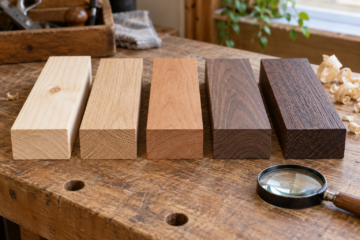
| Wood | Clear-finish look | Trade-off | Good fit when |
|---|---|---|---|
| Red oak | Strong, open grain; pinkish to tan cast | Large pores need careful finish work | You want a durable, common match for oak stairs |
| White oak | Prominent grain, generally browner and less pink | Can cost more or be harder to source consistently | You want a darker oak character without stain |
| Hard maple | Pale, fine, relatively quiet grain | Can show blotching if stained; dents may show clearly | You want a light, clean, modern look |
| Cherry | Fine grain; starts light reddish-brown | Darkens noticeably in light and can be expensive | You like natural color that deepens over time |
| Poplar | Often greenish or brown-streaked | Color and blotches can look uneven under clear finish | Usually better painted than left clear |
Red oak: the dependable default
Red oak is a sensible choice if the stairs are already oak, or if you want a traditional grain that reads clearly from across the room. It is hard enough for normal household use, easy to find in stair components, and usually less costly than cherry or specialty hardwoods. Its open pores are not a structural problem, but they remain visible beneath a clear coating. If you expect a glass-smooth surface, oak’s texture may disappoint; a grain filler can reduce it, though that adds work and can change the look.
Red oak can also vary in color between boards and between suppliers. Ask to see the actual post before purchase if color consistency matters. A clear finish will not reliably make two different oak pieces match.
When maple, cherry, or white oak makes more sense
Hard maple suits a light interior where oak’s strong grain would feel too busy. Its tighter grain can produce a smooth-looking clear surface, but sanding marks and handling stains show readily on pale wood. Avoid assuming that a clear coat will even out maple; test your finish on an offcut or an inconspicuous surface.
Cherry is a good clear-finish wood if you want natural warmth rather than a stain color. Expect it to deepen over months and years with exposure to light. A new post beside older cherry may look much lighter at first, so do not judge the match only by a sample. White oak is worth considering when you want oak grain with a browner, less rosy cast, though availability and price vary by region.
Poplar is often the budget option for painted stair parts, but its green or gray streaks can look odd under a clear finish. It is inexpensive, and it can be perfectly adequate if paint is the plan. For a clear-finished post, pay the extra for a species whose natural color you actually want to see.
How to buy the right post
Match the post to the handrail and stair parts by species first, then compare color and grain. A species name alone does not guarantee a visual match. If the staircase combines several woods, choose the newel based on the largest nearby surface or the part it connects to most directly.
Check dimensions, attachment method, and whether the post is solid or laminated before ordering. A newel must be secured to the stair structure; a good-looking post is not a substitute for correct installation. If you are replacing one, measure the post, base, and connection carefully. Browse unfinished oak newel posts or unfinished maple newel posts to compare available styles and sizes.
Prepare the surface before clear coating
Sand with the grain, working through roughly 120, 150, and 180 grit. On maple, avoid skipping grits or pressing hard: coarse scratches can remain visible under clear finish. On oak, sanding removes raised fibers and handling marks, but it will not close the pores. Vacuum thoroughly, then wipe with a clean, dry cloth; oily tack cloth residue can interfere with some water-based finishes.
Test the complete finish schedule on scrap from the same wood. A water-based finish usually keeps pale wood closer to its raw color, while an oil-based finish adds warmth and amber. Apply thin coats rather than one heavy coat, and follow the product’s recoat and cure times. For a handled interior post, a clear furniture or floor-rated polyurethane is a practical category; choose water- or oil-based based on the color you want and the manufacturer’s guidance. Lightly sand between coats only as directed, commonly with 220 grit.
Common failures are preventable: dust left in corners becomes bumps; sanding across grain leaves scratches; a heavy coat sags on turned details; and an untested finish can make a good wood choice look too yellow or too dark. Make the sample first. If the color, grain, or texture is wrong on the sample, change the wood or finish before coating the installed post.

0 Comments