What's inside
As an Amazon Associate I earn from qualifying purchases. This post may contain affiliate links at no extra cost to you.
A clear-finished floating vanity shelf puts the wood on display, but a bathroom is a hard place for an exposed slab. Steam, splashes, and water trapped around the faucet can stain wood or loosen a finish. For most projects, a stable hardwood such as white oak or hard maple is a better choice than a cheap, wide solid-pine board. The best option still depends on the shelf’s thickness, support, budget, and how much maintenance you’ll tolerate.
As an Amazon Associate we earn from qualifying purchases at no extra cost to you.

Our Top Picks
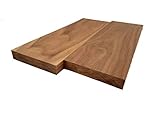
 Walnut Lumber Sheets Unfinished Walnut Wood Sheets Thick17x4x7/8 Inch - 1PCS3.93 x 7.87 x 0.8 inches1.4 PoundsCheck on Amazon
 Barrington Hardwoods Walnut Lumber 3/4 in x 43/4" x 4" x 12"0.75 x 4 x 12 inches2 poundsCheck on Amazon
 Varathane Water-Based Ultimate Satin PolyurethaneHalf Pint (Pack of 1)3 x 3 x 3 inches0.64 poundsCheck on Amazon
What the shelf needs
A floating shelf carries weight with little visible support. It also moves as humidity changes. Wood expands and shrinks mostly across its grain, so a wide solid-wood slab can change dimension enough to stress a rigid mounting system or open cracks. A 12-inch-wide board may move several millimeters between dry winter air and a humid bathroom; the exact amount depends on species, grain orientation, and local conditions.
Use a shelf at least 1½ inches thick if it must look substantial, but don’t assume thickness alone prevents sagging. The wall bracket or concealed steel support needs to be designed for the shelf’s depth and expected load, and fastened into studs or suitable masonry anchors. Keep the wood away from constant standing water, seal all faces and edges, and allow for movement in the mounting method. A rigid, full-length attachment can split a solid slab as it swells.
Wood options at a glance
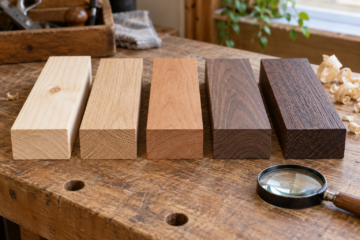
| Wood | Appearance and cost | Bathroom trade-offs |
|---|---|---|
| White oak | Distinctive grain; usually mid- to high-priced | Durable and a strong clear-finish choice. Pores need filling for a glass-smooth surface. Avoid contact between wet oak and iron, which can cause dark stains. |
| Hard maple | Light, subtle grain; often mid-priced | Hard and dense, with a clean look. Can blotch or look uneven under some finishes, so test on offcuts. |
| Black walnut | Dark, rich color; generally expensive | Looks good with a clear finish and is workable, but costs more and can fade or lighten with light exposure. |
| Cherry | Warm reddish tone; generally mid- to high-priced | Finishes smoothly and darkens with age and light. Its natural color changes may be more noticeable than expected. |
| Clear pine | Light, soft, and often inexpensive | Fine for a lightly loaded, budget shelf in a dry bathroom. Dents readily, and knots or uneven grain can look distracting under clear finish. |
| Quality plywood | Available with oak, maple, or walnut veneer; often economical | More dimensionally stable than a wide solid board. Use furniture-grade veneer plywood and protect the exposed edges; thin veneer leaves little room for sanding repairs. |
Best choices for most projects
White oak is the dependable all-rounder when you want visible grain and a hard-wearing surface. It has good resistance to wear and a distinctive look that suits many vanities. Its open pores show through clear finishes unless you use a grain filler, and filler adds time and can subtly alter the color. Oak is not waterproof: standing water can still damage the wood or finish.
Hard maple suits a pale, restrained design and is hard enough to resist everyday bumps. It may be a better buy than walnut if you want a light shelf without prominent grain. Maple’s dense surface can make finish application less forgiving. Apply a test finish to a cutoff from the same board, especially if you’re considering an oil-based product that may amber the color.
Walnut or cherry makes sense when color is the priority and the price is acceptable. Both can look excellent under a clear finish, but their tones change over time. Don’t choose either expecting the finished shelf to stay exactly the same shade as a new sample.
For a wide shelf on a tighter budget, furniture-grade plywood can be the sensible option, not a compromise to avoid. Its cross-laminated construction is less prone to seasonal width changes than a wide solid board. Choose a face veneer that matches the look you want, and add solid-wood edging if you don’t want exposed plies. Avoid construction plywood with patches, voids, and rough veneer.
Buying lumber and preparing the blank
Buy kiln-dried stock, ideally around 6–8% moisture content for a heated home. Check the board for twist, cracks, large knots, and grain that runs out at the ends. A clear finish makes defects permanent visual features, so inspect the face in the lighting where the shelf will sit. If buying a glued-up panel, check that the joints are tight and the faces are flat.
Cut the shelf to size before finishing, then ease sharp edges slightly with sandpaper or a small roundover. A tiny eased edge holds finish better than a knife-sharp corner. Sand through a consistent progression, such as 120, 150, and 180 grit; use 220 only if the finish instructions call for it. Sanding too finely can reduce finish adhesion or make stain absorb unevenly. On oak, decide whether you want the open pores visible or a filled, smoother surface before applying finish.
Choose a clear finish for bathroom use
“Clear” does not mean invisible or waterproof. Oil-based finishes usually add warmth or amber tone; water-based finishes generally preserve a paler look. Film-forming products such as a quality water-based or oil-based polyurethane offer better protection against splashes than wax or a simple oil finish. A hardwax oil is easier to spot-repair, but usually needs more frequent upkeep and won’t protect as well from standing water.
Use a water-based polyurethane if keeping pale wood pale matters, or compare it with an oil-based polyurethane if a warmer tone is welcome. Follow the label for surface preparation, coat count, drying time, and cure time; many projects need at least three thin coats. Sand lightly between coats only as directed, and remove dust before recoating.
Finish the underside, back, end grain, and cutouts as well as the visible face. Uneven sealing can encourage uneven moisture movement, and end grain absorbs water especially readily. Keep water from sitting around faucet holes or against the wall, where it can sneak beneath the finish. A finish may be dry to the touch in hours but take days or longer to reach full cure; don’t install or load the shelf until the manufacturer’s cure guidance allows it.
When the cheaper option is fine
A clear pine board or veneered plywood is reasonable for a guest bathroom with limited use, a shallow shelf, or a project where low cost matters more than dent resistance. Pine can look attractive if you select a straight-grained, knot-free board and accept that it will pick up dents. Plywood is a particularly practical choice for a long shelf because it is stable and often easier to keep flat.
For a frequently used family bathroom, spend more on a well-dried hardwood face and a sound support system. Keep a finish-compatible repair product on hand, wipe up standing water, and inspect the finish around faucet openings and wall edges once or twice a year. A careful wood and finish choice reduces maintenance; it does not make a wooden shelf maintenance-free.
0 Comments