What's inside
As an Amazon Associate I earn from qualifying purchases. This post may contain affiliate links at no extra cost to you.
A subtle pickled finish is a thin white or pale-gray wash that settles into open grain while leaving the wood’s natural figure visible. It works best when the species already has an interesting pore structure. On the wrong wood, the same finish can look cloudy, streaky, or like watered-down paint.
For most projects, white oak and ash are the safest choices. Red oak is also workable, but its pink and reddish undertones remain visible through a pale finish. Maple and birch can be attractive when you want a nearly solid, lightwashed appearance, but they require more careful preparation because they have little open grain and can blotch.
As an Amazon Associate we earn from qualifying purchases at no extra cost to you.


Our Top Picks
 Varathane Water-Based Ultimate Satin PolyurethaneHalf Pint (Pack of 1)3 x 3 x 3 inches0.64 poundsCheck on Amazon



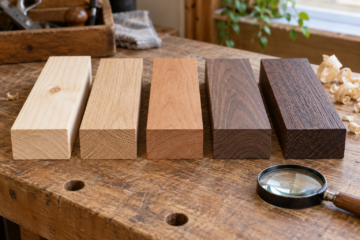
The best wood species for a pickled finish
| Wood species | Grain and color | Pickled-finish result | Difficulty |
|---|---|---|---|
| White oak | Prominent open grain; beige to light brown | Clean, visible grain with a refined white or gray cast | Easy |
| Ash | Open, straight grain; pale cream | Bright, linear grain and a lighter overall look than oak | Easy |
| Red oak | Open grain; pink and red undertones | Distinctive but warmer and less subtle | Easy to moderate |
| Maple | Closed grain; pale, sometimes mildly figured | Soft cloudy wash rather than a strongly grained effect | Moderate |
| Birch | Closed grain; light cream to tan | Pale and fairly uniform, but prone to uneven absorption | Moderate |
| Pine | Soft, resinous, with strong earlywood contrast | Rustic whitewashed look; knots and streaks remain obvious | Moderate |
White oak and ash: the easiest choices
White oak is usually the best all-around species for a subtle pickled finish. Its open pores hold a small amount of light pigment, while the harder surrounding wood stays more transparent. Quarter-sawn white oak adds dramatic ray fleck; plain-sawn boards give a quieter cathedral grain.
Ash behaves similarly but has a paler base color and a more linear grain. It can produce a brighter finish with less brown showing through. Ash is often the cheaper option compared with clear white oak, especially for painted furniture parts or wide projects. Choose it when you want visible grain without paying for oak’s color and figure.
Both species tolerate a thin water-based white stain or a diluted white glaze. Avoid applying a heavy, opaque coat. The goal is normally one thin application, wiped across the grain, followed by a clean wipe with the grain.
When red oak, maple, or birch makes sense
Red oak is inexpensive, widely available, and easy to sand. Its drawback is color: a white pickling product does not remove the red and pink cast. A slightly gray or taupe glaze can balance that warmth better than a stark white one. Test on the actual boards, because red oak varies considerably between sapwood and heartwood.
Maple is a good choice when you want a quiet, contemporary finish rather than strongly highlighted pores. Hard maple has a very closed surface, so the pigment mostly sits on top. This makes the finish easy to overdo. Apply a thin coat and wipe quickly. Soft maple accepts color somewhat more readily but may show uneven areas around end grain and figure.
Birch is affordable and commonly sold as plywood, making it useful for cabinet sides and built-ins. It has little open grain, so pickling will look more like a translucent paint wash. A wood conditioner for water-based stain can reduce uneven absorption, though it may also make the final color lighter.
Pine and species that need caution
Pine can look good if you want a casual, farmhouse-style result. Its soft earlywood absorbs more finish than the dense latewood, creating dark or pale stripes. Knots may bleed resin through a water-based coating, particularly in warm rooms or over time. Seal knots with two thin coats of dewaxed shellac before pickling.
Poplar is inexpensive and paints well, but it is rarely rewarding as a transparent pickled wood. Its green and gray areas can show through a white wash in unattractive patches. Cherry, walnut, and mahogany are also poor candidates if you want a pale, subtle result: their darker colors overpower the light pigment, and their best features are usually shown with a clear or darker finish.
Prepare the surface before adding color
Sand solid wood progressively to 150 or 180 grit. Stopping at 120 can leave visible scratches under a pale finish; sanding much finer than 180 can reduce absorption and make the color sit unevenly. For plywood veneer, use 150 grit and light pressure. It is easy to sand through a thin face veneer, especially at edges.
Remove all glue squeeze-out. Dried glue blocks both stain and glaze, leaving pale or dark outlines that are difficult to repair. Scrape or sand it away, then dampen the surface lightly with clean water if using a water-based product. This raises loose fibers. After it dries, sand them off with 180 grit.
Always make a sample using the same species, sanding schedule, edge treatment, and topcoat. A finish that looks subtle on a flat board may become much stronger on end grain or a routed profile.
Apply a thin wash and protect it
A practical starting mix is one part white water-based stain or glaze to one part compatible clear medium. For an even lighter effect, use two or three parts clear medium to one part color. Commercial white water-based wood stain is convenient, while a tinted water-based glaze gives you more control over opacity and working time.
Brush or wipe on a small section, then remove excess before it dries. Wiping across the grain pushes pigment into the pores; the final pass with the grain removes distracting streaks. Keep a wet edge and do not repeatedly brush partially dried material. That is a common cause of lap marks.
After the color dries, inspect it under the room’s actual lighting. If it is too strong, a light scuff with 320-grit abrasive can soften the surface, but it will not fully remove pigment from deep pores. If it is too weak, add another thin coat rather than one heavy coat.
Finish with two or three thin coats of a non-yellowing water-based clear finish. Scuff lightly between coats with 320 or 400 grit when the label calls for it. A matte or satin sheen usually suits pickling better than gloss. For furniture that receives regular handling, a durable water-based satin polyurethane is a sensible choice; for low-wear decorative work, the cheaper clear acrylic option is often sufficient.

0 Comments