What's inside
As an Amazon Associate I earn from qualifying purchases. This post may contain affiliate links at no extra cost to you.
Exterior doors live in a difficult location: one face may be in sun and rain while the other is in a conditioned room. The best wood is not simply the hardest or most expensive species. It is wood that moves predictably, has few defects, and can hold a complete film-building finish on every face and edge.
For most projects, genuine mahogany and sapele are the safest choices for a clear or lightly tinted finish. White oak is a good, tougher-looking alternative when properly sealed. Kiln-dried, engineered construction can make an affordable softwood door perform well under paint, but an inexpensive solid pine door is a poor candidate for a demanding clear finish.
As an Amazon Associate we earn from qualifying purchases at no extra cost to you.

Best wood species for an exterior door
| Wood | Best finish | Strengths | Limitations |
|---|---|---|---|
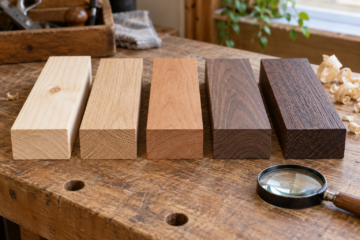
| Mahogany | Clear varnish or paint | Stable, easy to machine, attractive grain | Quality and species vary; can be expensive |
| Sapele | Clear varnish or stain | Stable, durable, widely available, rich color | Interlocked grain can tear out and become difficult to sand |
| White oak | Paint, stain, or clear finish | Hard, durable, distinctive grain | Moves more than mahogany; tannins can discolor finishes |
| Accoya or other modified wood | Paint or opaque stain | Very low movement and good decay resistance | High material cost; finishing instructions matter |
| Pine or fir | Paint | Low cost and easy to source | Resin, dents, knots, and movement make clear finishing difficult |
Mahogany and sapele: the best all-around choices
Mahogany is a strong choice for a door finished with exterior varnish. It is relatively stable across the grain, machines cleanly, and has pores that fill without excessive effort. It also accepts dye, stain, and paint evenly compared with many softwoods. Buy from a supplier that identifies the actual species; “mahogany” can describe several woods with very different durability and movement.
Sapele performs similarly and is often easier to find in door stock. Its ribbon-like or interlocked grain looks excellent under a clear film, but it requires a sharp plane or router bit and careful sanding. Sanding straight through the grits is important. Stopping at 80 grit and applying varnish can leave torn fibers that become obvious after the first coat.
For either species, select straight, vertical-grain stock when possible. Avoid large knots, loose grain, pith, and short grain around hinge or lock mortises. A laminated or engineered door core with stable face veneers is often more reliable than a wide solid slab, even when both use the same species.
When white oak or pine makes sense
White oak is durable and hard enough to resist many everyday dents. It is a sensible choice for a traditional door, especially with a stain or paint. However, oak’s tangential movement is substantial, and its open pores provide more routes for moisture if the finish is thin or damaged. Use a well-constructed door, seal all edges, and do not rely on one heavy coat to compensate for poor preparation.
Pine, fir, and similar softwoods are perfectly reasonable when the door will be painted and the budget matters. They are not automatically failures. The cheaper option is fine when the door is engineered for exterior use, has sound joinery, and will receive a light-colored, opaque coating. Expect more dents and more maintenance than with mahogany or oak.
Clear finishing exposes every resin pocket, knot, glue line, and sanding mark. That is why a low-cost pine door can cost more in preparation than a better-grade hardwood door. Knots also need a compatible knot sealer; ordinary varnish often cannot stop resin bleed.
Choosing the film-building finish
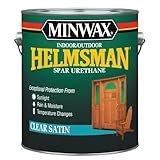
A film-building finish sits on the wood rather than soaking in only. Exterior spar varnish, marine varnish, and exterior-grade polyurethane are common categories. Look for a product specifically labeled for exterior use and UV protection. Interior polyurethane, lacquer, shellac, and ordinary furniture varnish should not be used as the final exposed coating.
Exterior spar varnish with UV protection is the usual clear-finish choice. Flexible formulations tolerate seasonal movement better than a very hard interior film, but they still require maintenance. Three coats is a bare minimum for a sheltered door; four to six coats is more realistic on exposed faces, with additional attention to the top, bottom, hinge, and lock edges.
Paint provides better UV protection than a clear finish. If the door receives direct afternoon sun or regular rain, an opaque exterior system is usually the most durable and forgiving option. Use an exterior wood primer followed by two finish coats, and follow the coating manufacturer’s recoat window. A glossy surface sheds water better, while satin hides minor defects.
Preparation and application details
Measure the wood moisture content before finishing. Exterior door stock should generally be near the moisture level it will reach in service, commonly about 8% to 12% in a heated home, though local conditions vary. Do not seal freshly milled, damp wood and trap moisture behind the film.
Sand hardwood faces through 120, 150, and 180 grit. For a clear film, 180 grit is usually enough; sanding much finer can reduce adhesion. Break sharp edges with two or three light sanding passes. A razor-sharp corner gets thin coverage and fails first. Vacuum thoroughly, then wipe as directed by the finish manufacturer. Avoid oily tack cloths unless the product specifically permits them.
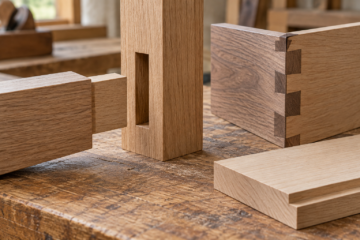
Exterior wood primer is especially valuable over pine, fir, and repaired areas. Prime all six sides before installation if possible. On a panel door, coat the panel edges, muntins, and joints carefully; these narrow surfaces often fail before the broad face.
Apply thin, even coats rather than one thick coat. Most exterior varnishes need light sanding with about 220-grit abrasive between coats after they have cured, not merely dried on the surface. Remove dust before recoating. Finish the top and bottom edges as carefully as the visible faces, because water entering there can cause swelling, split joints, and peeling film.
Common failures and maintenance
The most common failure is moisture entering through an unsealed edge or damaged film. The door then swells, sticks, and forces the finish to crack. Other failures include peeling over contaminated wood, white clouding from trapped moisture, and black staining around fasteners or oak tannins.
Inspect a clear-finished door twice a year. Recoat when the film looks thin, dull, or lightly abraded—not after bare wood is visible. Wash, scuff-sand with approximately 220 grit, remove dust, and apply compatible finish. If the coating is peeling, sanding only the loose spots usually leaves witness lines; strip or sand back to a sound, feathered surface before rebuilding the film.
For a clear exterior door, choose mahogany or sapele and budget for regular recoating. For the lowest initial cost, choose a well-built pine or fir door and paint all surfaces thoroughly. White oak sits between those choices: durable and distinctive, but less forgiving of movement and incomplete sealing.
0 Comments