What's inside
As an Amazon Associate I earn from qualifying purchases. This post may contain affiliate links at no extra cost to you.
For a butcher block that will see regular chopping, choose hard maple if you want a durable, neutral-colored work surface. Walnut is a good-looking, workable alternative, while cherry is easier on knives but dents more readily. The wood is only half the decision: a food-contact-safe finish, sound glue joints, and careful surface preparation matter just as much.
As an Amazon Associate we earn from qualifying purchases at no extra cost to you.


Our Top Picks
 Howard Products Butcher Block Conditioner and Food Grade7.9"L x 1.8"W1.85 x 3 x 7.9 inches0.6 poundsCheck on Amazon


Choose wood for how you will use the block
Decide first whether the block is a cutting surface or a countertop that will mostly hold food and dishes. A cutting surface needs wood that tolerates repeated knife impacts and can be sanded or resurfaced. A countertop can use a wider range of species and finishes because it sees less direct cutting.
For a chopping block, end grain—where the growth rings are visible on the working face—is often chosen because knife edges pass between wood fibers rather than across them. It can be gentler on knives, but it takes more labor to build and glue, and it still requires regular cleaning and drying. Edge-grain blocks, with the long face of the boards on top, are simpler and usually cheaper. They are a practical choice for everyday prep.
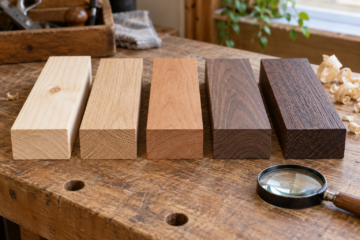
Common butcher-block woods compared
| Wood | Hardness and workability | Best fit | Main trade-off |
|---|---|---|---|
| Hard maple | Hard, close-grained, light colored | Frequent chopping; classic butcher blocks | Can show stains and knife marks; less forgiving to cut than softer woods |
| Walnut | Moderately hard, easy to work, dark | Blocks where appearance matters as much as utility | Costs more than common maple and shows pale food residue |
| Cherry | Moderately hard, workable, warm reddish-brown | Light-to-moderate prep and a warmer look | Dents and wears sooner than hard maple; darkens with age |
| Beech | Hard, fairly uniform, often economical | Budget-conscious blocks and work surfaces | Can move with moisture changes; availability varies |
| White oak | Hard and durable, prominent grain | Countertops and occasional food prep | Open grain is less convenient to keep clean than maple’s tighter grain |
Hardness is not a measure of food safety. Properly dried, sound hardwood from a known source can work well, but avoid reclaimed boards with uncertain treatments, painted or stained surfaces, and wood with cracks, rot, or persistent odors. Do not use a board that has been chemically treated for outdoor use.
Buying and preparing the wood
Buy kiln-dried boards intended for interior furniture or kitchen work, and check them for twists, deep checks, and knots that could loosen or trap food. A moisture content around 6–8% is a useful target for indoor furniture in many homes, but local conditions vary. Let boards acclimate indoors for several days before milling them. If you are building a large countertop, use a moisture meter rather than relying on feel.
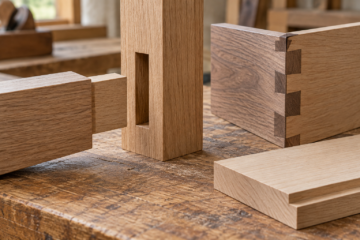
For a cutting board or block, glue only clean, freshly prepared edges with a waterproof adhesive approved for indirect food contact after curing. A common choice is waterproof wood glue labeled for food-contact applications. Follow the label’s clamping time and full cure time; a glue line that feels dry may not be ready for food use. Scrape off squeeze-out after it firms, then flatten the surface evenly.
Pick a finish that suits the job
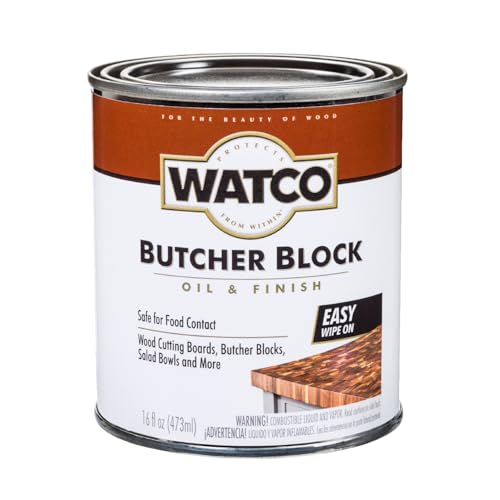
For a board that will be cut on, a simple, renewable finish is usually easiest. Food-grade mineral oil penetrates the wood without forming a brittle film. Apply a generous coat to all faces and edges, let it soak in for several hours or overnight, then wipe away the excess. Repeat until the surface absorbs little oil. Reapply when the wood looks dry or turns pale after washing—often every few weeks at first, then less often.
A blend of mineral oil and beeswax adds a little more water resistance and leaves a soft feel, though it still needs renewal. Look for a cutting-board oil and wax conditioner with ingredients clearly listed. Avoid cooking oils such as olive or vegetable oil; they can oxidize and become rancid.
For a countertop that will not be used as a chopping surface, a cured film finish can offer better resistance to spills. Choose a product whose manufacturer states it is suitable for food-contact surfaces once fully cured, and observe the stated cure time—not just the time until it feels dry. A film finish can chip under knife use, and repairs may be more involved than adding oil. No finish makes wood waterproof or eliminates the need to wipe up standing water and acidic spills.
Sanding, sealing, and daily care
Before finishing, sand evenly through the grits: for example, 80 or 100 grit to remove milling marks, then 120, 150, and 180. Stop around 180–220 grit for an oiled cutting surface. Sanding much finer can burnish the wood and reduce oil absorption. Remove dust thoroughly with a vacuum and a clean, dry cloth. Do not use a tack cloth unless its maker confirms it leaves no residue suitable for the finish you chose.
After the first oil coat, the grain may rise. Let the surface dry, lightly sand with 220 grit, remove dust, and apply another coat. Ease sharp edges slightly so they are less likely to chip. Apply finish to the underside and ends as well as the top; coating one face alone can encourage uneven moisture exchange and cupping.
Wash a cutting block promptly with warm water and mild dish soap, then dry it upright or with airflow on both sides. Do not soak it, leave it in a wet sink, or put it in a dishwasher. Use separate surfaces for raw meat and ready-to-eat foods when practical. If deep knife grooves develop, or the block smells sour after cleaning, sand it back to clean wood and refinish; cracks that cannot be cleaned are a reason to replace it.
A practical buying decision
For frequent chopping, hard maple edge grain is the dependable all-round choice; maple end grain is worth considering if you want a traditional block and accept extra cost and maintenance. Beech can save money when the boards are dry and well made. Walnut or cherry make sense when color and a softer working feel matter more than maximum dent resistance. Whichever species you choose, a sound block finished with food-grade mineral oil and kept clean is more useful than an expensive wood left poorly sealed or wet.

0 Comments