What's inside
As an Amazon Associate I earn from qualifying purchases. This post may contain affiliate links at no extra cost to you.
A transparent black finish should darken the wood without hiding its grain, pores, or figure. That makes species selection more important than it is with ordinary black paint. Some woods turn rich and charcoal-black; others become muddy, blotchy, or so dark that the “transparent” finish looks opaque. The best choices have visible grain, predictable absorption, and enough contrast to remain interesting after several coats.
As an Amazon Associate we earn from qualifying purchases at no extra cost to you.


Our Top Picks
 Varathane Premium Fast Dry Ebony Wood Stain1 Quart (Pack of 1)4.25 x 4.25 x 5 inches2 poundsCheck on Amazon
 Varathane Premium Fast Dry Jet Black Wood Stain10.25 Ounce (Pack of 1)2.7 x 2.7 x 7.9 inchesCheck on Amazon
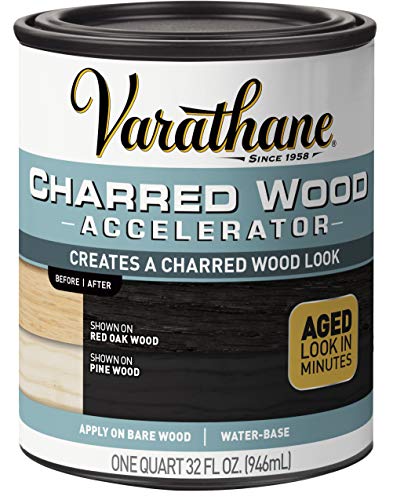 Varathane Charred Black Wood AcceleratorQuart (Pack of 1)4.25 x 4.25 x 4.9 inches2.5 poundsCheck on Amazon
 Minwax 233334444 Polycrylic Protective Wood Finish8 fl oz2.9 x 2.9 x 3 inches0.66 poundsCheck on Amazon

Best Overall Choices
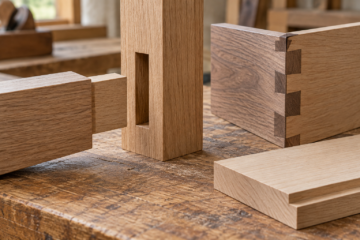
White oak is the safest all-around choice. Its open pores absorb black dye or stain and create strong cathedral grain lines. Quarter-sawn white oak is especially effective because its medullary rays remain visible as pale or smoky streaks. Rift-sawn boards produce a cleaner, more modern pattern with less dramatic cathedral figure.
Ash behaves similarly to oak but usually costs less. It has pronounced earlywood and latewood grain, so a black transparent finish shows a clear linear pattern. Ash can absorb unevenly on flat-sawn faces, but a washcoat or sanding sealer helps control that. It is a strong choice for tables, cabinets, and painted-looking projects where you still want grain showing.
Walnut gives a softer, more subtle result. Its naturally brown color combines with black to produce deep espresso, charcoal, and near-black tones. The grain remains visible, but the contrast is lower than on oak or ash. Walnut is a good choice when you want a refined finish rather than a high-contrast black-and-white effect.
Rift- or quarter-sawn white oak is usually the best premium option for contemporary furniture. The straight grain takes a transparent black finish evenly, and the narrow pores give the surface a controlled appearance. It costs more than plain-sawn oak, but the cut can matter more than the species when the finish is meant to look deliberate and uniform.
Wood Species Compared
| Species | Appearance under black | Absorption and risk | Best use |
|---|---|---|---|
| White oak | Strong grain contrast; charcoal to black pores | Predictable, though open pores can look uneven | Furniture, cabinets, shelves |
| Ash | Bold, linear grain with high contrast | Can blotch on broad flat-sawn areas | Large panels and budget projects |
| Walnut | Low- to medium-contrast espresso black | Usually even; naturally dark color reduces contrast | Fine furniture and trim |
| Maple | Mostly opaque-looking black with little grain emphasis | Blotches easily with pigment stain | Only when a restrained, dark finish is wanted |
| Cherry | Warm black with red-brown undertones | Can darken dramatically and unevenly | Decorative furniture after testing |
| Pine | Strong earlywood streaks and rustic contrast | High blotching risk; resin can interfere | Low-cost rustic work |
Choose Dye or Pigment Stain
For the clearest transparent black, use a black wood dye or a dye-based stain. Dye colors the wood fibers instead of mainly depositing particles in the pores. It preserves more figure on walnut, maple, and figured oak, but it can look too flat on very open-grained species. Dyes also tend to fade more than pigment products if exposed to strong sunlight.
Pigment stains settle in pores and low areas, making oak and ash grain stand out dramatically. They are often the better choice when “transparent black” means black pores with lighter surrounding wood. The trade-off is a greater chance of muddy areas, lap marks, and a finish that looks nearly painted on close-grained wood.
A gel stain is a reasonable cheaper option for a small project, particularly on pine or maple where a liquid stain can produce ugly dark patches. It is slower to apply and can obscure more grain. For large furniture, a black wood dye concentrate gives better control when diluted and tested properly.
Surface Preparation That Prevents Blotching
Sand evenly through 120, 150, and 180 grit. Stop at 180 on most hardwoods; sanding to 240 can burnish the surface and reduce absorption, making the color lighter and less uniform. Remove mill marks completely, because black finish emphasizes every cross-grain scratch.
Break sharp edges lightly with 180-grit paper. A crisp edge absorbs more finish than the face and can become an unnaturally dark line. Vacuum the surface, then wipe it with a clean, lint-free cloth. Avoid soaking the wood with water unless you are intentionally raising the grain and sanding the resulting fibers back with 180 grit.
On ash, oak, and walnut, test both a bare-wood application and a thinned washcoat. A washcoat made from compatible finish diluted according to its product instructions partially seals the surface and reduces excessive absorption. It also reduces color intensity, so it may require a second coat. Do not assume one preparation works for every board in a glued-up panel.
Before buying enough material for a project, make a sample using the same species, cut, sanding schedule, stain, and topcoat. Test at least two coats and let the sample dry fully. Wet finish often looks dramatically darker than the cured result.
Application and Topcoat
Apply dye with a spray gun, foam applicator, or lint-free cloth, working quickly enough to maintain a wet edge. Wipe excess pigment stain consistently with the grain. Overlapping partly dry areas creates dark bands that are difficult to repair without sanding back.
For a very dark result, two light applications are safer than one heavy coat. Allow the first coat to dry, inspect it under the intended lighting, and then adjust the second coat. Heavy applications can obscure pores, leave residue in corners, and create a surface that scratches visibly through the color.
After the color is dry, seal it with a clear coat. Water-based polyurethane preserves a cooler black appearance and dries quickly, while oil-based polyurethane adds amber warmth and can make black look brown or smoked. A satin or matte sheen usually looks more convincingly transparent than gloss, which highlights every sanding mark and uneven spot. Consider a satin water-based polyurethane when you want neutral color and fast recoating.
Species That Need Extra Caution
Maple is smooth and attractive but has little open grain for a pigment stain to emphasize. It can become a flat black surface with blotchy patches. Cherry accepts black, but its red undertones can produce an uneven purple-brown cast, especially where the heartwood and sapwood meet.
Pine is inexpensive and perfectly acceptable for rustic shelves or shop furniture, but its soft earlywood absorbs much more finish than the dense latewood. A pre-stain conditioner or gel stain can make the result more manageable. If the project needs a clean, high-end black finish, paying more for ash or oak is usually cheaper than correcting blotched pine.
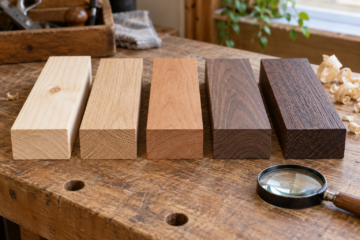
For a reliable first attempt, choose white oak or ash for strong grain contrast, walnut for a quieter luxury look, and a dye or controlled pigment stain based on the effect you want. Buy a small amount of unfinished wood sample boards and test before committing to the full project.

0 Comments