What's inside
As an Amazon Associate I earn from qualifying purchases. This post may contain affiliate links at no extra cost to you.
A kitchen shelf near a sink needs more than an attractive grain pattern. It sees splashed water, wet hands, cleaning products, steam, and occasional standing moisture from dishes or containers. For a clear finish, the best wood is stable, reasonably hard, and attractive without heavy staining. The finish matters just as much, but a poor species choice can still lead to dents, movement, and dark water marks.
As an Amazon Associate we earn from qualifying purchases at no extra cost to you.


Our Top Picks
 Danpoo 12 inch Floating Walnut wall Shelf12 inch4.72 x 11.81 x 2.08 Inches1.01 poundsCheck on Amazon
 Polyurethane Wood Finish Water Based Polyurethane Clear Gloss100 ml1.6 x 1.6 x 4.7 inchesCheck on Amazon


Best wood species for a clear-finished sink-side shelf
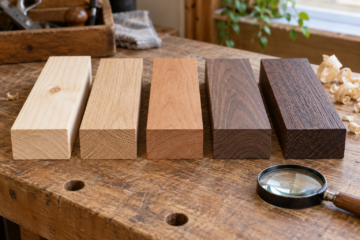
White oak is the best all-around choice for most projects. It is hard enough for everyday kitchen use, has a strong but not overwhelming grain, and looks good under clear water-based or oil-based finishes. Its closed pores are not truly waterproof, but they make the surface less prone to holding grime than open-grained woods such as red oak.
Hard maple is another practical choice. It has a fine, fairly uniform grain and a light color that works well in modern kitchens. It resists dents better than many softer species. The trade-off is appearance: maple can look plain, and clear oil finishes often turn it a noticeable amber color. It can also show blotchy color if you try to stain it darker.
Walnut is attractive under a clear finish and hides small scratches better than very pale wood. It is moderately hard rather than exceptionally hard, so a shelf may eventually show dents from ceramic containers or metal objects. Walnut also costs more, and its dark color makes dust, dried mineral deposits, and light scratches visible in a different way.
Cherry is stable, easy to work, and excellent for a traditional kitchen. It starts fairly light and darkens with exposure to light, sometimes substantially during the first year. That color change is normal, but it means a replacement shelf may not match the original for a long time.
Avoid using pine, fir, or other construction softwoods unless the shelf is lightly used and budget is the main concern. They are inexpensive and easy to find, but they dent easily and can develop dark spots around screws, wet containers, and the sink. A clear finish will not make softwood hard.
| Wood | What it does well | Main drawback near a sink | Best finish direction |
|---|---|---|---|
| White oak | Durable, attractive grain, good general-purpose choice | Visible pores can collect grime if the finish is neglected | Water-based polyurethane or wiping varnish |
| Hard maple | Hard, smooth, light, clean appearance | Can look bland or amber unevenly with oil finishes | Clear water-based polyurethane |
| Walnut | Rich color and good scratch camouflage | Higher price and lower hardness than maple | Water-based polyurethane or hardwax oil |
| Cherry | Stable, easy to finish, warm traditional look | Darkens noticeably over time | Water-based finish if you want to slow color change |
| Pine | Cheap and widely available | Dents and water stains easily | Use only for low-abuse shelves |
Solid wood, edge-glued panels, and plywood
For a shelf up to about 30 inches long and 10 to 12 inches deep, a solid hardwood board or edge-glued panel is usually straightforward. Wider shelves need more attention because wood expands and contracts across its grain. Do not rigidly trap a solid shelf between side panels or fasten it with screws through oversized areas without allowing movement.
Cabinet-grade hardwood plywood is often the more stable choice, especially for a long shelf. It resists seasonal cupping better than a wide solid board. Apply matching solid-wood edging to hide the plies, then finish all faces and edges. Avoid ordinary sanded plywood for a visible shelf; its face veneer may be thin, patched, or uneven, and its exposed edges look unfinished.
If the shelf is directly above the sink, use a front edge at least 3/4 inch thick and ease the corners. A small round-over—about 1/8 inch—is enough to prevent a sharp edge from quickly losing finish. A drip groove on the underside can help stop water from running toward the wall, but it is not a substitute for sealing the shelf.
Choose a finish that tolerates wetting
For the most dependable clear finish, use a water-based polyurethane rated for floors, cabinets, or heavy interior wear. It dries clear or only slightly amber, has low odor compared with oil varnish, and builds a continuous film. Apply three or four thin coats rather than one heavy coat. Lightly sand between coats with 320-grit abrasive after the finish has dried according to its label.
Oil-based polyurethane provides good water resistance and tends to make oak, walnut, and cherry look richer. It also ambers, smells strongly during application, and dries more slowly. That color shift is often attractive on walnut or cherry but can make maple look yellow.
Hardwax oil is easy to repair and gives wood a natural, low-build appearance. It is a reasonable choice when you prefer a tactile surface and will wipe up spills promptly. It generally offers less protection from standing water than a properly applied film finish. For a shelf beside a sink, choose a product specifically rated for worktops, countertops, or wet interior surfaces, such as these hardwax oil countertop finishes.
Do not use ordinary furniture oil alone as the primary protection. Mineral oil, butcher-block oil, and similar products soak in but do not form a durable water-resistant film. They require frequent renewal and can still allow dark rings and swelling if water sits on the shelf.
Prepare and finish every surface
Sand the wood flat through 120, 150, and 180 grit. Stop at 180 or 220 grit; polishing the surface much finer can reduce finish adhesion and make it harder for the coating to wet the wood evenly. Remove dust with a vacuum and a clean, slightly damp cloth. Do not rely on a tack cloth that leaves waxy residue unless the finish manufacturer approves it.
Seal the top, bottom, front, back, and both end-grain edges. End grain absorbs water rapidly and needs particular attention. Give it an extra coat or two, or apply a compatible sanding sealer before the finish. Coat the underside even if it is difficult to see; finishing only the top encourages uneven moisture exchange and may contribute to cupping.
Before applying the finish, test the complete schedule on an offcut. Compare the bare wood, first coat, and final sheen in the kitchen’s actual light. On maple especially, this reveals unexpected ambering or uneven color before the shelf is installed. If you need a more uniform color, use a compatible dye rather than a heavy pigmented stain, which can look muddy on tight-grained hardwood.
Installation details that prevent failures
Leave a small gap where the shelf meets a wall or end panel, then cover it with trim or flexible kitchen sealant as appropriate. Fasten the shelf with brackets or clips that support it without locking every edge against seasonal movement. Keep the shelf at least several inches from the faucet spray path when possible.
Wipe standing water within a few minutes, use coasters or trays under soap bottles, and clean with a damp cloth rather than soaking the surface. Renew a hardwax oil according to its instructions, often once or twice a year in a wet location. A film finish should not need routine recoating, but repair worn spots before water reaches bare wood.
For most buyers, a 3/4-inch white-oak or hard-maple shelf with three to four coats of water-based polyurethane is the safest purchase. If the shelf is decorative and sees little water, the cheaper pine option can be perfectly adequate—provided you accept dents, seal all faces, and wipe spills promptly. For a more natural feel and easier spot repairs, consider water-based polyurethane or a worktop-rated hardwax oil rather than an oil-only conditioner.
0 Comments