What's inside
As an Amazon Associate I earn from qualifying purchases. This post may contain affiliate links at no extra cost to you.
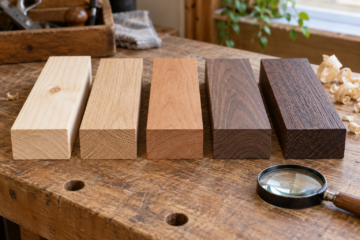
A clear-finished magazine rack shows every part of the wood: its color, grain, pores, glue joints, sanding marks, and end grain. That makes species selection more important than it is for a painted project. The best choice is usually a stable, straight-grained hardwood that sands cleanly and does not blotch badly under clear finish.
As an Amazon Associate we earn from qualifying purchases at no extra cost to you.


Our Top Picks
 1/2 pt Minwax 13407 Clear Pre-Stain Wood Conditioner1/2 Pint3 x 3.25 x 3 inches0 PoundsCheck on Amazon



Best overall: hard maple
Hard maple is the safest all-around choice for a clear-finished magazine rack. It has a pale cream color, fine grain, good dent resistance, and a smooth surface that needs little filling. Its understated appearance works with water-based polyurethane, oil-based varnish, lacquer, or a simple penetrating oil.
Maple is particularly suitable for a rack that will be handled often or placed near a chair where the bottom edges may get bumped. It is harder to cut and sand than pine, but ordinary carbide woodworking blades handle it well. Use sharp tools and avoid forcing the stock through a saw, since burning is a common failure mode.
The main drawback is price. Clear, wide maple boards cost more than construction lumber, and very pale maple can look bland if you want dramatic grain. Select boards with consistent color and few mineral streaks. A rack made from 3/4-inch maple panels will be strong without looking bulky.
Best value: poplar
Poplar is often dismissed because it is commonly painted, but it can work under a clear finish when its natural color is acceptable. It machines easily, has a fine texture, and usually costs less than maple, oak, or walnut. It is a practical choice for a first build or a rack that will not receive heavy abuse.
Fresh poplar may be pale green, gray, or brown rather than clean white. Those colors can become more pronounced under oil-based finishes. Water-based polyurethane generally keeps the wood lighter, while a clear oil finish may add warmth but can make green or muddy tones more obvious. Test the finish on an offcut before committing.
Poplar is softer than maple and dents more easily at the rack’s bottom corners. Ease all exposed edges with a small round-over or two sanding strokes. If you want poplar’s low cost but a more uniform appearance, it is also an excellent substrate for paint, even though that is not a clear-finish result.
Best appearance: walnut or cherry
Walnut provides the richest appearance with the least finishing effort. Its dark brown color, moderate grain, and ability to take oil evenly make it a strong choice for a furniture-quality rack. It is stable and machines well, but premium walnut costs considerably more than maple or poplar. Walnut also shows dust and sanding scratches against its dark surface, so inspect it under strong side lighting before finishing.
Cherry is another excellent clear-finish wood. It starts pinkish tan and gradually darkens to a deeper reddish brown with light exposure. Cherry sands smoothly and has a relatively fine grain, but it can show uneven color or dark patches where end grain absorbs finish. It also burns readily when cut with a dull blade.
For a small rack, walnut or cherry may be affordable because the total material quantity is modest. Buy extra length for test cuts and color matching. Mixing several boards without checking their color can make a finished rack look assembled from leftovers.
| Wood species | Appearance under clear finish | Workability | Typical trade-off |
|---|---|---|---|
| Hard maple | Pale, clean, subtle grain | Good, but harder on tools | Higher cost; can look plain |
| Poplar | Pale with possible green or gray tones | Very easy | Soft and color can be unpredictable |
| Walnut | Dark brown, distinctive grain | Good | Expensive; scratches show |
| Cherry | Warm, reddish, darkens over time | Good | Can blotch or burn during machining |
| Red oak | Bold grain with open pores | Easy | Requires pore filling for a glass-smooth surface |
Woods to use carefully
Red oak is structurally sound and widely available, but its open pores remain visible under most clear finishes. That is not a defect; it is part of the look. Choose oak if you want prominent grain and do not mind a textured surface. If you want a flat, refined finish, apply a compatible grain filler after sanding to about 180 grit.
Construction pine is inexpensive and perfectly adequate for a rustic rack, especially if the rack will be painted or placed in a workshop. For a clear finish, however, pine often has pitch pockets, loose knots, uneven grain, and soft areas that absorb finish differently. Clear, knot-free furniture-grade pine is better than framing lumber, but the money saved may not justify the extra sorting and preparation.
Avoid using a narrow solid-wood shelf with a wide cross-grain side panel unless the design allows movement. Wood can change dimension by roughly 1/8 inch across a 12-inch panel between dry and humid conditions. Use elongated screw holes, figure-eight fasteners, or joinery that permits seasonal movement. Do not rigidly trap a wide panel across its grain with screws or glue.
Preparing the surface
Dry-fit the rack before finishing. Glue squeeze-out left on the surface will appear as pale or shiny patches under clear coat. Remove it with a sharp chisel or scraper rather than smearing it into the grain. For a strong, clean assembly, use a quality interior wood glue and clamp until the joints are firm; most PVA glues need at least 30 minutes of clamping, with full strength developing later.
Sand solid wood progressively through 120, 150, and 180 grit. Stop at 180 grit for most polyurethane and varnish finishes. Sanding much finer can reduce absorption and make an oil finish look uneven, while stopping at 80 or 100 grit leaves scratches that become obvious after the first coat. Break sharp edges, then remove dust with a vacuum and a clean, slightly damp cloth.
For maple, cherry, and pine, a water-based wood pre-stain conditioner can reduce uneven color when using stain, but it may also make the color lighter. If you like the natural color, skip stain altogether. A clear water-based polyurethane keeps pale woods close to their raw appearance; an oil-based finish adds amber color and usually gives a warmer look.
Choosing the clear finish
Use three thin coats of water-based polyurethane for a low-odor, fast-drying finish. Lightly sand with 320-grit paper between coats only after the surface is fully dry. Oil-based polyurethane is slower and yellower but often gives better flowing and leveling on a beginner’s project. Apply it in a dust-free area and allow 24 hours or more between coats, depending on temperature and ventilation.
For a magazine rack that will see ordinary indoor use, hard maple with a clear water-based polyurethane is the most predictable combination. Choose poplar when budget matters, walnut or cherry when appearance is the priority, and oak when you specifically want visible open grain.

0 Comments